Udo you, man

独活の大木
(Udo no taiboku; “A large udo tree”)

Definition:

Of a person, big but good for nothing. An udo plant can grow up to about two meters tall and as thick as some trees, but its flesh isn’t strong or hard like wood (and it’s only edible as a young shoot), so it’s considered useless out of proportion to its size – and this saying is used to apply that situation specifically to a person who is physically large but not actually strong or useful. Like an executive who stands 6’2” but still couldn’t think his way out of a paper bag.

Breakdown:

This is another simple phrase comprising two noun phrases connected by the associative particle の (no). The first noun is 独活 (udo), an herbaceous flowering plant also known as “Japanese spikenard.” The second noun is 大木 (taiboku), “large tree.”

Notes:

A longer version of the phrase specifies that that large udo tree ~柱にならぬ (hashira ni naranu), “doesn’t become a pillar” – i.e. no matter how thick the stem is, it’s too weak to be used as a structural support. Keep in mind, though, that this saying can only be applied to people, not other inanimate objects or potential building materials.

Example sentence:

「蛮人南子は食欲もりもりで、筋肉ももりもりに見えるものの戦力は無し。そんな独活の大木たる者を仲間に入れると、結局危険を冒すに過ぎないと恐れております」

(“Banjin Nanko wa shokuyoku morimori de, kinniku mo morimori ni mieru mono no senryoku wa nashi. Sonna udo no taiboku taru mono wo nakama ni ireru to, kekkyoku kiken wo okasu ni suginai to osorete orimasu.”)

[“Nanco the Barbarian has a burgeoning appetite and the appearance of burgeoning musculature, yet lacks in martial ability. I fear that for us to admit such an ineffectual behemoth into the fellowship would in the end be no more than to place ourselves at risk.”]
Posted in Japanese, Kotowaza | Tagged , , , , , | Leave a comment

In one ear and then who cares?

[Insert tofu joke here]

馬耳東風
ba.ji.tou.fuu

Literally: horse – ear – east – wind

Alternately: When a person utterly fails to heed what others have to say. Opinions, criticism, and so on just go in one ear and out the other.

Notes: This compound comes to us from the poetry of Tang dynasty poet Li Bai. The image appears to be a contrast between human enjoyment of a spring breeze (which for Li Bai blew from the east) while horses were unimpressed. It also seems likely that he was complaining about how people with no taste remained unmoved by his poetry!

BaKaTouFuu

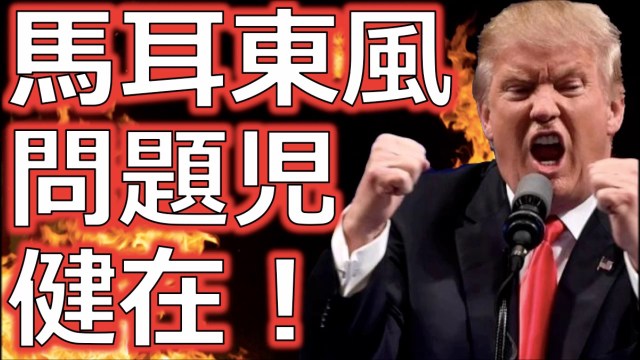
Ayup. “BaJiTouFuu problem child going strong!” Source.

Posted in Japanese, Yojijukugo | Tagged , , , , , , | 1 Comment

Elbow grease begins at home

Be nice to your neighbor, and you’ll attract better neighbors?

先ず隗より始めよ
(Mazu Kai yori hajimeyo; “First, start with Guo Wei”)

Definition:

When starting a large, ambitious undertaking, it’s best to begin with what’s close at hand. By extension, it can also mean that the person who talks about getting something done should be the one to start doing it; “Practice what you preach.”

Breakdown:

We begin, appropriately enough, with the adverb 先ず (mazu), “first of all.” Next comes the proper noun 隗 (Kai), short for the name 郭隗 (Guo Wei). This is followed by the directional particle より (yori), in this case “from.” And finally we have the verb 始める (hajimeru), “to start [something],” in imperative form.

Notes:

In the Kingdom of Yan, during the Warring States period of Chinese history, King Zhao asked Guo Wei how to gather clever men to serve his country. Guo Wei modestly suggested that Zhou begin by treating him well, reasoning that if even he, a relatively ordinary guy, could receive perqs and benefits, then the truly wise and clever would come of their own accord in hopes of receiving at least that level of hospitality themselves.

Note that the above story comes from a text known as the Strategies of the Warring States (『戦国策』, in Japanese Sengokusaku) and the anecdotes it contains should be taken as apocryphal rather than factual historical records.

This saying can also be shortened to 隗より始めよ or expanded to 賢を招くには隗より始めよ (ken wo maneku ni wa ~), “In order to invite the wise, ~.” Replacing 隗 with homophone 魁 is of course considered an error.

Example sentence:

「本当にビデオゲームを作りたいなら、さっさとプログラミングを始めたらいいじゃないか。先ず隗より始めよ、グラフィックデザイナーは後で探しても良いんだし」

(“Hontou ni bideo geemu wo tsukuritai nara, sassa to puroguramingu wo hajimetara ii ja nai ka. Mazu Kai yori hajimeyo, gurafikku dezainaa wa ato de sagashite mo ii nda shi.”)

[“If you really want to make a video game, shouldn’t you hurry up and start programming? Start with what’s at hand; you can look for a graphic designer later.”]

Posted in Japanese, Kotowaza | Tagged , , , , , | Leave a comment

We need to make our own light

Contact your representatives!

広宵大暮
kou.shou.tai.bo

Literally: wide – evening – big – sunset

Alternately: This is a phrase used to express great sadness and lamentation after someone’s death.

Notes: Both 広宵 and 大暮 express the idea of night that stretches out forever in every direction. Combined them and you get an unbearable night-time that seems it will never end no matter how far you go or how long you wait.

Note that this compound apparently comes to us from the Wen Xuan (『文選』, in Japanese Monzen ), a 2500-year-old anthology of Chinese poetry and literature, and is not currently in common use.

KouShouOhGreat

Not a lot of results for 広宵大暮, but 大暮維人 (a.k.a. Oogure Ito, a.k.a. “Oh! great“, is a manga artist’s pen name)

Posted in Japanese, Yojijukugo | Tagged , , , , , , | Leave a comment

What would you do for your deer?

秋の鹿は笛に寄る
(Aki no shika wa fue ni yoru; “An autumn deer approaches a whistle”)

Definition:

Destroying oneself for the sake of love. Alternately, being in danger or being used by others after having one’s weakness taken advantage of. From the practice of hunters, when the deer mating season rolls around in the fall, of using whistles that resemble the calls of female deer to lure in and capture the males.

Breakdown:

We begin with a topic, marked by the particle は (wa); the topic in question is the noun phrase comprising primary noun 鹿 (shika), “deer,” and modifying noun 秋 (aki), “autumn,” connected by the associative particle の (no). This topic acts like a grammatical subject, and the verb it enacts is 寄る (yoru), “to approach, in sentence-final form. The particle に (ni) shows that this action is in the direction of the noun 笛 (fue), “whistle.”

Notes:

Although the nuance is different, this phrase is often paired with 飛んで火に入る夏の虫 as another example of self-destructive behavior.

An alternate version of the saying replaces 秋の with 妻恋う (tsuma kou), literally “wife-loving”; also it seems that the verb phrase was originally 心を乱す (kokoro wo midasu), “to throw one’s heart into disarray.”

Both this saying and that of the summer insects come to us from a passage in the revenge epic 曾我物語 (Soga monogatari).

Example sentence:

「あのおじいさんは若い頃、愛してた女の人に騙されたらしいよ。それからずっと、秋の鹿は笛に寄るからと言い張り、独身の生活を送ってきたの。なんともいえない人生だよね」

(“Ano ojiisan wa wakai koro, ai shiteta onna no hito ni damasareta rashii yo. Sore kara zutto, aki no shika wa fue ni yoru kara to iihari, dokushin no seikatsu wo okutte kita no. Nan to mo ienai jinsei da yo ne.”)

[“They say that when that old man was young, he was led on by a woman he loved. And ever since, he’s always said that ‘love will lead you astray’ and stayed single. What a life that must have been.”]

Posted in Japanese, Kotowaza | Tagged , , , , , , , , | Leave a comment

Risutora?

As in リストラ, not squirrel-tigers.

新陳代謝
shin.chin.tai.sha

Literally: new – old – replace – apologize

Alternately: Replacing the old with the new. Originally this yojijikugo referred to living organisms expelling waste and taking in new resources; but by extension it has also come to mean renewal and reform in a society or organization… something we desperately need right now.

Notes: Despite the literal meanings of the characters, 代謝 as a compound means renewal; changing one thing out for another; regeneration; or even metabolism, of all things. As in, “basal metabolic rate” is 基礎代謝率 (kiso taisha ritsu).

代 is sometimes read as dai, but in the context of this compound, that’s considered an error.

ShinChinYaSai

I see your “women laughing with salad” and raise you a “woman grinning too widely with an armful of fruit”!

Posted in Japanese, Yojijukugo | Tagged , , , , , , , | Leave a comment

Buddhsplaining?

釈迦に説法
(Shaka ni seppou; “Lecturing the Buddha”)

Definition:

The foolishness of a person who knows just a little about a field trying to lecture an expert. Like delivering a sermon on Buddhism to the Buddha himself. “Teaching your grandmother to suck eggs.” Yes, really.

Breakdown:

This pithy idiom comprises only two nouns and a particle joining them. The first noun is 釈迦 (shaka), Shakyamuni, a.k.a. Gautama Buddha, a.k.a. the original Buddha, and the second is 説法 (seppou), a Buddhist sermon or lecture. The particle joining them is the directional particle に (ni), indicating that the second noun is being directed at the first.

Notes:

A longer version emphasizes the point by adding 孔子に悟道 (Koushi ni godou), “[explaining] the way of enlightenment to Confucius.” Similar phrases point out the foolishness of teaching swimming to a kappa, tree-climbing to a monkey, and so on.

Keep in mind that while a 釈迦に説法 act is silly and unnecessary, it does at least imply that the explanation being given is correct. The now-common act of overriding an expert in order to deliberately lie about a subject is outside the scope of this phrase – it’s something significantly worse.

Apparently this phrase was first attested in the 『俚言集覧』 (Rigenshuuran), an Edo-era dictionary produced at the very tail end of the 18th century.

Example sentence:

「ちえ子ちゃんは中学生とはいえ、数学は大学生並みにできるんだ。お前が彼女に代数学の説明は釈迦に説法だ、寄せ寄せ」

(“Chieko-chan wa chuugakusei to wa ie, suugaku wa daigaku nami ni dekiru nda. Omae ga kanojo ni daisuugaku no setsumei wa Shaka ni seppou da, yose yose.”)

[“Chieko may be a junior-high student, but she can do college-level math. You explaining algebra to her is like preaching to the Buddha. Cut it out.”]

Posted in Japanese, Kotowaza | Tagged , , , , , | Leave a comment

As the Beatles said!

Yeah, yeah yeah, yeah

唯唯諾諾
i.i.daku.daku

Literally: only – only – agreement – agreement

Alternately: Going along with what someone says without considering the merits or the rights-and-wrongs of it. Yes-manning.

Notes: Despite the literal meanings listed above, my sources note that both 唯 and 諾 are ways of saying “yes,” – where the former is an immediate affirmative response and the latter is expressing consent – meaning this yojijukugo’s structure is literally the same idea expressed four times in a row for extra emphasis.

This phrase is similar to 付和雷同 but with more of an emphasis on the lack of concern for good or bad, which makes it pretty topical.

Note that pronouncing 唯 as yui or replacing it with homophone 易 (i) are both considered errors. However, using the doubling mark to write 唯々諾々 is 100% valid.

IIBB

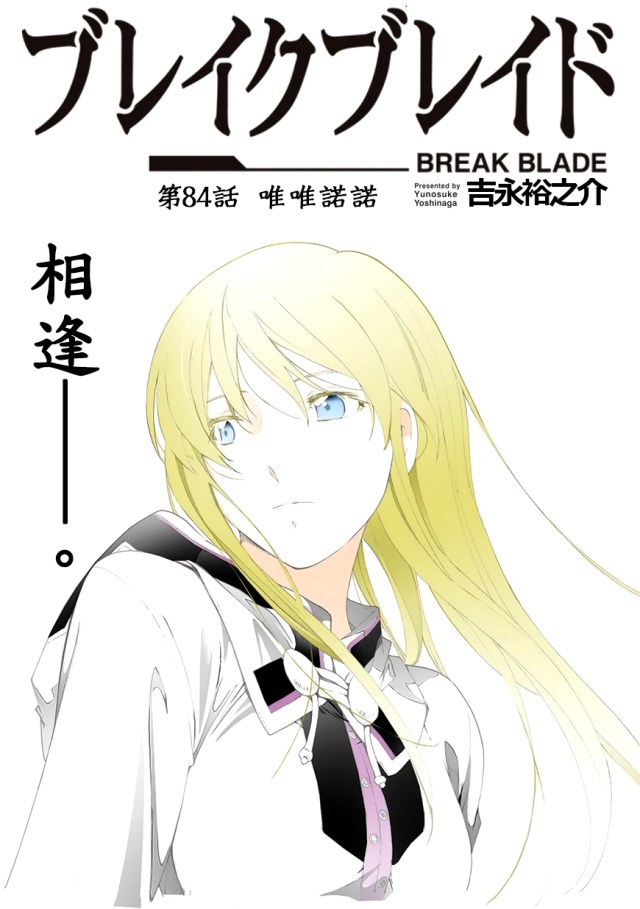
Also the name of chapter 84 of the Broken Blade manga, but you knew that. Yes, yes you did.

Posted in Japanese, Yojijukugo | Tagged , , , , , | Leave a comment

Fantasy GM tip: 100% definitely do let a neural network name your next inn.

I’m a follower of the lewisandquark blog, which is an intermittent dose of hilarity in which a neural network is trained to produce something like English – Harry Potter fanfic titles, death metal band names, new color names – and the blogger samples some of the best and worst results on our behalf.

A recent post was about pub names, and they’re just awesome. From “King Brad Inn” to “Rey Ofe White Bear Pivsing Jambork Hotel,” they’re very consistently a set of winners that would add massive color to any fantasy gaming setting.

Do your players want to drop serious coin on respectable accommodations? They can try the “Green Head Hotel.” Or perhaps they’re investigating a Gothic mystery and need to lodge at “Torn House Inn.” Or perhaps they’re on a diplomatic mission in goblin country and the only thing that doesn’t smell like a pig colon is the high garret at “Garled Blorge.”

Use them. Use them all! And for any party brave enough to spend the night at “Tivern” or “Moldy Goine” or “Old Hell Kick,” maybe reward them with a brand new spell chosen from this list here.

Posted in Miscellaneous, World-Building | Tagged , , , , | 1 Comment

When the cover-up actually is worse than the crime

李下に冠を正さず
(Rika ni kanmuri wo tadasazu; “Don’t straighten your hat below a plum tree”)

Definition:

Don’t do things that invite suspicion or misunderstanding. Even if you’re innocent, it’s best to avoid even the accidental appearance of guilt. If you reach up to adjust your hat below a plum tree, someone at a distance might think you’re stealing plums – so you’re advised to take care of the hat somewhere else just in case. For example, if you’re not guilty of crimes, it’s best not to act like you’re doing your best to obstruct justice in a desperate cover-up.

Breakdown:

We begin with the unusual compound noun 李下 (rika), “below a plum tree.” It’s marked as location by the particle に (ni), followed by the noun 冠 (kanmuri), often translated as “crown” but in this case referring to a more esoteric kind of headwear (although its use was likely restricted to the aristocracy). This noun in turn is marked as the object of a verb by the particle を (wo). And the verb in question is 正す (tadasu), “to correct” or “to straighten,” in imperfective form with a negative ending that could be interpreted as either conjunctive or sentence-final.

Notes:

This saying comes to us from a Chinese poetic collection predating the Six Dynasties era, known as the 古楽府 (in Japanese, Kogafu). It’s part of a longer phrase in which it follows 瓜田に履を納れず (kaden ni kutsu wo irezu), “Don’t adjust your shoes in a melon field.” Both phrases together can be boiled down to the four-character compound 瓜田李下 (kaden rika).

The character 正 can be replaced with 整 without any change in meaning or pronunciation.

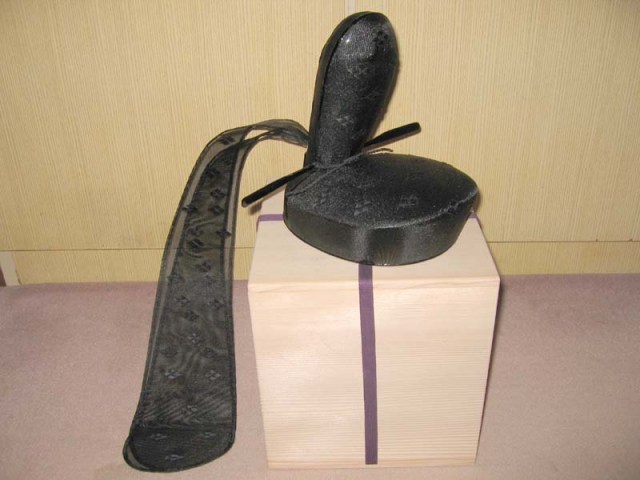
The original 冠 was a pretty funky kind of hat:

Kanmuri

Example sentence:

「ただの失敗だからこそ、隠さずに早く謝りに行った方が良いんだよ。瓜田に履を納れず李下に冠を正さずだからね」

(“Tada no shippai dakara koso, kakusazu ni hayaku ayamari ni itta hou ga ii nda yo. Kaden ni kutsu wo irezu rika ni kanmuri wo tadasazu dakara ne.”)

[“All the more because it was just a mistake, you should go apologize right away instead of trying to cover it up. You don’t want to accidentally make yourself look guilty of real wrongdoing, after all.”]

Posted in Japanese, Kotowaza | Tagged , , , , , , , | Leave a comment