Magic Monday – Draw a line in the sand

Barrier Rod

A rod of strange metal with the unusual property that it defines a plane in local psychic space through which certain things – usually sentient beings – may not pass. The rod must be placed against a surface in order to activate, and the plane stands out perpendicularly from that surface. Anyone in possession of a Barrier Rod may attune to it in a a ritual that involves spilling a single drop of blood and thereafter pass by freely regardless of whether it is active or not. Other rituals exists that can remove an attunement, but the easiest of them to perform require significantly more than a single drop of blood.

Barrier rods are about one finger’s thickness and one forearm’s length. Blue-black Barrier Rods affect beings that exist primarily in the mortal realm, while silvery-white Rods affect those that exist primarily in the Shadow. Rods that affect Dream are translucent like frosted glass, despite being metallic in feel and other properties. Rods that affect the Faerie realm are iridescent, and glitter in even the weakest light.

The value of a Barrier Rod for defense is not to be underestimated. The imperial family of the Slakiv Empire is known to possess and use at least two, although the real number is higher. It is said that Rysyd was brought into the Empire’s hegemony through negotiation rather than war because spies reported that the territory’s lords were sponsoring the masters who crafted them. Despite this, the true origins of the Rods is much disputed. It is unknown how many exist of each kind, whether they are still being made, whether the secret of their manufacture has been lost or not, or even whether they originate in the mortal realm.

Posted in Rules, Setting, World-Building | Tagged , , | Leave a comment

A saying from Ni no Kuni?

Speechlessness of the White Witch

二の句が継げない
(Ni no ku ga tsugenai; “A second word can’t follow”)

Definition:

Being dumbfounded. In a state of such complete shock or surprise that you can’t get words out even if you feel like you should probably say something.

Breakdown:

We begin with number (ni), “two,” connected by associative particle (no) to noun (ku), “phrase” or “section of text.” In this case, the combination 二の句 is a set phrase meaning “another word,” “the next word,” or “answer.” This noun phrase is marked as our grammatical subject by the particle (ga). Finally, the verb in this short but complete sentence is 継ぐ (tsugu), “to follow after,” in negative potential form.

Notes:

Replacing the verb with 告げる (tsugeru) – the negative form of which becomes homophone tsugenai – is an error. However, the negative form 継げない may be replaced with an older-fashioned-feeling 継げぬ. (This doesn’t mean that the saying uses classical grammar, though! In that case we’d be using the imperfective form and getting .)

This phrase is thought to originate in a serial novel from the early 1900s called 『或る女』 (Aru onna), A Certain Woman, perhaps in relation to the difficulty of properly chanting the second verse of a triad in a certain style of poetry recital.

Example sentence:

「厚顔無恥にも現実にそぐわない発言を何度もする政治屋に物申したかったが、二の句が継げないほどあっけにとられてしまいました」

(“Kouganmuchi ni mo genjitsu ni soguwanai hatsugen wo nando mo suru seijiya ni monomoushitakatta ga, ni no ku ga tsugenai hodo akke ni torarete shimaimashita.”)

[“I wanted to object to the the politician who time and time again, shamelessly said things that didn’t line up with reality, but I was so taken aback that I couldn’t get the words out.”]

Posted in Japanese, Kotowaza | Tagged , , , , , | Leave a comment

A GOP Parable: You Reap what you Boar

When Jesus arrived at the other side, in the region of the Gadarenes, he was met by a demon-possessed faction coming from the swamp. They were so obstructionist that no useful governance could pass that way. “What do you want with us?” they shouted. “Have you come here to torture us before the appointed time?”

Some distance from them a large pig was feeding. The demons begged Jesus, “If you drive us out, send us into the pig.”

He said to them, “Go!” And all of that faction’s inner demons came out and manifested in the pig. After clinching the nomination, the swine immediately rushed off the deep end, thrashed, floundered, and drowned. Those who had been attempting to tend and spin-control the pig fled. They went into the town and reported all this, including what had happened to the demon-possessed Speaker and Majority Leader. Then the whole faction went out and pleaded with Jesus to depart. He was only useful to them as a name, while his actual teachings and actions were deeply harmful to their ambitions of earthly power.

Posted in Musing, Nonfiction, Short Fiction | Tagged , , , | Leave a comment

Not even a loss leader

二束三文
ni.soku.san.mon

Literally: two – bundle – three – mon (an obsolete, very small unit of currency)

Alternately: Dirt cheap. Something so cheap that even selling it in huge volumes doesn’t make it profitable. Selling two pairs of sturdy woven sandals for only three mon.

Notes: Some versions of this saying use 足 – a standard counter for footwear – rather than , although it’s not clear which version came first. In any case, the phrase seems to be based on a real-world example of rock-bottom-price footwear in the Edo era, although probably not really for exactly three mon, since that particular amount can be found in a number of other phrases and seems to be a stock amount representing “cheap.”

NiSokuSaleTime

Who cares about profit? We just want to get this crap off our shelves!

Posted in Japanese, Yojijukugo | Tagged , , , , | 1 Comment

I learn by going where I have to go

習うより慣れよ
(Narau yori nareyo; “Experience over learning”)

Definition:

It’s easier to acquire knowledge or learn a skill by practicing it firsthand than through simply being taught. Hands-on study beats abstract learning methods like lectures or book-reading.

Breakdown:

We have two verb phrases and a particle here, yet it’s still a full sentence! The first verb is 習う (narau), “to study,” “to learn (from a teacher).” The verb is in prenominal form so that it can be followed by the particle より (yori), “more than,” “rather than.” The particle points to, and thus devalues, 習う in favor of the following verb, 慣る (naru), which appears in imperative form. (Note that the modern “base” form of this verb is not 慣る but , nareru.) Note that while the imperative form makes this phrase into a command rather than an assertion, I’ve mostly heard it used tangentially rather than directed at someone with imperative intent.

Notes:

The modern imperative form of the second verb, 慣れ, may also be used. (For that matter, 習う is the modern form of a verb that would previously have been 習ふ, but that’s more a matter of orthography than grammar.)

I’ve had a number of discussions about this idea in a pedagogical context, and my first impulse is to become annoyed at people who undervalue or even scornfully reject classroom learning: an organized, theory-based course of study can be invaluable for most people in learning most topics, even practical manual skills! That said, clearly a balance is best. These days, even our most abstract ideas, such as mathematics and philosophy, tend to be taught with hands-on methods like homework problems or group discussion of ethics problems. So I’d say that in the end, there is no true conflict. You get a book or a teacher, or both, to make concepts or skill sets accessible, and then you get personal experience in order to make them stick.

Example sentence:

「百点満点で筆記試験に合格しても、実施試験に落ちたらやっぱり運転できないんだよ。習うより慣れろと言うから、運転の練習も頑張って!」

(“Hyakuten manten de hikki shiken ni goukaku shite mo, jisshi shiken ni ochitara yappari unten dekinain da yo. Narau yori narero to iu kara, unten no renshuu mo ganbatte!”)

[“Even if you got a perfect score on the written test, of course failing the practical means you can’t drive! As they say, you learn by doing, so get out there and practice!”]

Posted in Japanese, Kotowaza | Tagged , , , , , | Leave a comment

Toddler Linguistic Development: 語彙収集

The kid has been on a real growth spurt recently – in terms of his vocabulary. Despite our intent to use plenty of Japanese with him in order to raise him properly bilingual, we’re using both English and Japanese (and little bits and pieces of other languages) in front of him and with him somewhat indiscriminately. Add to this the English-language environment of his daycare, and the result is a kid who speaks his own unique pidgin that is probably more English than not.

I doubt that he makes much of a distinction between various languages yet, although I’m sure he’s noticed that they don’t use the latter at daycare. I would like to make sure as he gets older that 1. he grasps and uses the grammar of each language properly, and 2. he learns how to read and write Japanese, despite its labor-intensive learning process. (Or even because of that, perhaps. If he can develop the self-discipline that Japanese writing practice demands, then he’ll be in good shape for many of life’s challenges.) In any case, here are some of his new words:


Traan – “crayon.” He has a box of crayons in eight colors. He also has a coloring-book, but his favorite activity so far has been to take the crayons out of their box and then put them back in.

Nounoru (乗る). This means “to ride,” and he primarily uses it to ask us to take him out on a bicycle ride. This has been a habitual evening activity lately, since his mother is still learning to ride. She’ll be using this new skill, starting next Monday, to commute to campus and back for the summer session.

Aadchaʔ – “woodchuck.” Note the glottal stop. There are a couple of fields along our usual evening bicycle route that house woodchucks, with about half a dozen in one and perhaps a pair in the other. The kid is very into woodchucks, and commands me to chase them down when we see them. They are not amused.

Gama – (ガマ, or 蟇 if you want to be fancy). “Toad.” I caught one the other day and kept it in an empty peanut butter jar we had lying around (empty plastic jars being one of the kinds of toy we keep around for the kid to amuse himself with) until the kid came back from daycare. Unlike many of the other animals he meets, he seemed really nervous about the toad, keeping away from it and generally being on his guard even though I was pretty casually picking it up and moving it around. Eventually he touched its back a couple times. In the evening we released it back into the woods and said bye-bye gama.

Haihae (蠅). “Fly” (the animal). I managed to stun and capture one and we fed it to the gama.

Eeʔ – “eat.” He seems to mostly use this to express things that other people eat, or as an imperative. So he’ll talk about how the gama ate the hai, or say “Papa, eeʔ!” and give me the part of his snack that he doesn’t want. When he wants to eat something, he simply asks for the thing.

Shiʔ – “sit.” This is another imperative. He responds just fine to the Japanese equivalent, 座る (suwaru), but doesn’t try to say it himself. He’s gotten very insistent recently about having one of us sit with him on the floor for certain activities, such as traan time.

Aabui – “RV,” as in “recreational vehicle.” We see these occasionally while out and about. He used to call them buses, but I corrected him and he seems to enjoy pointing them out now.

Pyun pyun – as close as he can get to pyon pyon (ピョンピョン), a Japanese onomatopoetic word for hopping. Both bunnies and gama go pyon pyon.

Momo – (桃). “Peach.” They’re in season, so we’ve been eating a lot of peaches recently, along with grapes and mangoes.

He can say all of the above (and several others that I’ve forgotten, no doubt) as well as the names of several of the other kids in his class. (One of them he just calls “baby.”) In addition, there are a number of Japanese words that he can clearly understand, although I haven’t heard him try to say them yet, such as 寝る (neru), “to lie down” or “to sleep” and 立つ (tatsu), “to stand up.”

Most interesting of all, he’s starting to chain words together. So he’ll hold out a slice of peach and say “Momo, eeʔ!” It’s all very exciting!  8^D

Posted in Musing, Nonfiction | Tagged , , | Leave a comment

A Buddhist “Oy Gevalt!”

南無三宝
na.mu.san.bou

Literally: phonetic “na” – phonetic “mu” – three – treasure

Alternately: Roughly equivalent to “Oh my God!” in Western exclamatory parlance, this phrase is supposedly used to invoke the aid of the Buddha when one has messed up. My sources all use the term 失敗 (shippai; “mistake”), suggesting that the phrase is used in times of personal failure rather than in the face of the world’s external vicissitudes. It also seems that the phrase is best used when one is caught off-guard by one’s errors, rather than when they’ve been seen coming for a while.

Alternately, this phrase may be invoked for divine protection, to ensure success in a risky venture.

Notes: This deeply Buddhist phrase is obviously not going to be used very much in modern, secular society.

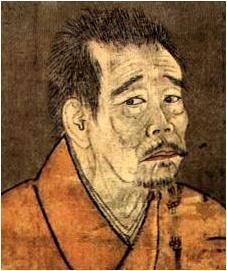
Namu is a transliterated Sanskrit word; apparently it means something like “Hail,” and is often used before the Buddha’s name to indicate respectful address. The phrase seems to have been popularized somewhat by a 1975-82 anime series about a precocious Zen monk folk hero called Ikkyū. Sanbou, as one can guess from the literal meaning of the characters, refers to the “three treasures” of Buddhism: the Buddha, the sutras (or, the Buddha’s teachings), and the priesthood (who spread those teachings).

Portrait_of_Ikkyū_by_Bokusai

You could do a lot worse for help than this guy, actually!

Posted in Japanese, Yojijukugo | Tagged , , , , , , , | Leave a comment

Something something Tokyo University

灯台下暗し
(Toudai moto kurashi; “Beneath a lamp is dark.”)

Definition:

It’s surprisingly easy to be ignorant about things or events close-by. We are most blind to what is under our very noses. “Go abroad to hear of home.” The image is based on a standing (rather than hanging) lamp, which naturally blocks its own light with its own base.

Breakdown:

This verbless, particle-free sentence begins with the noun 灯台 (toudai), literally “lamp pedestal.” The term can refer to a lighthouse, or to an old-fashioned interior lamp with a wick floating in a bowl of oil on a stand; in this case the latter is the image being invoked. This is followed by an unusual adverb: . In modern usage, the character on its own is often pronounced shita and acts as a noun. But here it’s pronounced moto, and acts as an adverb meaning “under” or “below.” This adverb modifies the adjective 暗し (kurashi), “dark,” which appears in sentence-final form.

Notes:

Even knowing the meaning of the phrase, it would be easy to assume that the moto is homophone , “foundation.” This substitutes a noun for the adverb, though, and is considered an error. On the other hand, using (an alternate form of ) is acceptable.

My sources are pretty vague here, but this saying seems to trace back to the writings of Mencius, perhaps by way of a later text called the Helin Yulu, although the precise source is unclear.

Example sentence:

「マジかよ、家の妹が俺の親友とデートしてて、ずっと気づかない自分ってどんな馬鹿だよ」 「ドンマイ、ドンマイ。灯台下暗しってまさにそのことじゃないか」

(“Maji ka yo, uchi no imouto ga ore no shinyuu to deeto shitete, zutto kidzukanai jibun tte donna baka da yo!” “Donmai, donmai. Toudai moto kurashi tte masa ni sono koto ja nai ka.”)

[“Are you kidding me? My own sister and my best friend have been dating all this time; what kind of an idiot am I not to notice?” “Chill, man. It’s a textbook case of how it’s hardest to see what’s right in front of you.”]

Posted in Japanese, Kotowaza | Tagged , , , , , , | Leave a comment

That time we were all sick

What follows is a description of the progress of a disease. It’s nothing especially gruesome, but feel free to skip it if you’re feeling squeamish. I merely present our experience in the hopes that it will prove to be of use or interest to someone.

So it’s been about a month now since our run-in with hand, foot, and, mouth disease (hereafter HFMD) began. First the kid got a fever and was sent home, then that developed into a rash. This seemed like a normal diaper rash at first, but then it spread out with scattered red bumps on his legs and hands.

On Thursday his daycare sent him home again, with a warning that the rash might be HFMD and instructions to bring him in again when the rash was gone… and that was the day when I got the fever. I spent the morning feeling sluggish, and in the afternoon and evening, it was a struggle to remain useful or even conscious at times. When I called the pediatrician’s office, they told me that there wasn’t really anything that we needed to do for the kid beyond wait out his rash – that the virus is most contagious during the incubation and fever stages, that there aren’t any real treatments yet aside from managing symptoms. That, at least, was a relief.

My fever broke around 10pm on the same evening. About a day later, the actual hand-foot-and-mouth part set in. First there were scattered large blisters, about the size of a bean (in various sizes, so go ahead and imagine mixed beans, if you were about to get sassy!), on my hands and feet. This was followed a day or two later by an intense swarm of smaller red bumps, mostly on the knuckles of my hands. It became really unpleasant to touch… pretty much anything, including water. This peaked probably on the following Sunday. Which, coincidentally, was the day my wife came down with the fever and spent most of the day in bed. Fun times were had by everyone!

I spend as much time barefoot as I can (mostly in our apartment), and I guess thanks to that, the foot blisters weren’t as bad as the ones on my hands. The skin of my feet was simply tough enough to protect me from some of the sensitivity, and thick fuzzy socks helped as well, so that I was able to walk around. The only exception is a couple blisters that formed between my toes, which were more or less constantly unpleasant. But the main issue was the hands. I had to wash them at intervals throughout the day, and do various tasks to take care of the kid, and I actually managed to get some typing done because that was somehow okay. (Holding a pen or pencil, on the other hand, was right out.) Aside from the sensitivity, there was simply the matter of my hands looking pretty awful… I spent about a week doing my best to keep them hidden when I was out in public, just to avoid freaking people out.

Things generally got better after that. The kid was able to go back to daycare on Monday. Also from Monday, my own rash began to recede – starting with the bigger blisters that had appeared first – into flat dark-red patches. (I assume they were something along the lines of pools of lymph fluid, and my body’s defenses were dealing with them.) By the end of the second week, I was pretty much back to normal functioning.

Ever since then, though, we’ve been riding the long tail of the disease. The blistered areas grew new skin, and as they did so the old skin began peeling off – first one my hands, then on my feet. As I write this, my hands are essentially back to normal, but my feel are still peeling in patches. It’s not painful or especially unpleasant, just a little weird-looking and inconvenient.

All in all, I wouldn’t recommend catching HFMD if you can help it. It’s not the worst out there by a long shot, but it is intensely inconvenient for several days, and its aftereffects can linger for weeks. The good news is that apparently antiviral treatments for it are being developed.

Posted in Musing, Nonfiction | Tagged , , , , | Leave a comment

Executive incense?

(No, that would be 独断線香.)

独断専行
doku.dan.sen.kou

Literally: alone – sever / decide – exclusive – go / act

Alternately: Deciding what to do, and then doing it, all on one’s own without consulting anybody else. Acting arbitrarily or willfully rather than in accordance with consensus.

Notes: In the US, we place a high value on individualism and decisive action, and our media routinely glorify loners who break away from the pack to do what they think is right. In Japanese culture, the concept of just doing what you want without at least making a show of gathering some sort of consensus is viewed in a much more negative light – it’s selfish, arrogant, and often leads to bad results.

Writing senkou as 先行 (“going first,” “seizing priority”) may feel thematically apt, but is considered an error.

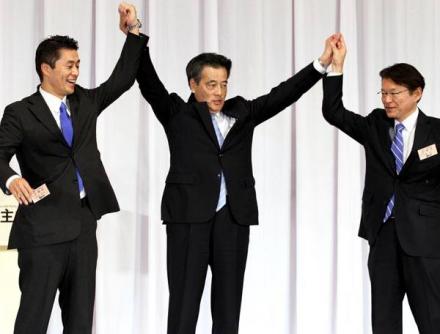
DokuDanDang.jpg

Oh, snap! Political commentary!

Posted in Japanese, Yojijukugo | Tagged , , , , | 1 Comment