Call it the “Holmes Hook.”

鎌を掛ける
(Kama wo kakeru; “to catch on a sickle”)

Definition:

Talking casually to someone in a way that leads them to give you information you wanted, such as their true feelings about a matter, without needing to ask them for it directly. Asking leading questions, or tricking someone into revealing something.

Breakdown:

This brief phrase comprises only a noun, a verb, and the particle (wo) that marks the noun as the object of the verb. The noun is (kama), a one-handed sickle. The verb is 掛ける (kakeru). It essentially means “to hang (something on something else),” but by extension (or by confusion with various homophones) it has come to hold a wide array of other meanings. In this case, it seems to be used with the intended image of someone hooking someone else with the sickle to pull them closer.

Notes:

As has happened before, this is an idiom rather than a true “saying,” but also as before, I have included it because it pleases me somehow.

The origins of this phrase are unclear, with multiple conflicting and unconfirmed theories offered. Oddly, several of these seem to depend on both leaps of logic and on some object other than a sickle being referred to through dialect or linguistic drift as a かま. Complicating matters further, there seem to be a number of dialects which use the same idiom for a variety of more or less related meanings. One source notes wryly that it’s probably best to just take the simple image of a victim being hooked and pulled in as the origin, and leading questions as the meaning, in most cases.

This idiom is attested as far back as the early 1700s.

Example sentence:

ペラペラ喋っている真っ最中に、何度も何度も弁護士に鎌を掛けられたことに証人が気づいたようで、突然黙って口を利かなくなってしまった。

(“Pera pera shabetteiru massanaka ni, nandomo nandomo bengoshi ni kama wo kakerareta koto ni shounin ga kidzuita you de, totsuzen damatte kuchi wo kikanaku natte shimatta.”)

[“Right in the middle of their outpouring, the witness seemed to realize that time and time again they had had information drawn out of them by the lawyer’s leading questions. They suddenly went silent and refused to speak any further.”]

Posted in Japanese, Kotowaza | Tagged , , , , , | Leave a comment

Clues

Why did you do it?

Why? It was agreed. We all hated him. The professor and I had to play rock-paper-scissors to determine the privilege. You see, whenever the professor had to pause in a sentence to search for a word or phrase, he would tap the poor man on the head and call out ‘Dain bramage!’ and giggle. Insufferable, really. I cheated prestidigitorially to ensure that I would be chosen.

So you killed him because he was annoying?

Such a tepid word! A flaccid word. It should hang vertically from the page whenever it is written. ‘Insufferable’ is more serviceable; rewind your charming little voice-recorder if you doubt me. ‘Infuriating’ would also suffice. ‘Exacerbating.’ The man could scarcely have gotten under our skins more effectively had he been a subcutaneous injection.

Was there no other motive? What about his money?

Oh, I doubt it. That nasty young woman—heaven forbid I call her a lady—Ms. Scarlet might have stood to come into a pittance, but his estate was given over to the care and maintenance of his truly impressive collection of topiary.

You knew what was on his will?

We all did. The colonel had witnessed it, so we all knew the details that very night. If only that idiot lawyer had stayed, I’d have taught him a thing or two about shrubbery.

That was supposed to be menacing, rather than referring to my skill as a gardener, by the way.

Why that particular night?

The act, by its very essence, was unavoidable. His death was certain, lacking only an agent, a tool, and a site for the final anticlimactic battle.

‘Battle’?

As I said, anticlimactic. After three blows he was still berating me for my faults and complaining of his arthritis. ‘If only my knees were young, I’d show you a thing or two about how a real man fights,’ he said. It was as if he did not want me to have mercy.

But what happened that night? What was the trigger?

There was none, as such. You remind me of Mrs. White, you know. Not by virtue of being a homely middle-aged new-age heretic, as she is, but in your belief that prophecy must precede an event. Not so: some things are always happening, have always happened, will always have been happening. She attempted, repeatedly, to prognosticate his demise in the cards—she had an impressively elegant ‘The Simpsons’ tarot—but she always drew the ten of swords, reversed, and could never remember what it signified. For me, the matter was far simpler. I came to the kitchen for a snack before playing billiards. I opened a box of cereal but discovered that no milk remained to eat it with. It was then that I knew that it was the time.

Because there was no milk?

I would not offer my support to such a weak supposition, but I must admit that the fault can hardly belong to the wheat bran. You would never suspect anything high in fiber of having psychic resonance, although milklessness seems no less innocent.

How many people would you say were involved?

Other than those mentioned previously, there were only myself and milady Peacock. I have no idea what nationality her name implies, by the way. She may have been American, especially since it was she who brought the revolver. She always claimed that it was for hunting rabbits, but apparently her scattered brains had forgotten to bring live ammunition, so it was useful only as a bludgeoning weapon, and of those we had plenty. The butler, by the way, was completely innocent, as is probably proved by his death three days prior in a truly unpleasant accident involving hedge-shears and a hedgehog.

So you say that the butler’s death was an accident?

Sir, it cannot be doubted. I have long campaigned against the dangers posed to our civilian population by hedgehogs, but the papers are always too caught up in petty local politics to make space for the editorials I grace them with. There is an in-depth analysis at home in my safe, if your inspectors have not found it yet.

I see. And what was the butler doing under the privet bushes with a pair of shears?

Engaging in a losing battle against the prickly menace, unless (as is rather unlikely) he had developed a fondness for the taste or texture of the soft ends of newly grown grass. I tried to warn him on several occasions, and even showed him how a contraption might make use of the rope to remove the trimmer from danger, but he was too hardheaded and soft-kidneyed to live, it seems.

Back to the accomplices… you make repeated reference to there being six of you, but we can find no records of these others ever visiting him. In fact, they are all public servants like myself, private investigators, or civilian specialists who were brought in to help solve the murder. Are you sure that there were five others with you in the conspiracy?

Oh, we were all there. Always.

Where?


In the conservatory, with the candlestick.

Waiting.


Posted in Short Fiction | Tagged , , | Leave a comment

Four more seasons; another year

春夏秋冬
shun.ka.shuu.tou

Literally: spring – summer – autumn – winter

Alternately: Like it says: spring, summer, fall, and winter. All four seasons. A full year.

Notes: This one is very old, attested since at least the early 900s, and has been used a number of times in connection with poetry.

You may recall from a couple of weeks ago (last year!) when I mentioned that the Japanese year used to begin in the spring. Unlike contemporary Western calendar years, which roll over somewhat arbitrarily in early winter, for a long time the Japanese new year (cribbed off of the Chinese new year) occurred in what we think of as February or so, at the start of what was officially considered spring for various official and aesthetic purposes.

Japanese people will often, with little provocation, tell you somewhat emphatically that “Japan has four seasons,” as if the rest of the world didn’t. It’s easy, when you’re from a temperate enough climate to also have four seasons, to be nonplussed or amused or offended. I suppose, to cast a positive light on the custom, it’s worth taking as a reminder that even though different cultures from all around the world share the “four seasons” concept, that the details and meaning of those seasons – the cultural packaging, if you will – varies. “Spring” for the Shining Genji began about a month earlier than it does for me, and the way he celebrated it was vastly different from my own mild attention. Even modern Japanese 大掃除 (oosouji), “big cleaning,” is different from the equivalent Western concept of “spring cleaning.” Just something to keep in mind to guard against false equivalence, I guess.

HNAFMI Itonaga Cover

Here’s a contemporary example of a poetry collection that references this compound, albeit with Japanese rather than Chinese readings of the characters.


Posted in Japanese, Yojijukugo | Tagged , , , , , , | Leave a comment

Magic Monday – “Um, I like your nose.”

Snuffer’s Mirror (A Spell to Change your Face)

Many dedicated wizards can take on at least one animal form. A change of appearance while retaining human shape, however, requires this difficult spell. Because of the potential for abuse, many governments heavily restrict access to knowledge of how to work this magic, and magi of the Order are generally happy to cooperate. Field agents of the Slakiv imperial court, in contrast, can almost always expect to be given access and even special training in its use. The magician must capture the image of someone’s face in a reflective surface that was prepared beforehand using the first part of the spell. After this, anyone in possession of the mirror may use the second part to change their own face to match the appearance it reflected, for a time. It is said that an advanced version of the spell uses a full-length mirror and allows more than just one’s face to be changed.


The mirror-preparation has a base difficulty of d12, and requires three each of fatigue and strain. Using an enchanted mirror reduces the difficulty by one step. The face-changing spell has a base difficulty of d8. It takes its toll in the form of one strain each time a new face is assumed, but if it is maintained for extended periods of time, a foreign face will have a cumulative cost, about every hour, of additional strain equal to the number of hours (i.e. the fourth hour will cost four strain). Swapping faces with a willing partner, rather than copying the face of a potentially unaware or unwilling victim, reduces the difficulty by two steps. Changing one’s face for exactly 24 hours without any strain beyond the initial point increases the difficulty by two steps.

There exists a full-body version, but it requires a full-length mirror, increases all difficulties by a step, and doubles all costs.

Posted in Rules, Setting | Tagged , , , , | 1 Comment

Baby steps to victory!

Another thing to keep in mind as we make resolutions and head into the new year.

一日一字を学べば三百六十字
(Ichinichi ichiji wo manabeba sanbyakurokujuuji;
“If you learn one character a day, three hundred sixty characters”)

Definition:

If you study just a little bit each day, the learning accumulates and eventually one has a substantial body of knowledge or skill built up. If you learn just one new kanji every day, you’ll acquire 360 in a year. If you decide to do a thing, persistence is the most important part of success.

Breakdown:

This one is not a sentence, so we’ll approach it left-to-right.

We begin with a number plus noun, 一日 (ichinichi), “one day.” This is followed by another number and noun, 一字 (ichiji), “one [written] character.” The character is marked as the object of a verb by the particle (wo). The verb is 学ぶ (manabu), “to study” or “to learn,” in conditional form; this gives us “If you learn one character per day.” And everything that follows is another number-noun combination: 三百 (sanbyaku) is “three hundred,” 六十 (rokujuu) is “six ten” (i.e. sixty), and as above (ji) is a written character. Just to be safe, let me clarify: in this context, a “character” is a single written mark. An English letter is a character; a numeral like “9” is a character; and Japanese kana and kanji (e.g. , , and ) are characters.

Notes:

Apparently this saying comes from a Kamakura-era study-book for young children (ages 7-15) called 『童子教』 (doujikyou). The text seems to have originally been written in kanbun, an adapted and annotated writing style based on Chinese, which could explain the relatively terse grammatical structure.

It may seem a little strange that a year would be characterized as 360 rather than 365.2425 days, but keep in mind that in the old days, Japan used a lunisolar calendar that was calculated by special government offices. The actual number of days in a given year must have varied.

Example sentence:

「諦めたいと思うときこそ、一歩だけでも頑張って前へ進むべきだよ。一日一字を学べば三百六十字って言うし」

(“Akirametai to omou toki koso, ippo dake de mo ganbatte mae e susumu beki da yo. Ichinichi ichiji wo manabeba sanbyakurokujuujitte iu shi.”)

[“It’s exactly when you feel like giving up that you have to make yourself take even just one step forward. As they say in Japan, if you learn one character each day, you’ll learn 360 in a year.”]

Posted in Japanese, Kotowaza | Tagged , , , , , , , , | 1 Comment

Some thoughts on resolutions

It’s January first of a new year… what are your resolutions? What are my resolutions?

There are a few things I’d like to change about how I structure my life. But first I’d like to talk a little about “resolutions.” Probably nothing you’ve not heard before somewhere else, but this is my spin.

Our culture seems to be full of humor specifically designed to subvert the idea of bettering yourself. The newspaper comics around this time of year are full of cynical declarations that this character or that will be breaking their resolutions within at most a week of making them, or moaning that there’s no point in making resolutions at all. The memesphere is full of paired image macros declaring that gyms are empty but will fill soon, presumably to empty out again by the end of the month.

The impetus behind all these ideas is understandable. The newspaper comics are invoking a trope to lampoon human foibles, while the macros are a protestation by regular gym-goers over the violation of “their” space by outsiders who don’t understand the rules and don’t hold the same values. By the same token, though, these ideas are reprehensible.

The newspaper comics are invoking a trite cliché that was boring years ago instead of trying to say anything new or interesting or truly humorous. Worse, someone struggling to keep their resolutions who is exposed to that sort of defeatism isn’t likely to be strengthened in their resolve to do what’s best for themselves. Instead, they’re likely to take the perception that “nobody keeps their resolutions” and use it to excuse failure on their own part. After all, if resolutions are meant to be broken, why would I go to extra effort to keep mine? Especially if, as one strip suggested, daring to keep your resolutions only opens you up to catty, resentful hate from your friends.

The gym meme smacks of the worst kind of parochialism. If someone comes to your gym and pays the entree fee, they have as much right to be there as you. (This goes double if it’s free!) If someone is genuinely trying, they should be encouraged. If someone isn’t doing it correctly, they should be taught. Yes, even if the rules are written on the wall – our society is full of metric face-tons of advertisements incomprehensible legalese, and these teach us every day to ignore signage when possible. Just because somebody started coming to the gym at the start of a new year doesn’t mean they shouldn’t actually be there, and any problems stemming from someone’s newness could easily be overcome with a little communication and patience, to the ultimate benefit of your community.

Long story short: our society seems to work hard to encourage a cynical, disparaging attitude toward both others and ourselves, and that’s a shame. A resolution is an opportunity to improve your life, and with a little perseverance it can work. If you make a resolution, stick to it! You’ll be happier in the long run!

Despite this screed, I’m not spending a lot of time or thought on resolutions for myself this year. Why not?

Because I’m not limiting myself to January first on the Gregorian calendar, that’s why. In recent years I’ve had a number of issues with how my life is going, and thought of a number of steps for moving it concretely in a positive direction… and I’m trying to take action as soon as such a thought occurs to me. The regular kotowaza posts on this site sprang from a dual desire to study more Japanese and to make myself write more on a regular basis. The yojijukugo and Magic Monday posts were added for the same reason. There are other things that don’t show up on the blog, of course.

As I said at the start, my reactions here may all be things you’ve heard elsewhere. I guess what I’m trying to say is, don’t let yourself be limited by social Zeitgeist. If the new year isn’t a good time for you to change up your routine, then don’t. If you do, don’t let defeatism or xenophobia discourage you. And if you find yourself wanting to change your routine at any other point in the year, then do it. A June resolution is no less valid than a January one. “You do you,” and all that.

Posted in Musing, Nonfiction | Tagged , , , , | Leave a comment

Boars ain’t boring

猪突猛進
cho.totsu.mou.shin

Literally: boar – pierce – wild – advance

Alternately: A headlong rush. Reckless, thoughtless behavior. Charging forward without thinking or looking ahead. Acting with all the foolhardy and fury of an angry boar.

ChoTotsuMouShinGirlImg

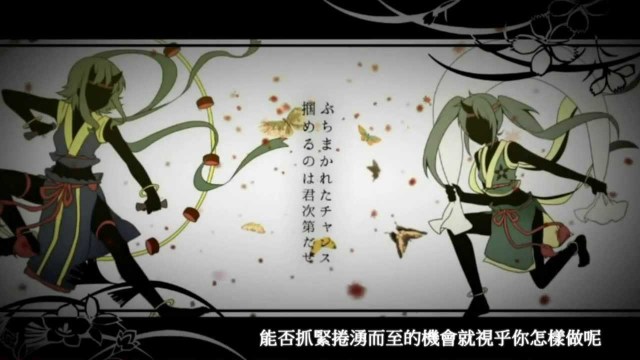
From a high-paced song called “Chou totsu mou shin girl.” It strikes me as being very, very Japanese in a pop-culture sort of way. The character seems to be popular, since she was in many of the top Image search results.

Posted in Japanese, Yojijukugo | Tagged , , , , | Leave a comment

Magic Monday – An anti-spell spell

Soft-Hand Ward (Unweaving)

Although generally thought of as a complement to the Strong-Hand Ward, this magic-working is substantially different, to the point where some scholars argue that it isn’t a “spell” at all. Instead, a magician who detects other magic being worked nearby may attempt to unweave it. The act is not undertaken lightly, though, as it increases the danger for both parties.


The base cost in energy is equal to the base cost of the spell being undone, and requires a challenge roll of the un-weaver’s Gnosis skill (plus their skill in the spell, if any) against the weaver’s relevant skills.

* A tie on the challenge roll indicates that the spell is successful, but that the un-weaver is spared its effects.

* Beyond this, each degree of success by the un-weaver increases the difficulty of the spell check by one step and its initial energy cost by one strain. The weaver may choose to end the magic safely after paying only the normal initial cost, but must roll a Psychic save at the modified difficulty or be stunned for the rest of the scene. Alternately, the unweaver may protect additional specific targets (as they are protected in a tie) at the cost of one fatigue per target; in this case, additional degrees of success halve the extra cost.

* If the weaver defeats the challenge by more than one degree of success, they un-weaver is afflicted as if they had failed a check to cast the spell themselves. If the defeat is by more than three degrees of success, then the un-weaver is afflicted as if they had critically failed.

Posted in Rules | Tagged , , | Leave a comment

A minute’s plan in the first second

Here’s a New Year’s Resolution for you!

一日の計は朝に在り一年の計は元旦に在り
(Ichinichi no kei wa asa ni ari ichinen no kei wa gantan ni ari;
“A day’s plan in the morning; a year’s plan on New Year’s Day”)

Definition:

Planning and preparation should be done well in advance of when they are needed. A year’s plans should be made on the first day of the year. If you only decide how to do a thing as you’re doing it, your work often becomes slapdash and haphazard; it’s better to be ready before the work itself begins if you want your work to go well. The beginning is the most important part of any undertaking.

Breakdown:

This is a pairing of parallel structures. We will begin with the first one, examined from right to left.

Our governing verb is 在り (ari), “to be.” The particle (ni), here acting as a positional marker, connects the verb to the noun (asa), “morning.” The topic marker (wa) tells us that the rest of the clause will be a single noun phrase describing what is situated in the morning. The primary noun of this phrase is (kei), “plan.” The associative particle (no) tells us what kind of plan it is by attaching it to the number-noun combination 一日(ichinichi), “one day.”

The latter half is identical except for replacing “day” with (nen, when you count them), “year,” and “morning” with 元旦 (gantan), the first day of the new year (or even specifically the morning of that first day).

Notes:

Either half of this kotowaza may be used on its own. In fact, at first I was only aware of the latter half, about the year; the former half was found and added in the course of researching this post.

may be pronounced hakarigoto, and may be pronounced ashita, without any change in meaning. I suspect that the feeling given by using these pronunciations is more old-fashioned or poetic; they are not standard in modern Japanese. The original version of this saying, apparently from a sort of almanac called the 月令広義 (Getsu.ryou.kou.gi), used the character (ashita), “morning” in place of and (haru), “spring,” in place of anything explicitly indicating the new year. Keep in mind though that in the old Chinese-style calendar, the first day of the year occurred in February or so and marked the beginning of the spring season.

On the other hand, 元旦 may be replaced with 元日(ganjitsu), “the first day of the year” or 正月 (shougatsu), “the first month / the first three days / the first day – of the new year,” without any significant change in feel.

Example sentence:

一年の計は元旦にありと言わんばかりに、啓司が見事で複雑な新年の抱負の計画を立てた」

(Ichinen no kei wa gantan ni ari kara to iwan bakari ni, Keiji ga migoto de fukuzatsu na shinnen no houfu no keikaku wo tateta.”)

[“Keiji developed a marvelous, complicated strategy for his New Year’s resolutions, as if to say that a year’s plan belongs on its first day.”]

Posted in Japanese, Kotowaza | Tagged , , , , , | 1 Comment

Much more acceptable than “never sleeping, never eating”!

It’s a bit late, but this one caught my eye while I was in the throes of writing for a term project. I may need it as my thesis work kicks into high gear….

不眠不休
fu.min.fu.kyuu

Literally: no – sleep – no – rest

Alternately: Ceaseless effort. Working on something day and night, without stopping for sleep or even rest.

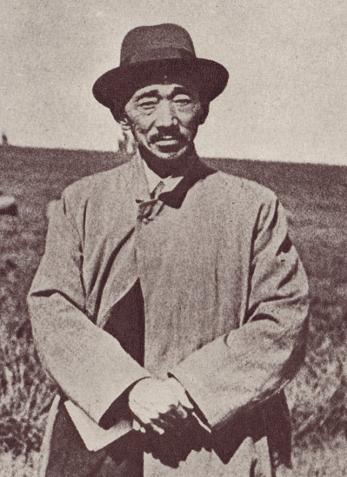
Notes: This compound seems surprisingly recent in origin, only attested since 1922, when it was used in this essay by Torahiko Terada.

FuMinFuKyuu Terada

This guy! He kind of looks like he needs some sleep, actually.

Posted in Japanese, Yojijukugo | Tagged , , , , , | Leave a comment