Magic Monday – Better than the colors of the wind

Earth Brush

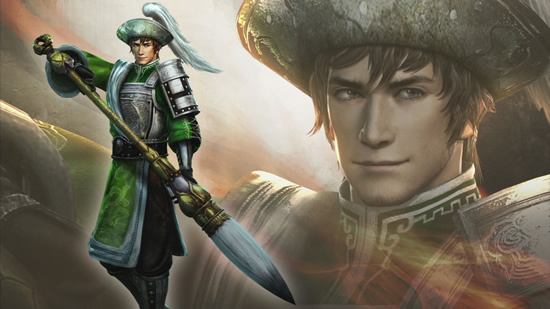
This magic item comes to us from the earthenware works of Pertasofolos Lan: a writing-brush as long as a grown man is tall. It can be used like any other brush, for oversize calligraphy, but its true power is in “painting the earth.” If dipped into an earthenware pot containing a given kind of stone or soil and then applied to a surface, it will cover that surface in a layer of the same kind of stone or soil. The source material in the pot is never depleted, but the brush must still be dipped repeatedly, as if the pot were filled with ink and normal (oversize) calligraphy were taking place. The resulting layer of earth is about a finger’s thickness, but it may be painted over with more layers. Perhaps the most magical aspect of this brush is that – no matter what it is dipped in – it is able to take up a new medium without the need for washing in between.

Originally eight such brushes were known to exist, but several have been lost or destroyed. At least one is owned by the High Court of the Tal, where it is used in the maintenance of the Court’s extensive garden complex.

Brush Guy

Like this one… minus the smarmy idiot.


(The name for this week’s magic item comes from The Forge.)
(Image source here.)

Posted in Rules, Setting, World-Building | Tagged , , , , | Leave a comment

Thank you Mario! But…

Bowser is in another castle?

敵は本能寺にあり
(Teki wa Honnouji ni ari; “The enemy is in Honnou Temple”)

Definition:

One’s true purpose is “elsewhere.” Someone’s true goals are not what they were stated to be – not because they were confused about what they wanted, but because they were lying to gain a tactical advantage.

Breakdown:

This complete sentence begins with the noun (teki), “enemy,” emphasized by the particle (wa). Next we have the proper noun 本能寺 (Honnouji), a Buddhist temple in Kyoto that has stood since 1415… and which saw a pivotal event in the wars of the Sengoku period. Anyway, this place name is marked by the location particle (ni), and the whole is capped by the verb あり (ari), “to be,” in sentence-final form.

Notes:

The Honnouji Incident is a famous betrayal, referenced time and time again in Japanese culture. Oda Nobunaga, one of the major warlords of the time, sent a general named Akechi Mitsuhide to help prosecute a siege on a castle. But Akechi marched his forces by Kyoto, where Oda was stopping over in the temple. For reasons that are still a matter of speculation, he is said to have betrayed his master by declaring “The enemy is in Honnou Temple” and ordering his troops to attack. Oda eventually set fire to the rooms he was staying in and committed seppuku. You can see a little dramatic animation describing the incident in this Extra History video, part of a multi-video series about the Sengoku period.

It is acceptable to write the final verb with the kanji 在り.

The saying also exists in yojijukugo form, as 敵本主義 (teki-hon-shugi), meaning a policy of hiding one’s motives from one’s enemies until the last moment.

Example sentence:

「この子、凄いな。公園で遊ぼうと言ってたくせに、敵は本能寺に在り、本当の狙いはアイスを買ってもらうことだった」

(“Kono ko, sugoi na. Kouen de asobou to itteta kuse ni, teki wa Honnouji ni ari de, hontou no nerai wa aisu wo katte morau koto datta.”)

[“This kid is amazing. He was all, ‘Let’s go play in the park!,’ but that was just a bit of misdirection – his real goal was to get me to buy him some ice cream.”]

Posted in Japanese, Kotowaza | Tagged , , , , , | Leave a comment

Tubular wiles

(A sharp-eyed reader has alerted me that yesterday’s yojijukugo is a repeat from last August! This is pretty embarrassing, but it also gives us an interesting glimpse into my writing process through the similarities and differences between the two posts. I’ll leave it be, then, and simply add a new one today to officially fill the te slot in our journey through the syllabary.)

手練手管
te.ren.te.kuda

Literally: hand – polish / train – hand – tube / control

Alternately: Techniques for tricking and manipulating people.

Notes: Both 手練 and 手管 refer to methods of trickery, so this is one of those 四字熟語 formed through doubling or repetition. Supposedly, the phrase originally described the various ways “pleasure women” manipulated their customers in order to maintain a high income. While this may suggest a literal reading of the characters, the “doubling” nature of the compound tells us that that path leads to folk etymologies, so we’ll say no more about it.

TeRenTogame

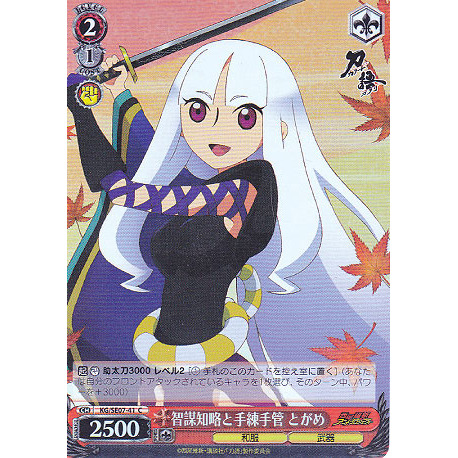
Togame, a character who fits the “manipulator” role in a surprising way. From the light novel series Katanagatari, which was later adapted into an anime… and a card game?

Posted in Japanese, Meta, Yojijukugo | Tagged , , , , , | Leave a comment

Everybody was cabbage-frying; those spatulae were fast as lightning

電光石火
den.kou.se-.kka

Literally: lightning – light – stone – fire

Alternately: As quick as lightning or sparks struck from a stone. Doing something with incredible speed, or something happening in an extremely short span of time.

Notes: Apparently some people replace 石火 with a homophone such as 石下, but this is an error.

This compound is attributed to a 13th-century history of zen Buddhism in China known as the 五灯会元.

DenKouKouShou

Also the name of a Hiroshima okonomiyaki restaurant chain, where presumably they take “fast food” to the next level. That dustpan-looking shape on the left is actually a spatula.

Posted in Japanese, Yojijukugo | Tagged , , , , | 2 Comments

Nail-biting suspense; nail-burning poverty

爪に火を点す
(Tsume ni hi wo tomosu; “To light one’s (finger)nail”)

Definition:

Extreme penny-pinching. To be incredibly poor, or just incredibly stingy with one’s money. Being unable to afford even a candle – or unwilling to buy one – and instead making light at night by setting flame to one’s own nails.

Breakdown:

This is grammatically a complete sentence, although you’ll usually see it as a clause or phrase in a longer sentence. The verb is 点す (alternately 灯す), (tomosu), “to light (a fire).” The particle (wo) marks as direct object of this verb the preceding noun (hi, rhyming with English pronoun “he”), “fire.” Finally we have the particle (ni) in its function as a location-marker, acting on the noun (tsume), “finger/toe nail.”

Notes:

It’s not uncommon to render tomosu in kana as ともす, and 灯す is a second valid kanji to use, but replacing tomosu with 燃やす (moyasu, “to burn”) is an error.

This is the entry for the Osaka iroha karuta set. One of my sources also ties it to Kefukigusa, an early Edo-period collection of haiku compiled by Matsue Shigeyori.

Example sentence:

「大学生と大学院生の時は、爪に火を点すほど貧しい暮らしをして来たので、外食ですらなんとも贅沢な気持ですよ」

(“Daigakusei to daigakuinsei no toki wa, tsume ni hi wo tomosu hodo mazushii kurashi wo shite kita no de, gaishoku de sura nan to mo zeitaku na kimochi desu yo.”)

[“As an undergrad and grad student, I was poor enough to burn my nails for light, so simply eating at a restaurant feels ”]

Posted in Japanese, Kotowaza | Tagged , , , | 1 Comment

Toddler Cognitive Development: Magical thinking and bicycle riding

The Magic Word

The kid is learning to say “please”! I’ve been making a point of prompting him when he asks for things or asks us to do things for him. First I try asking “What do you say?” (なんと言う?, nan to iu? in Japanese) in response to his request. If that fails, I remind him by saying “Please?,” and he repeats Pii? (the L sound is a work in progress, and while word-initial sh sounds are showing up, he has yet to figure out S).

Naturally, he’s caught on that Pii? prompts us to do what he wants (most of the time), and is in the throes of trying to figure out the details of how it works. Of course, there are things that even “please” won’t get him, and he gets upset when he runs up against one of these limits. There are also times when he opens with Pii? but without a clear referent, and we need to figure out what he’s actually asking for. I’m trying to use a lot of Japanese with him, so I’ve been asking 何? (Nani?, literally “What?”) when this happens.

The problem is that he seems to be interpreting that as a prompt rather than a question! He repeats Naani? back to me as if it were another “magic word” in the same vein as “Please.” Sometimes this ends up with him getting frustrated and tearfully going “What? What!?” in Japanese while we try to figure out what it is that he wants.

As long as we’re on the subject of magical thinking, he sometimes exhibits a sort of cargo-cult understanding of our habits. For example, I generally put on a cap or hat before going out. This has led to the kid, when he wants to get out of the apartment and walk around, trying to force the issue by bringing me my cap. It’s very cute, but he doesn’t seem to understand that he’s got the causality backwards.

Bike!

It’s spring, and the kid is almost two years old already, so we’ve finally gone out and bought him a bike helmet and had a child seat installed on my bicycle. (While we were at it, I had the bike shop give me a thorough tune-up to make sure everything is in top shape.) Things were ready yesterday, he’s been so excited.

He’d been taking notice of bicycles for a while, especially since our apartment complex rounded up all the old ones from the racks that nobody vouched for, and has them all chained up in the back of the parking lot. Anyway, the kid called bicycles Pa for a while. I have no idea why – we didn’t teach him that, at least not on purpose, and it doesn’t sound anything like “bike,” “bicycle,” or 自転車 (jitensha). But recently he’s started saying Bai’, so I’m assuming that they taught him the English word at daycare.

Even before things were ready for him to ride, we took him to the bike shop and let him choose the color of helmet he wanted – he chose red – and since then, that helmet has been his “hat” of choice when we go out for a stroll. (He tends to get bored, take it off, and give it to me to carry partway through… but simply choosing to put it on is dramatic for a boy who generally complains about hats even in the dead of winter!) Needless to say, he was very into things when we took a test ride last night, so much so that we went out for a forty-minute spin after dinner (arriving home, by a stroke of luck, shortly before it began to rain), and he requested more again today! I’m really glad, and looking forward to using it as much as possible, weather permitting.

It’s not a perfect set-up, of course. It’s a front-mounted seat, which allows me to wear a backpack but also forces me to splay out my knees somewhat while pedaling. I’m still getting used to the dramatic shift in balance and the slightly unwieldy steering. Fortunately, the baby seat can be detached smoothly for essentially-normal riding when I’m on my own. Biking with a kid must necessarily be slower and more methodical than biking solo.

But as long as it increases our mobility and he’s having fun riding, it’s all good! And it’s one of those little heart-warming moments that make parenting feel really worth it when he cranes his head back to look up at me and smile. ♡

Posted in Musing, Nonfiction | Tagged , , , , , | Leave a comment

Two tsu to you too!

津津浦浦
tsu.tsu.ura.ura

Literally: harbor – harbor – bay – bay

Alternately: Everywhere; every inch of the country; throughout the entire land (of Japan).

Notes: Naturally, this can also be written with the repetition mark, as 津々浦々.

This compound is somewhat unusual in that it uses only the native Japanese pronunciations of the characters (so-called kun readings); many compounds and many yojijukugo keep things short by using Chinese-derived pronunciations (on readings). The emphasis derived from doubling each character functions as a sort of plural in a language that technically has no systematic grammatical plural.

This compound is contrasting human-shaped ports and natural seaside. But the combination of littoral features coming to mean “everything in the whole country” goes to show how much Japanese culture has traditionally been one of open lowlands and the sea, rather than the forested mountains that make up so much of the archipelago’s land area.

TsuTsuUraTie

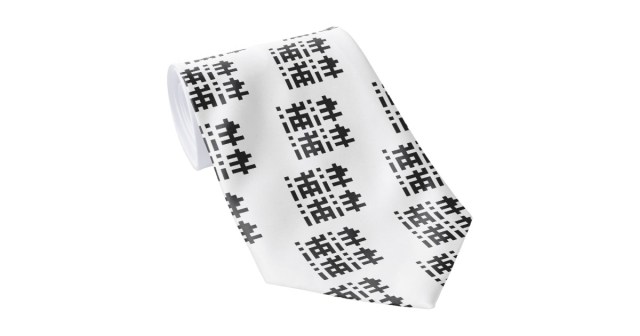
Now you, too, can own a tie emblazoned with this idiomatic expression meaning “everywhere” in cellphone-level pixelated text! (From zazzle.co.jp.)

Posted in Japanese, Yojijukugo | Tagged , , , , , , | Leave a comment

Magic Monday – the Sword of Life

(I’ve been slowly running out of steam on spell ideas for a while now… which is fine, all things considered. At some point it’ll be necessary to stop simply adding new things, especially when they start becoming variations on a theme, and start refining what already exists and integrating it into a larger whole. It’s probably time for “Magic Monday” to start opening up, and maybe even lead back into the game-system project it sprang from in the first place. For now, here’s an idea for a unique magic item – a sword – to inhabit a fantasy world and perhaps mess with the characters who live there a bit.)

The Sword of Life

A blade always slightly warmer than the ambient. Using it to strike a blow against a living thing gives the wielder a pleasurable tingle, and using it to kill a living thing (that has blood) gives a bit of a rush, although these feelings are often lost in the general adrenaline of combat.

The Sword of Life can be called upon to slay any living being it strikes, even from the merest scratch… but at the cost of permanently stealing the same amount of life from the wielder. Wielders slain in this manner are caught between life and death. Only the power of the sword prevents them from descending into putrefaction and a brief horrible stint as a zombie. This power is maintained by slaying a living being each day with the sword. (The living being must have the same style of blood as the wielder, so insects or plants won’t be sufficient if you’re a mammal!) Wielders are made aware of the danger by the onset of a terrible hunger – they intuitively know what must be done to preserve themselves, and their bodies urge them to take the necessary steps.

As long as this stream of sacrifices is maintained, the wielder remains eternally youthful, healthy, and their flesh feels oddly warm to the touch. This is the origin of the blade’s name. The blade’s history is filled with tales of horrible curses, vampirism, and tragic heroes.

(I gave this to a PC once while DMing a Pathfinder game; in that system, the cost of the blade’s power was one point of Constitution per hit die of the creature auto-slain. The player somehow managed to avoid discovering the cost until an epic battle against a high-level crazed evil wizard. They heroically beheaded him and immediately became an undead sword-wight. Fortunately the player was a good sport and rolled with the news. We spent the rest of the campaign dealing with the consequences, including a particularly tense day in which the party managed to trap themselves underground without anything to kill. Good times!)

Posted in Nonfiction, Rules, World-Building | Tagged , , , , | Leave a comment

Wearing your heart on your hat?

頂門の一針
(Choumon no isshin; “A needle in the scalp”)

Definition:

A warning, scolding, or prohibition that really hits home. An admonition that feels like a needle stuck into the “vital point” at the top of the head. Being told off so accurately and sharply that it hurts.

Breakdown:

This one’s a noun phrase, and the primary noun is combined with a number as 一針 (isshin) “a single needle.” Since Japan doesn’t require singular or plural to be specified, the number here acts to emphasize the kind of pain we’re invited to imagine: a single piercing point. This noun is joined by the associative particle (no) to another noun: 頂門 (choumon) – literally meaning “peak gate,” but on the concrete level, referring to the top of the head.

Notes:

The reference here is to acupuncture – a practice in Chinese traditional medicine in which needles are inserted into designated points in the body in the belief that doing so would influence the flow of vital energies. This kotowaza seems to have a complementary double-meaning, then: first, the image of a “sharp” admonition works almost regardless of culture or language. But second, if you believe in the efficacy of acupuncture, then it probably seems natural for a specific “gate” being pierced to have a therapeutic effect.

一針 may sometimes be written as 一鍼 and/or pronounced as hitohari. However, replacing 頂門 with 頭頂 (touchou), a more literal way to say “the top of the head,” is an error.

This phrase appears to be derived from a commentary on a critique of the works of Xunzi, whom we’ve run across before.

Example sentence:

いつも通りに母さんが出勤した。でも、今日は頂門の一針のような一言を残して出かけた。

(Itsumo doori ni kaasan ga shukkin shita. Demo, kyou wa choumon no isshin no you na hitokoto wo nokoshite dekaketa.)

[Mother went to work as usual. However, today on her way out, she left behind a single, stinging word of warning.]

Posted in Japanese, Kotowaza | Tagged , , , , | Leave a comment

So the most ominous forest these days is Wall Street?

魑魅魍魎
chi.mi.mou.ryou

Literally: mountain-forest spirit – ghost / bewitch – mountain-water spirit – mountain-water spirit… probably.

Alternately: Various malevolent spirits (aka bakemono, 化け物, or mononoke, 物の怪) of the mountains and rivers, born of the “miasma” found in such places. By metaphorical extension, the phrase also describes a group of people who do bad things to serve their own greed.

Notes: These characters are all pretty rare; the only one even remotely close to common is , which is included in the daily-use (常用) set literate adults are expected to know. In fact, it’s kind of hard to even pin down the “meanings” of the characters precisely without in-depth research, because apparently they (and this compound) go back thousands of years to ancient China. Again.

Specifically, my sources trace its lineage to the Commentary of Zuo, a sort of midrash on an even older text called the Spring and Autumn Annals.

That said, while at a distance this yojijukugo may look like a mass of tiny lines, closer inspection reveals that each is based on the “demon” radical (), wrapped around the left and bottom, and that the remaining component is often phonetic – so shares a pronunciation with , “net,” and with , often a prefix meaning “not yet.”

Jisuke_Chimi-Moryo

These guys! Art by Edo Iseya Jisuke, borrowed from the Wikimedia Commons.

Posted in Japanese, Yojijukugo | Tagged , , , , , , , | 3 Comments