Magic Monday – Making it up as you go

Whole Cloth

In this useful but mind-bending spell, a magician reaches forward in time and plucks from their own hands an object. Its existence is maintained for a while through sheer force of will until finally it disappears, stolen by the past, and the loop is closed. The object can be almost anything the caster can picture, but it must be a kind of thing that they are intimately familiar with, having handled and examined other objects of the same kind in great detail – otherwise the mists of the future prove too confusing, and a random object is stolen instead.


The base difficulty to create a short-lived stable time loop is d12, and the base cost is one fatigue for each point of Size of the object. In addition, the caster must pass a relevant Knowledge skill check at d12 difficulty, or the object summoned is random (chosen by the GM). The caster may spend rest actions inspecting objects of the appropriate type; each such action spent gives a +1 bonus to create such items out of Whole Cloth within the next day or so.

Each round the object exists inflicts two strain on the caster; this cost cannot be replaced (e.g. by using outside sources of energy or converting the cost to harm or fatigue), reduced, or recovered in any way as long as the time loop remains open. Attempts to destroy the object before it can be stolen by one’s past, or otherwise create a paradox, cause it to be stolen just before the attempt and inflict a permanent point of SP damage on the perpetrator.

It is possible to create living things with this spell; temporal clones of either a general type (increasing the difficulty by two steps) or a specific individual (an additional two steps). Like inanimate objects, creatures appear in the caster’s hands, and behave as normal for their nature. Cloning a sentient being other than oneself in this way is considered morally dubious at best, due to the spell’s typically short lifespan.


(I was hesitant to include this spell in the lineup: it has a sci-fi smell that clashes a bit with the “late antiquity” feel that I want for my fantasy worlds, and there’s no lack of magic already outlined for getting one’s hands on useful tools. But something about it also makes me really happy for some reason, and I feel like I’ve been on a bit of a kick for magic that encourages creativity through  wide-open applicability recently… so here you have it.)

Posted in Rules, World-Building | Tagged , , | Leave a comment

Who knows enough? I know enough!

Yes, the post title is an obscure Passover joke; thanks for asking!

足るを知る者は富む
(Taru wo shiru mono wa tomu; “Who knows ‘enough’ is wealthy.”)

Definition:

Even a shoestring budget is wealth if it’s enough. People whose needs are met and who are satisfied with what they have are truly rich, even if their finances seem meager. Happiness, life satisfaction, and spiritual fulfillment do not depend on money.

Breakdown:

Let’s work left to right today. We start with the verb 足る (taru), “to suffice.” It could be in sentence-final or prenominal form, but I suspect the latter because it’s followed by the direct-object-marker particle (wo) as if it were a noun, and we’ve seen cases before in which this form allows verbs to behave like nouns. The verb that takes taru as its object is 知る (shiru), “to know,” “to understand”; this verb too is in prenominal form, because everything so far is a relative clause modifying the noun (mono), “person.” That person is marked as our topic of discussion by the particle (wa), and the entire comment given on that topic is the verb 富む (tomu), “to be abundant,” “to be rich,” in sentence-final form.

The phrase 足るを知る by itself can be used to mean “to know that one has enough” or even “ to be happy with one’s lot in life,” giving us a fair amount of leeway in translating this phrase.

Notes:

This is yet another saying that descends from our old friend Laozi, part of a longer passage that also asserts that “Who works hard has willpower.”

If you try to type this into a computer, be careful that taru isn’t rendered as 樽, “cask” or “barrel.”

Example sentence:

「確かにそうですが、大金持ちが『足るを知る者は富むと繰り返して言い張るのは、何とも言えません」

(“Tashika ni sou desu ga, ookanemochi ga ‘Taru wo shiru mono wa tomu‘ to kurikaeshite iiharu no wa, nan to mo iemasen.”)

[“It’s certainly true… and yet, for someone super rich to keep on declaring that ‘true wealth is satisfaction with what one has‘ leaves me speechless.”]

Posted in Japanese, Kotowaza | Tagged , , , , | Leave a comment

From hand (and foot) to mouth

Monday: I have lunch with my wife and then walk across campus to the Hillel building. There’s a quiet room there where I can study, get drinks and sometimes snacks, and even go chat with someone for a while if I feel like socializing. I arrive, use the restroom, set up my work-zone, and…

…my phone rings. It’s the daycare; the kid has spiked a fever of 102° F and they want me to come pick him up. Well, it’s not the first time. Daycare is apparently a thriving trading-ground of disease. So I pack up again and go.

The kid seems mostly okay; his appetite is normal at snack-time. But in the evening he gets warmer and warmer, and has almost no appetite for dinner. He gets very droopy and we put him to bed early to no complaints.

Tuesday: The kid seems better, although he’s a bit cranky. He’s been eating a lot of grapes recently, and we’ve been blaming this for an increase in frequency and wetness of certain diaper events. This, in turn, seems to have led to a rash on his butt. We have an appointment with the pediatrician, though, since the daycare staff said there’s a possibility some strep throat is going around.

I put him in the stroller and walk to the hospital (a couple miles). Everything seems mostly okay. The doctor swabs his throat for a strep test and recommends a “barrier cream” for the rash. We walk home, with stops for me to do a little grocery shopping and vote in the primaries. Yes, now you know where I live, if you didn’t already.

The kid’s appetite is back, and the quick strep test came back negative. In the afternoon he’s a bit fragile, though; he doesn’t want me to put him down for very long, which makes it hard to get chores done.

Wednesday: The kid is still kind of cranky, so we keep him home again even though he’s been fever-free for the past day. I don’t get much done, of course, but he seems to have a pretty good time! We play with his toys, walk outside, and so on. The rash seems to be spreading, though.

Thursday: I’ve been trying to get up early to run recently, but this morning it’s more difficult; I just feel a little more slow and heavy than before. In part it’s got to be the weather, which is chill and overcast and a bit damp. We get on with our normal day, though. We take the kid to daycare… but I’ve got a feeling that I’ll be getting another call. With weather this nasty, it’s almost required.

The call comes, of course. It comes at about 12:30, while I’m waiting for my wife to finish her work and let me know she’s ready to eat lunch together. She’s working on a term paper, and I’m proof-reading a longish (~17 page) paper for one of her colleagues (who’s not a native speaker of English). This time, instead of strep, they saw the rash (which has apparently spread to his hands by now) and suspect hand-foot-and-mouth disease, which has also been going around. I call the hospital and talk to a nurse, and she tells me that by the time symptoms show the worst is over and all we have to do (all we really can do) is wait for it to clear up on its own. So I just head home.

I’m starting to feel pretty bad myself, by this point. Bad enough that I can’t just blame the weather. I ask my wife to come help out but she really wants to get this paper written; she’d like to take the last bus (on the loop that goes between our apartment and campus) and come home at 6:00pm.

Soon it’s clear that this isn’t going to work. I’ve got a fever and a mild headache, I’m dizzy, my throat is scratchy, and my body tells me that it really wants to hold still and not move, which doesn’t make the kid happy – he wants to play and go outside and so on! I message my wife, begging her to come home ASAP.

She’s not happy about it – she grumbles about the stress she’s under, and accuses me of setting myself up to get sick by staying up late too much – but she does come home. She makes dinner, feeds the kid, plays with him, puts him to bed, and washes up before going back to work on her paper. At one point during this process the kid brings me our thermometer (which I’d searched for earlier, fruitlessly!) and I find I have a temperature of 101° (still F).

It’s good that the wife came home, because by that point I was starting to feel like how drunk must feel – very dizzy, hard to focus, babbling like an idiot when I try to talk, no appetite, and I even pass out on the floor a couple of times. Over the course of the evening I feel increasingly chilly and put on long sweat-pants, then a jacket and knit cap, then wrap a blanket around myself. I force myself to concentrate long enough to finish proof-reading the paper I’m checking, and then go to bed. By this point my fever seems to have broken: I’m a bit sweaty, and don’t need so much layering to feel warm.

Friday: The kid’s rash may be subsiding a bit by this point, but mine is just getting started. Over the course of the day my hands and feet are covered in red bumps and blisters, and by evening they’re pretty itchy. I normally do without socks around the house, but today I wear them for most of the day because it’s a bit unpleasant trying to walk without the padding. Cool water is nice, if weirdly overstimulating, but touching things isn’t, except maybe in that pins-and-needles sort of way.

Thoughts: On the balance, putting the kid in daycare has probably netted me more time than it’s lost, but not nearly as much as I had thought it would. It seems like he’s been sent home once every two or three weeks, and he’s definitely been home for at least about three full weeks’ worth of the eleven since he started. I can only hope that both of us come out of this experience with more robust immune systems.

My wife had been counting on being able to write all day on Thursday, then have me check her paper and do her rewrites on Friday. Obviously, that didn’t work out, and as she struggled to get everything she wanted to say on paper in a timely manner, her stress levels ramped up pretty quickly. She went through stages of being angry at me for getting sick at exactly the wrong moment, then at herself for not having gotten more done sooner, but I feel like the real lesson is that she should have contacted her professor, or her adviser, or someone in the department, as soon as it was clear that the kid and I were both sick. Most teachers are going to try to work with you and give you some leeway in that kind of situation! As in many situations, communication is the key to keeping things in balance.

Posted in Nonfiction | Tagged , | Leave a comment

Same difference, amirite?

…or perhaps different similarities….

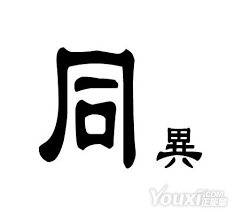
大同小異
dai.dou.shou.i

Literally: big – same – small – different

Alternately: Generally similar. The similarities between things outweigh their differences. Although the things being compared may differ in a number of details, the broad strokes are the same.

Confusingly, this yojijukugo can an also be used to emphasize that while two things may seem the same, focusing on the details will reveal the ways in which they’re different.

Notes: Writing instead of , despite their similar meanings and identical on-readings, is an error.

This compound is derived from a passage in the Zhuangzi, a Daoist text written in the 4th or early 3rd century BCE and the source of the famous story in which a man dreams that he is a butterfly (and then, upon waking, wonders whether he isn’t a butterfly now dreaming that he is a man).

DaiDouLiteralism

For you literalists out there!

Posted in Japanese, Yojijukugo | Tagged , , , , , | 2 Comments

Magic Monday – I cast thee away

Untether Aspect

In contrast to borrowing aspects, which almost never overwhelms their user, untethering aspects of oneself can present significant danger. The caster creates a representation of the aspect of themselves – a skill, ability, or quality – that they wish to cut away for a time, and ritually puts it away from themselves. Often this is as simple as writing down the name of the aspect and folding it up. The spell can be performed on another living thing, if they do not resist, and can even be used to transfer an aspect from one person to another.


As with Borrow Aspect, the base difficulty varies: d10 or d20 depending on whether the aspect is a matter of experience or something more inherent. Removing an aspect from, or transferring one to, something other than oneself raises the difficulty by a step unless they help with the ritual; if a recipient casts Borrow Aspect at the same time, both spells have their difficulty decreased by one step. Casting this spell costs three or six strain (for trained or inherent aspects). What’s worse, though, is that each hour with part of oneself missing imposes cumulative strain (one the first hour, two the next, etc.). A grueling day-long version of the spell can untether an aspect of the magician permanently, but in this case the cost in strain is also permanent (i.e. SP are reduced by three or six points).

Posted in Rules, World-Building | Tagged , , | Leave a comment

Refusing to bite the hand that feeds you bait

その手は桑名の焼き蛤
(Sono te wa Kuwana no yaki-hamaguri; “That trick won’t work!”)

Definition:

This one is a pun! It has a serious meaning, saying that someone’s strategy or trickery (often verbal) isn’t going to succeed (usually against the speaker). But where one might normally use the verb 食う (kuu, here meaning “to be negatively affected by something”) in its negative form kuwanai, the verb is switched out for the place-name Kuwana. Kuwana was apparently known for its roasted clams, so a mention of those is tacked on to the end for an overdone, playful feel.

Breakdown:

We begin with その (sono), generally translatable as “that” in that it often indicates something physically or psychologically closer to the listener than to the speaker. As a determiner, it identifies the following noun: (te), “hand,” which in turn is marked as the focus of discussion by the topic-marker particle (wa).

This is where you’d get your negative verb, 食わない (kuwanai), as noted above, but instead you get 桑名 (Kuwana), which literally means “mulberry name.” The associative particle (no) connects this to the noun (hamaguri), the “common orient clam.” This noun is modified by the verb 焼く (yaku), “to bake / to roast,” in prenominal form.

Notes:

Te is a normal metaphor in Japanese for a plan, strategy, trick, or even a “move” in a board game.

This bit of humor was apparently in relatively common usage by the Edo period.

Example sentence:

「相手の狙いに見当がついて、その手は桑名の焼き蛤だぞと思ったけど、おかげで油断してしまった。それこそ相手の仕掛けてた罠なのかな」

(“Aite no nerai ni kentou ga tsuite, sono te wa Kuwana no yakihamaguri da zo to omotta kedo, okage de yudan shite shimatta. Sore koso aite no shikaketeta wana na no ka na.”)

[“I had an idea of what my opponent was aiming at and thought to myself Oh no, you’re not pulling one over on me that easily! But thanks to that, I let my guard down. Was it a trap that they were laying for me all along? I wonder….”]

Posted in Japanese, Kotowaza | Tagged , , , , | Leave a comment

Random poem!

Delirium’s Lemonade Hat-Song

I am the aardvark who empties his glass,
then goes for the bottle; he wants to get smashed.
I am the guitar that’s missing a fret
that you tried once to play for the sake of a bet.

I am the froggies that never stop croakin’
with a fury and din you can’t hear when you’ve woken.
I am the garden that grows bluepink flowers!
I am the song that your kid chants for hours.

I am the penpal who almost replied
from the far side of town – which is two miles wide.
I am the poodle who’s never undressed,
and old lady Crowley, who thinks he’s her guest.

You’re heard me inside you when you eat creams
of whipping, of ice, or of cheese, and it seems
I may be the waffle that brings you good cheer –
But I am the aardvark! I’ve stolen your beer.


(With apologies to Dana Gioia; this is a parody of “Vampire’s Nocturne,” which can be found here. I wrote this years ago, as a joke, during discussion in a poetry workshop, and recently found it again in an old notebook. Now presented for the world in general to perhaps be mildly amused by, outdated in-jokes and all.)
Posted in Poetry | Tagged , , , , | Leave a comment

Toddler Cognitive Development: Mirror Test

I read somewhere a while ago that some people did an experiment where they painted a spot on an elephant and showed it a mirror, and in response the elephant reached around with its trunk to touch, not the mirror, but the place on itself where the spot had been painted. This was taken to show that the elephant (and thus elephants in general) are sentient and self-aware in a way that few other animals are.

The kid has been aware of how mirrors work for many months by now, of course. He will look at us through the reflection, and respond to things he sees that are behind him or off to one side but visible in the mirror. And I’ve suspected for a long time that he knew that his reflection was him, although there was nothing (that I noticed) to really confirm that.

A similar situation where it’s unclear that he entirely understands his own image is with photographs. He recognizes his mother and me in pictures, of course, because we fundamentally look the same. But when we show him pictures of himself at various ages, he’s definitely interested, but it’s not clear whether he gets that that’s himself at stages in his growth, or whether he just thinks we’re showing him lots of pictures of babies.

Just a couple days ago, though, he unmistakably reached the level of an elephant in terms of self-awareness. His hair is prone to standing up in a wild curling thicket, and when put in front of a mirror (to brush his teeth, I think), he took some time to look at himself in the mirror and use his hands to try and brush his hair into some semblance of good order.

It failed, of course. Nothing short of a buzz cut is going to keep his hair tidy for long. It was interesting, though, and it made me happy in that special stupid way that comes from being a parent and watching your kid learn how to be human.  8^)

Posted in Musing, Nonfiction | Tagged , , , , | Leave a comment

[Insert imaginative title here]

創意工夫
sou.i.ku.fuu

Literally: start – idea – construct – man

Alternately: Creativity and skill in formulating and realizing a new idea. 創意 is “new idea,” and 工夫 means (coming up with) a clever way to do something.

SouINanDa

Japan, reinventing the Apple phone and even sushi. [Source]

Posted in Japanese, Yojijukugo | Tagged , , , , , , | Leave a comment

Magic Monday – The Borrowers

Borrow Aspect

Humanity (and other intelligent species) are inherently greedy: they see birds and wish for flight; they see cats and wish for grace; they see tortoises and wish for impenetrable defense. During the golden age of the Slakiv Empire, Order scholars studying the totem magic of the Clanlands managed to bring the inhabitants of Vestan a step closer to fulfilling these desires by formulating a rote to “borrow an aspect” of nature for a time. The caster must possess and invoke (often by consuming) a piece of whatever it is they wish to emulate: a bit of a grasshopper, to gain its ability to leap; of a bat, to gain echolocation; of a tree, to root oneself firmly to the ground. It turns out that a having a Spirit Call contract or an Animal Mask will serve this purpose as well.


The base difficulty depends on whether the aspect borrowed is simply an enhancement of a preexisting capacity (such as improving one’s strength, sense of smell, or reflexes) or an entirely new ability (such as flight or breathing underwater): the former is d8; the latter is d12. The cost for the former is one strain for each +1 the borrowed aspect gives to relevant rolls; for the latter, ten strain. In either case, the borrowed aspect lasts for a single scene or task. Increasing the difficulty by a step can allow the duration to be extended by a step without needing to re-cast the spell, or it can halve the cost in strain. Possessing a spirit contract, animal mask, or other magical link to the aspect decreases the difficulty by a step.

Posted in Rules, Setting, World-Building | Tagged , , | Leave a comment