Magic Monday – This land is my land

Wizard-Ward

This enchantment is one of many that can be used to create a “place of power” in which the abilities of its resident magician are magnified and hostile forces are weakened. Each day of the month-long ritual, the magician must visit (or inhabit) the space to be warded, moving through the entire space, touching and rearranging it, feeling and manipulating the flow of energy, and negotiating with any local spirits. This process culminates in a draining, dramatic ritual on the final day. Through this process, and by charging various ritually-significant objects (the specifics depend on the caster and the location to be warded) with magical energy and arranging them properly, the casting magician stamps their mark on the warded area’s Shadow, and may manipulate the space in various ways. Some examples:

Environmental manipulation: Within the warded area, factors such as light and darkness, heat and cold, how well sounds carry, and other ambient phenomena can be changed to match the magician’s whim – in extreme cases, their moods and subconscious reactions.

Power attunement: The magician’s personalization of the flow of magic through the space makes it easier for them to cast spells, to detect magical affects in the area, and allows them to make it harder for others to work magic without their permission.

Psychic shielding: The area and persons and objects within it cannot be spied upon, summoned, enchanted, or cursed by anything less powerful than a death-curse or a deity. Furthermore, if a high-quality enchanted mirror is placed within the warded area, the face of anyone attempting to spy in will be shown in the mirror’s surface.

Etc.: Make up your own, as appropriate for your setting!


The base difficulty of this ritual, to cover a space equal to one large room, is d8. One check must be made during each phase of the moon for a month before the ritual can fully take effect. (Expanding the space covered increases the difficulty on a one-step-for-one-step basis.) In the final binding ritual, the magician must sacrifice some number of points from their attributes. Each day of the ritual, fatigue and strain are inflicted on the caster equal to the number of attribute points that will be sacrificed.

While in the warded space, its creator acts as if the sacrificed attributes were never lost; furthermore, any Presence sacrificed is doubled. (E.g. a wizard of Presence 13 who sacrificed three points would have Pre 10 most of the time, but effectively act at Pre16 while in their place of power.) In general, the number of attribute points sacrificed also determine the potency of other effects:

For each point sacrificed, one environmental factor can be changed by one step; checks made to detect and identify magical activity or entities with the area receive +1; the difficulty of hostile magic and similar effects is increased by one step; and one point is removed from the cost (in strain or fatigue) from each spell the creator casts. (Note that magic with a recurring maintenance cost will start imposing a cost in strain or fatigue at some point in the duration, after this “buffer” is used up.)
Posted in Rules | Tagged , , , , | 3 Comments

That’s what she said?

大は小を兼ねる
(Dai wa shou wo kaneru; “The large does the work of the small”)

Definition:

Something that is more can do the work of something that is less. Better too much than too little. It is possible to use a large tool in place of a small tool, but not vice-versa. So for example, you can cut a grape with a huge chef’s knife, but not a watermelon with a tiny paring knife. Or at least, one of those imbalances is less inconvenient than the other.

Breakdown:

(dai) is technically not a normal part of speech; my prime dictionary categorizes it as a “prefix.” In this case, both it and (shou) are clearly operating, grammatically, as nouns. Dai is “big,” in this case rendered by sense as “the large,” while shou is “the small.” The first noun is followed by the topic-marker (wa); meaning the saying is primarily about “the large.” The latter noun is marked as an object by the particle (wo), and the verb that acts upon it is 兼ねる (kaneru). This is a fascinating verb that can have some pretty divergent meanings depending on the exact context of usage, but here means “to serve multiple functions simultaneously.”

A clunky but sense-literal rendition of the phrase would give us something like “As for big things, they also do the work of small things.”

Notes:

There are some pretty obvious situations where this isn’t true, of course. I’d rather have a too-small cooking fire than a too-big one, probably. Too little anesthesia in a given dose rather than too much. But in many practical situations, it is indeed better to have more of a given resource than too little.

This saying is based on a passage in The Luxuriant Dew of the Spring and Autumn Annals (春秋繁露), a 4th-century (or so) Neo-Confucian text.

An alternate version of this saying replaces the final verb with 叶える (kanaeru, “to fulfill [a desire/condition/requirement]”). Note how close the verbs are phonetically.

Example sentence:

本棚に並んでいた辞典は皆分厚くて、五キロを越える本も沢山あった。太郎のお父さんは、『大は小を兼ねる』と信じていたのだろう。

(“Hondana ni narandeita jiten wa minna buatsukute, gokiro wo koeru hon mo takusan atta. Tarou no otousan wa, ‘Dai wa shou wo kaneru‘ to shinjiteita no darou.”)

[“The dictionaries lining the bookshelf were all thick tomes; many were over five kilograms in weight. Taro’s father seemed to have believed that ‘The greater serves for the lesser.’”]

Posted in Japanese, Kotowaza | Tagged , , , , | 2 Comments

A tale of (computer) renewal

Things are stable again in the Land of Nu, and we didn’t even get to the end of the buffer. (Which means it’s time to rebuild the buffer for all three of my regular posts – kotowaza, Magic Monday, and yojijukugo – and make a habit of staying a week ahead of the game, just in case!) In the meantime, I thought I would describe the weird series of coincidences that characterized this episode.

I knew my old laptop was dying. It was about four years old. It had been carried around a lot, and dropped a couple times. The screen’s integrity was starting to loosen; it was secured with duct tape. The original power cord had been replaced. The E key had simply fallen off, and sat loosely on top of the keyboard. Operation was getting slower and slower, to the point where watching a video sometimes required that all other programs be shut down. There were occasional Blue Screens of Death. And then, last Saturday morning, it took an inordinate amount of time to boot up from sleep mode.

It was past time to start thinking about getting a new one. My wife and I discussed finding a few models that I’d be interested, checking the price, and seeing if any good deals were forthcoming in the post-Thanksgiving sales blitz. So I spent Saturday evening looking at possible new computers, mostly with the help of LappyList (found via Reddit) and the mercenary warrior-woman.

On Sunday morning, the old laptop refused to boot up, as if being forced to research its own replacement is what broke its heart. I was able to use my wife’s to look up the error code it gave me (it was a hard drive issue), fortunately, and to take care of ordering a replacement. All that remained was the matter of data: I’d been doing semi-regular backups… on Sunday evenings, and of course there were gigabytes of photo data that simply wouldn’t fit on my backup memory stick.

On Monday I took the old dead laptop to a computer shop, where they confirmed that the HD had failed for good, but that they could try to retrieve the data off of it (and that if that failed, there was a dedicated service that could try… for an order of magnitude more money. This was business-world-level serious data retrieval, after all).


On Thursday, the new computer had arrived and my data was (“were,” technically) ready. I had business on campus in the afternoon anyway, so after the kid woke up from his nap we went over, took care of the other business, and then dropped off my new computer at the shop to have the data transferred onto it.

I had forgotten that this process takes time. I dropped off my new machine at around 4:30 in the afternoon. The kid and I hung around the area, walking down the hill to do a little shopping at an Asian-foods market, then back up to campus. At about ten ’til 6:00, when the shop was due to close, I called them again to see what they wanted to do – I had neglected to bring the power cord, so even if we left the transfer running overnight, there was a chance that my laptop would hibernate and cut off the process.

We managed to work out a plan: I would take the next bus home (at about 6:30; I had missed one bus while we were talking) and get the power cord; one of them employees who lived close by would stop over to pick it up, then go back and plug in the laptop so that it would keep running, then I’d come in the following morning. That settled, I packed up the kid and we headed back down the hill to catch the bus.

I was at the bottom, about to cross a busy road, when my phone rang: the transfer had finished! So I walked back up the hill, retrieved my computer, paid, chatted with the guy a little and thanked him for being willing to keep working after hours, and then headed down the hill a final time.

The wife was kind of worried when she got home and found the apartment empty, of course, but somehow we managed to have dinner and get the kid in bed at a reasonable time. And as of this writing, I’m in the middle of the laborious process of sorting through the “Old_Hard_Drive” folder that was created on my computer, first retrieving the things I’m currently working on, then re-filing everything else in a more organized manner than it was previously (especially the contents of the Downloads folder!).

And that’s the coincidence-filled story of my sudden computer change-over. Make of it what you will.

Posted in Miscellaneous, Nonfiction | Tagged , , , | Leave a comment

Enjoy it while it lasts

Happy November! While it will no doubt be over by the time this post goes live (I’m typing it up a week in advance), we’re even having a very appropriate spell of warm weather right now: sunny, with highs in the 70s (F; over 20° C).

小春日和
ko.haru.bi.yori

Literally: small – spring – sun / day – peace / harmony

Alternately: “Indian summer.” A warm day with nice weather in late fall or early winter.

Notes: Apparently koharu was an old term for the tenth month of the old lunar calendar; around November by the modern solar-year reckoning. Hiyori (voiced as biyori in the compound) is simply good weather.

“Koharu” is also a girls’ name. So it’s like “April,” “May,” or “June” in English, kind of, except instead of a spring name, it’s the last warm breath of fall.

Koharu choo-choo

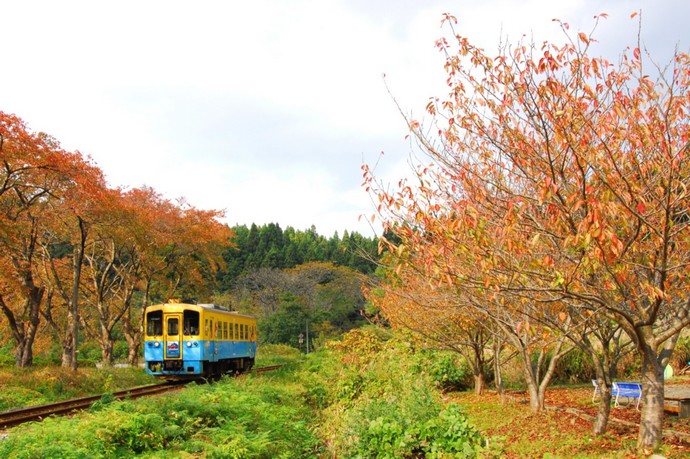
With the brightly-colored one-car train, this shot just SCREAMS “rural Japan” at me. Source.

Posted in Japanese, Yojijukugo | Tagged , , , , | Leave a comment

Magic Monday – Hiatus announcement

So my computer’s been dying, slowly, for a while now. Little bits of damage accumulating, tasks taking slightly longer to complete.

On Saturday morning it was slow to boot up. On Saturday during the day I scheduled two kotowaza and one yojijukugo to auto-post. On Saturday evening I researched replacement laptops and ordered one on Amazon.

On Sunday morning, the computer tried and failed to boot up. I was able to use my wife’s to look up the error message – hard drive failure. So now the machine is in a computer repair shop… not for repair, but for data retrieval. It’s currently unknown whether any can be gotten out, and if so, how much… at least for the amount of money I’m able to pay.

Obviously I still have internet access: on my wife’s device, on campus, in the apartment office. I should be operating normally again before I need to worry about posting more Japanese-study posts. (My schoolwork is a separate matter… wish me luck!) But I will have to skip this week’s Magic Monday. I’ll try to make it up to you somehow, when things are running smoothly again.

Anyway, thanks for reading! And remember: back up your data early and often.

Posted in Meta, Miscellaneous | Tagged , , | Leave a comment

“Because when I get angry, even flies don’t dare to fly!”

地震雷火事親父
(Jishin kaminari kaji oyaji; “Earthquake, thunder, fire, father”)

Definition:

Scary things. The first and third are self-explanatory for an earthquake-prone archipelago that was home, especially by the end of the Edo era, to dense urban centers built almost entirely of wood. Thunder is also easy to understand; humans around the world are still frightened of, or at least startled by, flashing light and loud sounds. The final element is harder to understand in a modern context; it harkens back to the days households were age-based patriarchies, and any old man could easily be a petty tyrant within the walls of his home.

Breakdown:

This is nothing more than a series of nouns; there’s no grammar or structure, and it can’t operate as a complete sentence or phrase, even by the loosest standards of elision-happy Japanese. The nouns are as follows:

  • 地震 (jishin), “earth” + “shake” = “earthquake.”
  • (kaminari), “lightning/thunder.”
  • 火事 (kaji), “fire” + “thing” = “fire,” in the sense of a conflagration, a house catching on fire or the like rather than a small fire for camping or cooking.
  • 親父 (oyaji), “parent” + “father” = “[my] father.” This is a relatively informal term, so it’s mostly used when referring to one’s own father (to someone else), or when addressing or referring to a yakuza boss.

Notes:

Oyaji may also be written 親爺 with no change in meaning.

In keeping with the declining fearsomeness of patriarchs, some Japanese people substitute in 女房 (nyoubou, “wife”), 津波 (tsunami), or other potentially scary things for the fourth element, although some of the original phonetic element may be lost.

There exists a folk etymology that oyaji is actually a mispronunciation of 大山嵐 (ooyamaji), supposedly a (dialectical?) term meaning “typhoon.” However, authorities agree that this theory has no basis; I present it here as a curiosity only.

Example sentence:

地震雷火事親父って言うけど、家の一番怖い人はやっぱり父じゃなくて、色んなしきたりを厳しく守る、凄く頑固な祖母だ」

(Jishin-kaminari-kaji-oyaji tte iu kedo, uchi no ichiban kowai hito wa yappari chichi ja nakute, ironna shikitari wo kibishiku mamoru, sugoku ganko na sobo da.”)

[“They say ‘Earthquakes, thunder, fire, father,’ but the scariest person in my family isn’t my dad: it’s my stubborn grandmother, who strictly abides by the old ways.”]

Posted in Japanese, Kotowaza | Tagged , , , , , , , , , | Leave a comment

Things to do with “spell slots”

A while back I read and commented on a post at Ten Foot Polemic. Mr. Young had an interesting idea about allowing clerics to create “talismans” (I keep on feeling like the plural should be “talismen,” but that’s silly) to reward the faithful with little situational bonuses.

It’s a cool idea and I’d like to give it a try some time, although it would need to be altered a bit to fit in with my devotions-and-boons model for priestly powers in YAOSC. Maybe have the creation of a talisman be a major boon that a priest can perform for the devout in an hour of need, and it grants a minor-boon-type benefit in response to being “charged” by the religious practice of its bearer? And then you could have relics created through miracles, capable of granting a variety of major or minor boons. In essence, a talisman or relic would be a portable, limited priest-substitute that gives you some modicum of blessing in return for your faith even when no actual priest is present. So people could get rosaries betalismanned, and use them in their daily prayers. I like it; that’s pretty cute, and provides an in-game justification for various religious practices.

That’s all tangential to the thought I wanted to write about, though, which comes from my comment on Mr. Young’s post: spells that work (in the D&D-standard Vancian magic system) by occupying slots rather than (or in addition to) being expended from slots. So now my head is full of possible ways to make it useful and interesting for a spell to be placed into a spellcaster’s headspace long-term (which reduces the flexibility of the character’s spell selection) rather than stored temporarily and expended with the day.

This is probably a thought people have played around with before. It shares something in common with an idea I’ve seen floating around the OSR, which is giving wizards “cantrips” that are just minor manifestations of the spells they have prepared, can be used without burning the prepared spell, and become inaccessible after the spell itself is cast. This is a really interesting mechanic that makes low-level wizards useful on a greater than once-a-day basis, and which also exerts pressure on the caster to retain spells in memory (and continue gaining minor benefits from their psychic penumbrae) rather than cast them (and gain a one-off greater benefit).

Back to the talisman thought: another method would be to offer a specific, significant power in return for a permanent reduction in spell-casting capacity. Perhaps a fantasy setting where all magic items, or a sci-fi world where all psionic items, are created and powered by their maker sacrificing one or more “spell slots” (or some equivalent resource). You have less mana for throwing fireballs because some of it is flowing into the magic sword you forged and allowing it to emit flames of its own, for example. It’s up to the specific game whether this implies a permanent mystic connection between the creator and the created (like the link between Sauron and his ring), and whether the sacrifice is permanent or can be reversed in a process that disenchants the item or ends the benefit.

A third possible mechanic that just occurred to me is similar to the “cantrip” one above, except instead of (or, in addition to) granting spell-like benefits that correspond to specific spells, it charges the caster up with an aura. Let me expand on that a bit:

* Each spell is associated with a “resonance” of some kind. These can be general categories like “white” and “black” (and red?) magic, or like the five colors of MTG. They can be complex and overlapping. They can be elemental, according to an Eastern, Western, or home-brewed rubric. They can be thematic (e.g. “healing,” “creative,” “destructive,” “metamorphic” etc.). Each spell could carry a single point of resonance, or a number of points corresponding to its power (level); in the latter case, they could be all the same kind of resonance, or they might be a mix.

* An obvious utility based on such a resonance system would be supernatural sensing. The more resonance, and the more resonance of a given type, a spellcaster is charged with, the more intense their supernatural aura is going to be. Fellow magicians, and animals sensitive to supernatural phenomena (including cats, of course), will presumably be the best at noticing subtle auras or deciphering resonance mixes, but this could be the mechanic by which common folk get a tingly feeling in the presence of powerful witches, or a creepy feeling in the presence of a necromancer.

* This also opens the door to mechanical things that work off of the resonance system. Instead of D&D standard spells to detect magic or alignment, you can have a spell to detect and read resonance. Magical items could have resonance, which doubles as “ego” if they’re sentient. Magical beings like elementals or spirits could have resonance. The power or effect of certain spells you cast could depend on your resonance rather than character level, making this a nice addition to levelless systems.

I could meander on, but these ideas have been sitting on the back burner for a long time now while we moved to a new town and started a new semester… and there’s only one month left in the semester. Time flies!

Posted in Musing, Rules | Tagged , , , | Leave a comment

Super deep!

A very appropriate yojijukugo for the sixty-ninth entry in the series. I can hardly believe it’s been over a year already!

意味深長
i.mi.shin.chou

Literally: thought – flavor – deep – long

Alternately: Containing deep meaning. Possibly this meaning is hidden, or suggestive, or simply profound; in any case it must be more than what’s going on on the surface of things.

Notes: 意味 (imi) is “meaning.”

Apparently some people replace with (“heavy”) or 深長 with 慎重 (“careful”). But while this doesn’t change the pronunciation, and none of my sources specifically condemn them, I would not recommend using these variants.

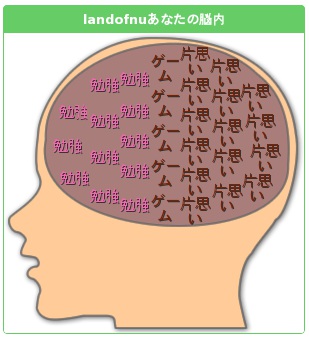
勉強 ゲーム 片思い

From a cute little “maker” (found here) that takes text strings and spits out the supposed contents of your brain based on your name. As you can see, “landofnu” is primarily concerned with study and unrequited love、 sandwiching a layer of game. Surprisingly close, really.

Posted in Japanese, Yojijukugo | Tagged , , , | Leave a comment

Magic Monday – I will knot be ensorceled

Witch-Ward

Faerie creatures have been meddling in the lives of mortals since before recorded history, and humans have been developing and passing on ways to deal with this almost as long. This protective charm centers on knotting red threads in one’s hair, and offers some defense against the malevolent enchantments of the fae. All fae creatures will be distrustful of a human wearing this charm, but it is most commonly used by those going to battle against faerie monsters that have entered the mortal world and must be slain or driven back out.

The base cost is one strain, and the base difficulty, d4, for the ceremony to knot one thread. More threads may be added; for each additional thread beyond the first, the cost is one more strain than the previous. (E.g. using four threads total costs 1+2+3+4= 10 strain total.) For each thread, +1 is added to all saves against harmful or unwanted magics cast by fae upon the protected mortal. Each time such a roll is made, successful or not, one thread becomes useless and must be replaced.

Posted in Rules, Setting | Tagged , , , , | Leave a comment

Always look on the bright side of life [whistling]

笑う門には福来る
(Warau kado ni wa fuku kitaru; “Good fortune comes to laughing gates.”)

Definition:

Fortune and happiness, or good luck, come to the homes of those who are always smiling and laughing. A positive attitude attracts positive events. Life is better when you face it cheerfully.

Breakdown:

笑う (warau) is “to laugh” or “to smile”; here the verb directly modifies the following noun (kado), “gate” or “doorway,” especially the gates of an estate or the front door of a house, and metonymically signifies the household as a whole. (ni) is a directional or locational particle and (wa) is the topic-marker particle. Here, the combination means that takes on an emphatic or contrastive function, implying that other gates do not draw good fortune in the same way.

And we end our saying with another noun-verb pair: the noun (fuku) is “fortune,” “luck,” and the verb 来る (in this case kitaru rather than the more common kuru) is “to come,” “to arrive.” The nuance of the unusual form is that of an action that is completed or continued, rather than being as yet unfinished.

Notes:

Some versions of this saying do without the emphatic ; others generalize to (tokoro, “place”) and swap for the directional particle (e).

Pronouncing as mon or writing kado as its homophone (corner, angle) is incorrect.

This saying can be found in the Kyoto iroha karuta set.

Example sentence:

「そんな暗い顔をしてては駄目、笑う門には福来るよ」

(“Sonna kurai kao wo shitete wa dame, warau kado ni wa fuku kitaru yo.”)

[“Don’t look so gloomy! A smile brings good luck!”]

Posted in Japanese, Kotowaza | Tagged , , , , , | Leave a comment