Some hard-core traditional Japanese culture, in a small convenient package

This is quite possibly the most famous yojijukugo in Japan. I’m not entirely sure how it took me so long to get around to it.

一期一会
ichi.go.ichi.e

Literally: one – time (period) – one – meeting

Alternately: (Every time you meet someone, you should treat it as) a cherished once-in-a-lifetime encounter. Every time you meet someone is precious (because it might be your last). Focus on the moment with an open and honest heart.

Notes: 一期 is “one lifetime”; 一会 is “one encounter.” The nonstandard readings, even among the set of available Chinese-derived pronunciations (is often read ki, and is often kai), mark this phrase’s roots in Buddhist terminology and thought – but it doesn’t come to us from an ascetic monk. Rather, this four-character compound is said to come from a saying by one of the disciples of the tea-ceremony master known as Sen no Rikyuu, during the late 16th century. I could go on – this phrase unfolds and unfolds and unfolds into so many areas of Japanese history and culture – but perhaps the rest should be left as an exercise for the reader.

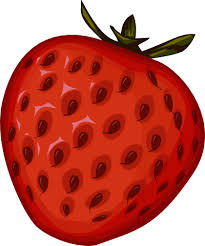
Strawberry! It's a pun!

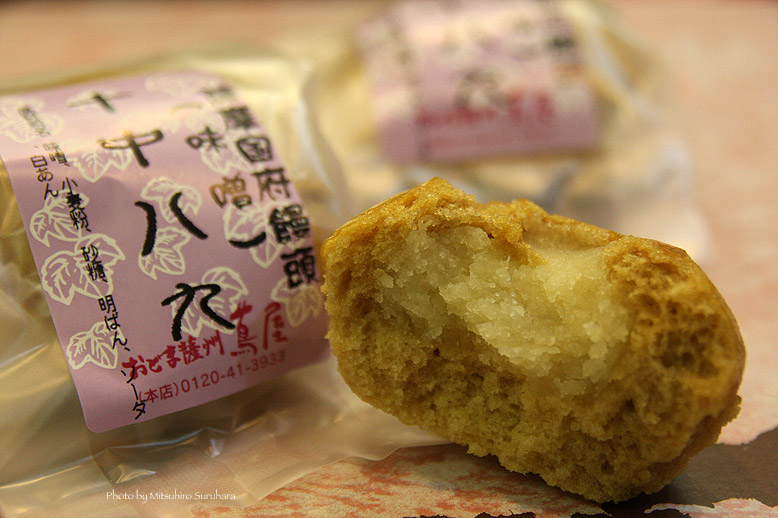
This yojijukugo‘s become a commercial product too. Picture almost unrelated.

Posted in Japanese, Yojijukugo | Tagged , , , | 1 Comment

From out of the mouth of me, I grab at thee

喉から手が出る
(Nodo kara te ga deru; “A hand comes from the throat”)

Definition:

To want something very, very much; so much that you can hardly stand it. This imaginative metaphor compares desire to physical appetite, and pictures a hunger so powerful that a grasping hand comes out of the person’s throat to seize its object and pull it back. You know, like that weird second mouth inside the alien’s mouth in Alien. Except a hand, not a mouth. Um.

"I wants to play too!"

Look at that face! Doesn’t it just scream “want” to you?

…Long story short, this kotowaza expresses an almost-overwhelming want.

Breakdown:

(nodo) is “throat” and から (kara) is a particle roughly equivalent to the English “from,” meaning the first two words of the phrase actually mark the location of the action. The actual subject of the sentence comes next: (te, “hand”), followed by the subject-marker particle (ga) and then the verb 出る (deru, “to come out”).

Notes:

Although the expression can technically function as a complete stand-alone sentence, it will generally be part of a longer one, followed by terms like ように (you ni, “as if”) or ほど (hodo, “to the degree/extent”). のど can also be written with the kanji , although this is rarer – an alternate character that was only recently reintroduced to the standard set.

Example sentence:

「そのゲームを喉から手が出るほど欲しいから、バイトで稼がなきゃ」

(“Sono geemu wo nodo kara te ga deru hodo hoshii kara, baito de kaseganakya.”)

[“I want that game more than I can bear, so I have to get a part-time job and make some money.”]

Posted in Japanese, Kotowaza | Tagged , , , , , | 1 Comment

All four of them

喜怒哀楽
ki.do.ai.raku

Literally: joy – anger – sorrow – ease/pleasure

Alternately: Human emotions. The range of human emotions. All of a person’s emotions.

Four emotions

From this “motivation life hackers” blog

Posted in Japanese, Yojijukugo | Tagged , , , , , , | Leave a comment

Thought of the day: baby arms

When a baby is startled, even if it’s asleep, it will often go like this:

Huzzah!...?

Like you just don’t care?

I’m not sure how much scientific literature is out there about this particular reflex. Someone I was talking to idly theorized that its roots go back to humanity’s more simian ancestors, when the possibility of falling out of trees was high; the purpose was perhaps to allow the baby to catch onto a branch and break its fall.

This seems unlikely. New humans spend years developing the strength and coordination they need for purposes ranging from from athletic or gymnastic activities (running, jumping, climbing, etc.) to basic tasks and abilities like holding their heads up and looking around. The chances of a newborn managing the split-second timing necessary to catch something, much less possessing the grip strength to support its own weight and thus to stop or slow its fall, are essentially nil.

What other functions could the reflex serve, then? It could be to startle predators and drive them away. Unexpected motion will spook most animals, even hunting animals. It could be a signal to parents or other caretakers that the baby is in some sort of danger. I fear, though, that the reason really is related to falling.

I have read that when an adult falls a long way, they tend to wind up with foot and/or leg injuries. We instinctively try to land on our feet, because they’re simply more expendable than all the organs above the waist. When an infant falls, however, it has no ability to control its orientation… and babies, with their proportionally large heads, are very top-heavy. Babies who fall will tend to fall head-first.

Where are infants often injured after a fall? In their arms. The statistics suggest that the arms-up reflex is to protect the head. This may be from dangers in general – animal bites, loose objects that might strike it, and so on – rather than from falling damage specifically, but the basic idea is the same.

The sad part of all this is that sufficient numbers of human or pre-human babies must have been put in danger over the course of evolutionary time that the V pose became ingrained as instinct. We get the protective reflex as a legacy from the survivors… but first, somewhere in our past there must be a great number who did not survive, and second there must also be a great number who survived, but at the cost of some sort of injury to the arms. “Nature red in tooth and claw” indeed.

Posted in Musing, Nonfiction | Tagged , , , , | Leave a comment

Frog and more frog

One more kotowaza for the frogs. It’ll be something different next week, I promise.

蛙の子は蛙
(Kaeru no ko wa kaeru; “A frog’s child is a frog”)

Definition:

“Like father, like son.” “The apple doesn’t fall far from the tree.” The character and abilities of a child tend to resemble those of a parent. In a negative sense, the saying can be used disparagingly to claim that the children of “mediocre” families are doomed to mediocrity themselves. Due to this nuance, it’s better not to use it in an attempt to praise someone.

Breakdown:

(kaeru) is “frog” again; (ko) is “child.” We have two particles, the associative (possessive) (no) and the topic marker (wa). Rendered literally, this kotowaza becomes “As for child of frog, frog.”

Notes:

The saying can also be extended to 蛙の子は蛙の子, “a frog’s child is a frog’s child.” Note also that the case of the frog’s child turning out to be like its frog parent can be a surprising or counterintuitive congruence: tadpoles look very little like frogs, after all.

Example sentence:

「勉強しても意味ないよ、うちは農家だし。所詮、『蛙の子は蛙』だもん」 「そんなことないよ。『継続は力なり』だよ」

(“Benkyou shite mo imi nai yo, uchi wa nouka da shi. Shosen, ‘Kaeru no ko wa kaeru‘ da mon.” “Sonna koto nai yo. ‘Keizoku wa chikara nari’ da yo.”)

[“There’s no point in me studying; we’re just farmers. After all, like they say, ‘The apple doesn’t fall far from the tree.’” “That’s not true! They also say ‘Perseverance is strength’!”]

Posted in Japanese, Kotowaza | Tagged , , , , | 1 Comment

Elbow Grease

Midterms. Already?

切磋琢磨
se-.ssa.taku.ma

Literally: cut – scrub/rub – strike – polish/scour/grind
(or: cut – polish – polish – polish!)

Alternately: Diligent effort. Improving oneself through study.

Notes: There’s a fuller phrase, 切磋琢磨し合う (sessa-takuma shiau). The shiau part means “to do together,” “to do reciprocally.” This phrase, then, refers to people working hard together – often encouraging each other to greater efforts through friendly rivalry, like members of the same sports team. By extension, the same meaning can be contained in the original yojijukugo.

Posted in Japanese, Yojijukugo | Tagged , , , | 2 Comments

Frog, like honey badger, just don’t care

Another frog kotowaza! Because… I don’t know why. Don’t let it bother you.

蛙の面に水
(Kaeru no tsura ni mizu; “Water in a frog’s face”)

Definition:

Not being bothered by things at all. No matter what happens, keeping one’s composure, or even not showing a reaction at all. The vicissitudes of life, to you, are like water to a frog – and frogs live in the water. This can be functionally equivalent to the English expression “Like water off a duck’s back.”

Note, however, that the saying is often used in a critical way, to describe someone’s impudent or shameless behavior. In that case, the “water” that doesn’t draw a response is the disapproval or censure of the people around the “frog,” who is acting as they please without consideration for others.

Breakdown:

is “frog” again, although for this saying the pronunciation is the usual kaeru. is, as always, the associative particle, here serving its familiar possessive function. (tsura) is “surface” or “face” (apparently it used to refer specifically to cheeks, as well). (ni) is a directional particle modifying (giving us “in the face” or “into the face”), and finally (mizu, “water”). Reverse the word order and you get “water in face of frog.”

Notes:

Apparently the Japanese observed that if you splash water on a frog, even in its face, it doesn’t react. I haven’t tested this empirically (and it might be hard to, given that they’re likely to be freaking out about your presence). My sources note that this expression doesn’t apply to people who are too magnificent to be bothered by something trivial; instead, it’s for people who remain calm when most in their position wouldn’t.

The “water” () can also be replaced with 小便 (shouben, “urine”). Make of this what you will.

Example sentence:

「どんなに批判されても、彼は気にせずにしたいをことをする。蛙の面に水のようだ」

(“Donna ni hihan sarete mo, kare wa ki ni sezu ni shitai koto wo suru. Kaeru no tsura ni mizu no you da.”)

[“No matter how much he’s criticized, he just does what he wants without a care in the world. It’s like throwing water in a frog’s face.”]

Posted in Japanese, Kotowaza | Tagged , , , , , | Leave a comment

Maybe just 85%?

十中八九
ji-.chuu.ha-.kku
(or ju-.chuu.ha-.kku)

Literally: ten – middle – eight – nine

Alternately: Eight or nine out of ten; an 80% – 90% probability; “most likely, X”

Notes: This is obviously in the same vein as the previous 九分九厘, and may be considered equivalent, although in a purely mathematical sense the chances are lower and so the certainty is less absolute.

It does look pretty tasty

Also, this manjuu – image sourced here.

Posted in Japanese, Yojijukugo | Tagged , , , | 1 Comment

Big frog, small pond

A kotowaza to encourage exploration and growth.

井の中の蛙大海を知らず
(I no naka no kawazu taikai wo shirazu;
“The frog in the well knows not the great ocean.”)

Definition:

A frog at the bottom of a well may look up and see only walls and a circle of sky; it may look around and think that the cistern it lives in is the whole world, or all of the world that matters. It doesn’t know about the vastness of the world outside, or about the oceans that dwarf its little pool – and as a result, it may gain an overinflated view of its own importance.

This saying thus has two, related uses. It can point to a situation where someone has limited access to information, or a narrow worldview. Or it can mean someone who has a lot of pride in their knowledge – but only because they know so little that they don’t realize how much there is that they don’t yet know. In either case, the implication is critical, with a nuance that the ignorance the person displays is at least in part due to their own sense of self-importance preventing them from seeking deeper or broader knowledge. I like to twist the saying in a positive direction by suggesting that a frog brought out of the well can learn about the ocean and benefit from the experience.

Breakdown:

(i, pronounced like the letter “e” in English) is a water-well. (naka) is another noun, indicating the inside or middle of something. is yet another noun, “frog.” Note that in this case the usual pronunciation, instead of standard-Japanese kaeru, is kawazu – a poetic or archaic name for “frog.” These three nouns are joined with the associative particle (no), for a literal rendition along the lines of “frog of middle of well.” This noun phrase forms the subject of the sentence.

The predicate is simply an object-verb grouping: 大海 (taikai) is literally “large sea,” or “ocean.” is our object-marker particle, and 知らず is an archaic or formal negative form of 知る (shiru), “to come to know.”

Notes:

Despite kawazu being the more common reading, kaeru is also acceptable. 井の中 can be replaced with 井底 (seitei, “the bottom of a well”). The character can be replaced with (uchi, “inside”) without any change in meaning. The whole saying may be referred to, shorthand, as just 井の中の蛙 or even 井蛙 (seia, “well-frog”).

Example sentence:

「大学を卒業し、故郷に戻り、得意になっている人を見たら、やはり井の中の蛙大海を知らずと思わざるを得ませんでした」

(“Daigaku wo sotsugyou shi, furusato ni modori, tokui ni natteiru hito wo mitara, yahari i no naka no kawazu taikai wo shirazu to omowazaru wo emasen deshita.”)

[“After graduating from university, returning to my hometown, and seeing the people there putting on airs, I couldn’t help but think about how the frog in the well knows nothing of the ocean.”]

Posted in Japanese, Kotowaza | Tagged , , , , , | 2 Comments

Directions, part IV

(Story begins here. Continued from part III)

EEeee! There was a scream in the darkness. Seth sat up in bed and swatted his alarm. EE—whap

A glance at the clock revealed that it was only midnight, Monday morning. He had forgotten to reset the alarm to four. He did so automatically, half-dozing already, and slept again until the alarm pulled him from violent, terrifying dreams four hours later.

EEeee! He sat up again and swung, but missed the clock’s alarm button and instead knocked it to the floor. It went off three more times before he could retrieve and silence it. He turned to look at the room’s other bed to see whether his roommate had been woken up.

Isaac was awake, lying on his back. One arm was crooked over his face, hiding it. His breathing was deep and slow, regulated with obvious effort, although he didn’t seem to be feigning sleep.

Seth dressed and grabbed his CD player. “Sorry ‘bout that, man. I didn’t wake you up ‘cause of being mad… what? What’s up?”

He got no reaction, and tried again. “Are you okay over there? When did you get in? What’s going on? Did Thea see you at your job and break up with you or something?”

After a pause, Isaac spoke in a flat, controlled voice. “Thea was riding a bicycle out to the grounds. She had said something earlier about wanting to visit them. She must have come late, around midnight. Th… she… there was an accident.”

“What?”

Isaac remained silent and motionless.

“You are SO shitting me!”

A whisper: “…no….”

“You—how do you know?”

Isaac was still breathing with forced depth and regularity. “I saw. I don’t know what they did after that; there might have been an ambulance involved. Now go away and do your job. And have your fun whining about it. And leave me alone.” His voice remained low and even.

“Well, f—”

“I said, go.”

Seth left. He let the door slam behind him, although he regretted doing so even before it had swung all the way shut. He put his headphones on behind his ears, holding them in place with his cap. He turned the volume all the way up. It felt as if knives were working their way into his brain as he walked out into the chilled darkness, but he didn’t touch the player until the music had stopped on its own.

The week between the end of classes and the start of finals: “Dead Week.” There had been a funeral, but Seth hadn’t gone. He had thought about getting drunk, but decided against that too—it seemed inappropriate. Instead, he spent the day staring out the window, watching birds shake the light snow-cover from the branches of a nearby evergreen.

After vanishing for a few days, Isaac had been spending more time in the dorm, staring at books for hours at a time and then disappearing again, presumably to class or work. His easy sarcasm had vanished so completely that others asked Seth about it, and when it returned, it was subdued. When he learned that Isaac was turning twenty-one on Thursday of Dead Week, Seth decided that they should go drinking. He still enjoyed going to the Welcome Mat, in part because it reminded him of better times and better company. But his one-time friends had moved on to the clubs, while he mostly kept to himself.

“Isaac,” he had said.

“What?”

“You’ve never gone to a bar.”

“No.”

“I’ll treat you.”

“Why?”

“It’s a tradition to get to know your alcohol when you come of age. And I’m not talking about that psycho fruit-juice they serve at your Jew things; I mean shots, or at least beer.”

“Give me a reason.”

“You need to relax.”

“Another reason. A better one.”

“I said I’ll treat you a round. You don’t get to bitch if you don’t like it though.”

“Fine, but don’t expect me to have more than that one drink.” Isaac had given Seth a speculative, distrustful look, then turned back to his reading.

Now, leading Isaac in, Seth smiled as the familiar wall of sound met them, muted yet almost tangible. The great thing about this place was that it hosted a continual rotation of local bands. The music wasn’t always good, but it was usually fresh. He took Isaac to one of the tables along the wall, with a good view of the band, and sat him down before heading over to the bar for drinks. He selected a rich dark beer from his favorite microbrewery so the taste wouldn’t scare Isaac away. When Seth returned to the table, Isaac was looking pensive.

“Hey, what’s down?” said Seth, putting one of the beers in front of him. “You’re a man now! Sort of. In a way. Cheers; drink up!” He sat down and took a drink.

Isaac picked up the beer and looked at it as if expecting strong acid. “Tell me something. Why are you being so nice to me?”

“Don’t get all moody over there. You’re not even drunk yet.”

“Fine.” Isaac audibly suppressed a sigh, took a mouthful, and made a thoughtful face before swallowing and setting his glass down. “OK, I’m drunk. Why are you being nice?”

“What, I take you out for your birthday and you gotta ask why?”

“Seth. We don’t usually get along very well. Our schedules are incompatible, our tastes are incompatible, and so on and so forth. I wouldn’t do something like this for you.”

“It’s your birthday! And you haven’t been an ass recently. That’s it. You didn’t, um, lose your position over there, did you? Or get put on probation?”

“What? Oh, no, nothing like that. In fact, they were very nice about everything after they found out I knew her. I’ve been staying away because— because I just wanted some time alone. To think things over, I suppose.” He gave Seth a close look. “Why do you ask?”

“Well, I dunno. I thought you might get in trouble since your girlfriend got in an accident on her way out to see you without permission. There’s even a story that she got shot on the grounds during one of the exercises or something, even though it’s just a rumor. I mean, you know….”

Isaac was silent for a long time, pressing his lips together tightly. Then he picked up his beer and drank again as if trying to decide whether he liked the taste. In the background, the band launched into a new song about men and women. Finally, he sighed and said, “It wasn’t like that at all, really.” He paused to drink again, then continued while Seth was still trying to figure out what he had been responding to. “I guess I need to clear up a misconception: she wasn’t my girlfriend. Eligible after she started down the road to Jerusalem, as it were, but she always made me a little nervous.”

Seth snorted. “Coulda fooled me.”

Isaac bared his teeth sarcastically. This was the smile Seth understood the most. “If you weren’t such a pessimist, somebody besides yourself might need to participate in the fooling.”

That was effectively the end of the conversation and of the evening, although when they got home Isaac did thank Seth for the birthday present.

Seth let his bike fall on the hillside, checked the ground, sat down. It was the middle of the spring semester now, and he was taking a break from a vicious swarm of essays by visiting the countryside beyond county road W24. From his backpack he took a thermos; he popped a piece of crushed ice from it into his mouth and chewed noisily while extracting a can. He opened this carefully. He took a drink.

“Cold Beer, you’re my best and only friend.” He grinned briefly. “We should meet like this more often.”

Sighing, he drank again. The air temperature was high enough that he appreciated the ice and the shade of a nearby stand of pines. The trees in front and the hill at his back lent a sense of strength and depth to this little corner of the world. Here, he didn’t need or even want other people.

Birds flew overhead. The beer was gone, and Seth idly contemplated a grassflower he had picked. “Plain,” he murmured. “You wouldn’t even notice it. But that one Transcendentalist guy said we’re all just grass anyway.” That probably meant something, he felt.

He picked a piece of clover as well and stared at them, twirling the stems together between his fingers before finally tossing them away. A memory of sitting on the hillside, the first time he had done it with another’s company, came to his mind.

Jimmy said “Your name is in the Bible, Seth. My mom told me that.”

Seth said “It doesn’t mean anything. I’m not in the Bible.”

Jimmy said “My mom said Bible names are special. I’m special because there’s a James in the Bible.”

Seth said “I’m special because I can see the dog in the sky.”

Jimmy lay down too on the spring-smelling lawn and said “I can too!” even though there was no dog. But that was ok because Seth could see a dragon, and it was his.

The shell of the sky was infinitely blue; the land and trees around him curved up to meet it. Warm, calm, tired, somehow comforted by the enclosure, Seth slept. He dreamed of a world where nobody told him what to be. He dreamed that he became something anyway.

One evening, Isaac came back to the dorm and found Seth poring over a notebook page full of numbers and a large printed map of the campus, with details added in pen. “Oy vey, am I hun— what’s this?”

Seth flashed a self-deprecating smile. “I’ve gone psycho. Didn’t you notice? It’s all your fault, too. This wouldn’t have happened if you hadn’t set me up with that stupid newspaper gig.”

“What wouldn’t have happened?”

“I wouldn’t have assigned a number to each bush in the Rose Garden and then counted all the stems and leaves and thorns on each, and then kept track of the buds as they turned into more leaves and flowers and stuff, and I wouldn’t be keeping track of their petal count now. And I wouldn’t have started doing the same thing for every other garden in the place. And I wouldn’t be eying the trees now. Do you know how much counting a guy can do between four-fifty and seven, five days a week? A lot!”

Isaac looked over the map and notepad with wide eyes. “I thought you were lifting weights in the spare time. Or thinking of new ways to get back at me for recommending you to a paycheck. Hey,” he pointed, “those don’t have numbers, they have names.”

“Shut up!” Seth flipped the notebook shut and put his hands over the map defensively. “It gives variety. If you’d get your face out of your books, you might notice that plants have personalities too! Either tell me I need medication, or leave it alone.”

“I don’t think I’ll touch this one.” Isaac looked out the window with his tired smile, with an added touch of melancholy. “We all remember in different ways. Botany is a fine science.”

“Botany?” Seth looked up. “Maybe. Or something like that.”

Posted in Long Fiction | Tagged , , , | 1 Comment