Campaign idea: Medusa’s Vault

I was talking with some gaming friends the other day and we got onto the topic of people being turned to stone (e.g. by a Medusa-type monster) and then back again (e.g. by a Stone to Flesh type spell). We agreed that aside from any wear and tear you receive while as a statue, being turned to stone (and back again) would actually be a great way to time travel (once, one direction only), because it would carry you almost un-aged into the future.

We also talked about the possibility of using this conceit as the basis for an RPG campaign: the PCs suddenly awaken in a cave somewhere to discover that they have been recovered from a collection of petrification victims. There’s a lot of room for variation and customization.

  1. When do the adventurers wake up? Have mere days passed since they were caught and turned to stone? Years? Centuries? More importantly – what has changed? Was a battle lost? Has a kingdom fallen? Has the outside landscape been changed beyond recognition, or has it changed just enough to catch the player characters off-guard and undermine their expectations? It’s the perfect excuse to set up a party of blank-slate adventurers whose ignorance and uncertainty about the game-world matches that of the players.
  2. On a related note, how have the PCs changed? Did the petrification and recarnation leave any lasting physiological or mental effects? Did erosion ruin most of their clothing and equipment? (If so, perhaps their faces were saved by having been wearing masks? I do like the idea of a group of adventurers wearing masks that are supposed to protect them against the Medusa’s gaze, but which turned out to be a total ripoff….) For that matter, did a flawed Stone to Flesh change all of their clothing and equipment into sheets and chunks of meat? Conversely, did the patron who freed them leave them material gifts or information as well? It’s the perfect excuse to start the party out with any collection of stats, conditions, and equipment you want.
  3. For that matter, who freed the PCs, and why, and what are they doing next? Is it a magically powerful but physically frail individual who can act as the party’s patron and quest-giver? Is it a bad guy who intends to use them as pawns through manipulation or bribery? A neutral party who simply asks for a favor in return? Do they reveal themselves immediately, or is their identity a mystery for the PCs to unravel? Are they even alive when the party finds them? It’s the perfect excuse to set up a mystery and let investigation be the fall-back activity for the players while the campaign gets into gear.
  4. I’m envisioning this setup as the starting point of a campaign, but do you want to use it in a different way? This sort of discontinuity would be the perfect excuse for a massive content or even genre change in your regular campaign: you could shift between dramatically different levels of technology or magic; you could shift genres from high fantasy or horror, low fantasy to superhero comedy, or anything else you want. (Obviously it’d be best to consult with the rest of the group before making this kind of change in the middle of a campaign.)

What comes to my mind is the party being left groggy by their return to the land of the living and finding themselves in a cave or other defensible position of some kind, along with a crowd of other victims. These other characters can act as a pool of backup characters in case of PC death, but they can also provide limited support, and will definitely provide a goal: taking care of the community. Their base has some resources and clearly has the potential to be developed into a self-sustaining colony, assuming X, Y, and Z can be gathered from outside.

On venturing out of their base, the PCs find that the landscape is unrecognizable, and studying the stars (or other clues) reveals that centuries have passed. Some disaster has erased the world they knew and rendered the landscape hostile, so that adventuring (the game itself) is necessary. Each game session is the colony’s away team going on a mission to eliminate some threat, overcome some obstacle, gather some resources, or solve some mystery.

One such mystery is that of their benefactor, who left before the initial grogginess wore off. A meta-arc for their adventures, if they choose to pursue the thread, can be in hunting down clues in order to find and confront whoever it was. I’m kind of leaning toward a morally complex figure who has enemies somewhere else in the area and who figured that the colony would provide a check or balance to that enemy’s power – i.e. using the PCs for selfish ends, but in a relatively passive way without direct manipulation or control. A hermit who lives in a deep mountain valley, or a shape-shifting mythical creature who hides in plain sight within the colony itself, are attractive options.

Beyond this, I’m imagining a sandbox campaign: a map to explore, with challenges and threats to overcome. Here and there are resources to gather, ranging from tools and weapons to magical secrets to raw materials to domesticable animals to people who could be recruited to bolster the ranks of the colony. Other groups of sentient beings inhabit the landscape, far enough away that they can be left alone if the party isn’t interested in interacting, but close enough to negotiate or fight with them if desired. Multiple groups with varied natures and resources and conflicting interests could help ensure engaging faction play.

Major factions should probably be nonhuman, in order to discourage the PCs from simply trying to merge the colony into a preexisting faction community – centaurs, giants, lizard-people, sentient animated skeletons. This is an excellent opportunity to play up the weirdness of the territory being explored; meanwhile, the home colony provides both a contrasting sense of “normalcy” and opportunities to do a little base-management play.

In the end, this whole thing is just a little conceit to get the ball rolling; most of the work of making this into a sandbox campaign would be in building the sandbox: drawing maps, placing obstacles and inhabitants and rewards, and then actually running the dang thing. But you could probably do worse in terms of setup.


A variant for you trope-benders out there: the Sleeping Beauties. A party of freakin’ princesses who were ensorceled and entombed years ago and now have to fight to win back their kingdom(s) while also babysitting a hapless prince – he freed them and is now insisting that one or perhaps all of the party marry him. Allies include a clan of dwarves, of course. Bonus points if all the PCs are magic-users and the final confrontation against the witch-queen is less a knock-down fight than a complex, protracted magery duel.

Posted in Setting, World-Building | Tagged , , , , , | Leave a comment

By their fruits you will know them

By their refrigerated, long-distance-shipped fruits?

悪事千里を走る
(Akuji senri wo hashiru; “Bad deeds run a thousand leagues”)

Definition:

When you do bad things, the rumors spread rapidly throughout society. News of evildoing soon reaches a distance of a thousand ri. There’s an implicit contrast with news of good deeds, which spreads much less far and less quickly, but in either case the lesson is the same: watch your actions carefully lest you gain a reputation as a villain.

Breakdown:

We begin with compound noun 悪事 (akuji), literally “bad thing(s).” Any particle is elided, although one could make a case for topic-marker は (wa) or subject-marker が (ga) here. Instead, we move to number-noun 千里 (senri), “one thousand ri.” And this distance is marked by the particle を (wo) as the object of the verb 走る (hashiru), “to run,” appearing here in sentence-final form.

Notes:

This saying is derived from a 10th Century CE Chinese text known as the Beimeng Suoyan (北夢瑣言, in Japanese Hokumu sagen).

Some versions of this saying use 行く (iku or, more commonly, yuku), “to go,” in place of 走る. In the original usage, the akuji phrase is preceded by one about how – in Japanese rendition – 好事門を出でず (kouji mon wo idezu): good deeds don’t even make it out the gate.

Apparently some people interpret this saying as saying that bad deeds are copied far and wide rather than known. While such usage would be no less topical now, as I write this post, it’s still considered an error.

Example sentence:

「よせよ、ツイッターの発明の前ですら悪事千里を走っていたんだ。今なんてなおさらだよ。そんな胡散臭い計画、参加したくないって言っただろ」

(“Yose yo, Tsuittaa no hatsumei no mae de sura akuji senri wo hashitte itanda. Ima nante nao sara da yo. Sonna usan kusai keikaku, sanka shitakunaitte itta daro.”)

[“Cut it out! Even before Twitter was invented, ‘bad deeds could run a thousand leagues.’ All the more so nowadays. I already said I didn’t want to be involved in such a fishy scheme.”]

Posted in Japanese, Kotowaza | Tagged , , , , , , , | Leave a comment

All the difference in the world

(And yet it was a close race. We should be ashamed.)

雲泥万里
un.dei.ban.ri

Literally: cloud – mud – ten thousand – ri (a unit of distance, about 2.4 miles or 3.9km)

Alternately: Two things are incomparable. A vast difference. Like comparing apples and anaphylactic shock. A difference like that between the clouds of heaven and the mud of earth, except stretched to over twenty-four thousand miles.

Notes: There’s a cute little phrase, 雲泥の差 (undei no sa), literally a “cloud-mud difference.” It’s so little, though, that I hesitate to introduce it on this site as a kotowaza. There does exist a yojijukugo version that uses 之 (a kanji that long ago served the same function as the particle の does now), but that felt kind of like cheating. Fortunately, the banri version also exists, expressing the same concept in stronger terms… and allowing me to introduce all three phrases for the price of one. 😉

The term 雲泥 is attested from around 900 CE, when it was used in a poem by legendary scholar Sugawara no Michizane. The four-character compound 雲泥万里 followed about a century later, in the poetry anthology 和漢朗詠集 (Wakan roueishuu).

UnDeiNoGuys.jpg

Posted in Japanese, Yojijukugo | Tagged , , , , , , | 1 Comment

They just schlep around

毒にも薬にもならない
(Doku ni mo kusuri ni mo naranai; “Neither poison nor medicine”)

Definition:

Something – or someone – that doesn’t matter. Something neither harmful nor beneficial; it doesn’t matter whether it’s there or not. Something that’s just kind of whatever – but note that when used in reference to a person, the tone is faintly nasty.

Breakdown:

This phrase is built around three major components: the noun 毒 (doku), “poison,” the noun 薬 (kusuri), “medicine,” and the verb なる (naru), “to become” or by extension “to be,” appearing in sentence-final negative form. Each of the nouns is followed by the particle に (ni), which ties it to the verb (similar to the “into” in “change into”), and then the particle も (mo), “also.” In this case, the doubled も…も followed by a negative ending means that the best rendition is probably “neither… nor.”

Notes:

Some versions of this phrase may use an older form of the negative ending: なら (naranu).

This kotowaza comes from Ejima Kiseki (江島其磧)’s 1710 ukiyozoushi novel 『けいせい伝受紙子』 (Keisei Denju Gamiko).

Example sentence:

「あ、健太くん?ついてくるけど気にしなくていいんだよ。役に立たないけど邪魔もしない、毒にも薬にもならない奴だ」

(“A, Kenta-kun? Tsuite kuru kedo ki ni shinakute ii nda yo. Yaku ni tatanai kedo jama mo shinai, doku ni mo kusuri ni mo naranai yatsu da.”)

[“Oh, Kenta? He’ll follow us around, but don’t let it bug you. He doesn’t do any good but he doesn’t get in the way either; he’s just kind of there.”]

Posted in Japanese, Kotowaza | Tagged , , , , , | Leave a comment

Lobbyists have been providing the former

Who intends to provide the latter?

邪知暴虐
ja.chi.bou.gyaku

Literally: wicked – know – violence – oppress

Alternately: Using knowledge and violence to harm and oppress. Jachi is knowledge or cleverness turned to evil purposes; bougyaku is committing atrocities or violent acts.

Notes: The character 知 may be replaced with 智 without any change in meaning or pronunciation. That said, this particular compound seems to be relatively rare and may have been coined by Osamu Dazai in 1940 in his short story 「走れメロス」 (Hashire Merosu, “Run, Melos!”).

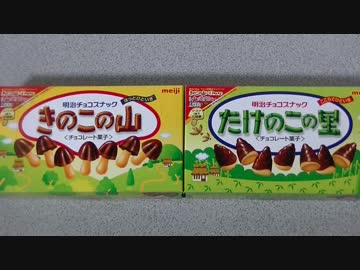
JaChiChoko

Image from a discussion, I kid you not, of how to use one kind of chocolate to troll fans of the other kind.

Posted in Japanese, Yojijukugo | Tagged , , , , , , | Leave a comment

Too mad right now to come up with a witty title

I literally searched for kotowaza about betrayal

獅子身中の虫
(Shishi shinchuu no mushi; “A bug in a lion”)

Definition:

Someone ostensibly a member of an organization who nonetheless causes it harm. Someone who rewards kindness with enmity. Like a parasite living within a lion and protected by the lion’s strength, yet eating out the lion from within until it dies. Or like a certain political party within a nation, protected by that nation’s strength, yet gutting its government and taking life-saving services away from its people in order to make a handful of plutocrats richer. Treachery from someone who was supposed to be on your side. Ugly, hypocritical betrayal.

Breakdown:

We begin with the noun 獅子 (shishi), “lion,” followed by the noun 身中 (shinchuu), “within the body.” This is connected by the associative particle の (no) to the noun 虫 (mushi), “bug,” in this case referring to parasitic vermin.

Notes:

It’s possible to use the first four characters of this phrase as a stand-alone yojijukugo. A longer version of the saying gives the mushi an action, 獅子を食らう (shishi wo kurau), “eats the lion.”

Pronouncing 身中 as shinjuu or rendering it as 心中 (“inner thoughts” or “double suicide”) would be considered an error.

Today’s kotowaza comes to us from the Brahmajala Sutra (梵網経, Bonmoukyou) of Mahayana Buddhism.

Example sentence:

「この獅子身中の虫等を明日の朝すぐ払い除けても、もう遅い、遅すぎる。来年が待ち遠しい!」

(“Kono shishi shinchuu no mushira wo ashita no asa sugu harai nozokete mo, mou osoi, ososugiru. Rainen ga machidooshii!”)

[“Even if we drive out these traitorous parasites first thing in the morning it will be late, way too late. I can’t wait for next year!”]

Posted in Japanese, Kotowaza | Tagged , , , , , , , , | Leave a comment

Like a tax code, perhaps

“Beware of he who would deny you access to information, for in his heart he dreams himself your master.” – Commissioner Pravin Lal, “U.N. Declaration of Rights,” Sid Meier’s Alpha Centauri

複雑怪奇
fuku.zatsu.kai.ki

Literally: multiple – miscellaneous – mystery – strange

Alternately: Comprising varied entangled elements, so that the reasons for things are unclear. Complicated and (therefore) mysterious.

Notes: Apparently the first usage of this compound is attributed to Showa-era writer and scholar Michio Takeyama

FukuZatsuKaiRo

But is it worse than Boston?

Posted in Japanese, Yojijukugo | Tagged , , , , , | 1 Comment

In which 0 = 7

And (n ≥ 1) = 48

無くて七癖
(Nakute nanakuse; “None, seven quirks”)

Definition:

Even someone who appears completely normal has their quirks, flaws, or questionable habits. Nobody is truly ordinary or above criticism. Everybody has their own faults.

Breakdown:

This compact idiom depends on elision. It begins with the adjective 無い (nai), “not,” in conjunctive form, followed by the number-noun 七癖 (nana-kuse), “seven habits.” (The implication is that the “habits” would be considered odd or bad, although examples such as verbal tics also fall into this category.)

Grammatically, this phrase simply doesn’t work as it stands; it should be read not literally but as shorthand for something along the lines of “(Even if it appears that somebody has) none, (they actually have) seven (hidden) quirks.”

Notes:

It’s said that the reason “seven” was chosen was simple alliteration: the nas in nana match up with the na in nai. Accordingly, while reading 七 as shichi is not strictly an error, it should probably be avoided.

Some versions of this expressions follow with あって四十八癖 (atte shijuuhakkuse), e.g. “Someone who has visible quirks then will have forty-eight of them.” – This number chosen due to 48 traditionally indicating a comprehensive set, as in the 48 basic techniques of sumo.

Example sentence:

無くて七癖で、全くもって一般人だと思った兄でも、クシャミのあと、グアーとか変な声を出す癖があるのに最近気が付いたんだ」

(Nakute nanakuse de, mattaku motte ippanjin da to omotta ani de mo, kushami no ato, ‘Guaa’ to ka hen na koe wo dasu kuse ga aru no ni saikin ki ga tsuita nda.”)

[“It’s said that everybody has their quirks – recently I noticed that even my older brother, who I’d thought was perfectly ordinary, has this habit of making weird noises like ‘Guh’ after sneezing.”]

Posted in Japanese, Kotowaza | Tagged , , , , , , | 1 Comment

It was the best of stuff, it was the worst of stuff

玉石混淆
gyoku.seki.kon.kou

Literally: jewel – stone – mix – mix

Alternately: Good mixed with bad. Valuable things mixed together with worthless things. Wheat and chaff.

Notes: Rare character 淆 may be replaced with 交 without any change in meaning or pronunciation. However, reading either of these as gou is considered an error, despite what one might guess based on normal rules for voicing in compounds.

This compound comes to us from a 17-century-old Chinese text known as the Baopuzi (抱朴子, in Japanese Houbokushi).

GyokuSekiSekiSeki

But what if you just polished all the rocks?

Posted in Japanese, Yojijukugo | Tagged , , , , , , , | Leave a comment

Green grow the rushes

Oh.

急いては事を仕損じる
(Seite wa koto wo shisonjiru; “To hurry is to fail”)

Definition:

If you rush things you’re going to make mistakes, and your attempt at speed will end up having been in vain. When pressed or pressured, be extra careful. Haste makes waste. 急がば回れ.

Breakdown:

We begin with the verb 急く (seku), “to hurry,” in conjunctive form. The combination of the “te” form and the following particle は (wa) creates a conditional, “If you hurry.” The clause describing the consequence begins with the noun 事 (koto), “thing,” “matter,” “situation,” etc. The “matter” is marked as the direct object of a coming verb by the particle を (wo), and that verb is 仕損じる (shisonjiru), “to make a mistake” or “to fail,” in sentence-final form.

Notes:

The final verb may appear in alternate form 仕損ずる (shisonzuru) or be replaced entirely by 過つ (ayamatsu), “to err.” However, while the kanji 急 is also used in the verb 急ぐ (isogu), reading the opening of this saying as Isoide wa would be an error.

This saying apparently comes to us from an 18th century Chinese text called the 通俗編 (in Japanese, Tsuuzokuhen).

Example sentence:

「石に躓いて倒れながら、大事に抱えていた焼き物がきっと飛んで行ってしまうと実感した渉君の脳裏に浮かんだたった一つの考えは、ああ、何度も耳にしたことはあるけど、これでようやく急いては事を仕損じるという言葉の意味が理解できた、ということであった」

(“Ishi ni tsumadzuite taore nagara, daiji ni kakaeteita yakimono ga kitto tonde itte shimau to jikkan shita Wataru-kun no nouri ni ukanda tatta hitotsu no kangae wa, Aa, nando mo mimi ni shita koto wa aru kedo, kore de youyaku seite wa koto wo shisonjiru to iu kotoba no imi ga rikai dekita, to iu koto de atta.”)

[“He tripped on a rock and as he fell, as he realized that the pottery he had cradled in his arms so carefully was going to go flying, the one thought that flitted through Wataru’s mind was ‘Oh, I’ve heard it over and over, but now I finally understand the meaning of the phrase Haste makes waste.’”]

Posted in Japanese, Kotowaza | Tagged , , , , , , | 3 Comments