You’ve got to really “stick” it in?

連木で腹を切る
(Rengi de hara wo kiru; “To cut one’s belly with a wooden pestle”)

Definition:

An impossible event or task. By extension, attempting to achieve the impossible. Attempting a task that is as daunting as slicing one’s belly open with an object as soft, blunt, and rounded as a wooden pestle in place of a suitable tool like a blade.

Breakdown:

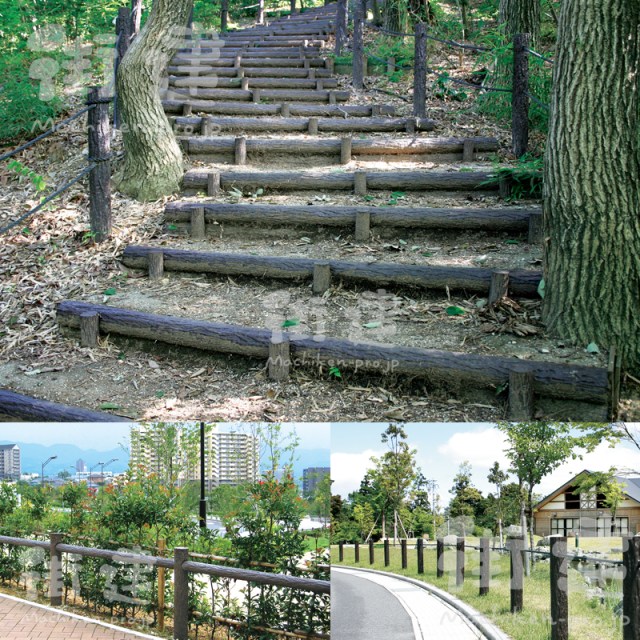
This is a pretty basic sentence. You’ve got the noun (hara), “belly,” which the particle (wo) marks as the direct object of the verb 切る (kiru), “to cut,” which appears in sentence-final form. The particle (de) marks the means by which the verb is performed – in this case, the noun 連木 (rengi). Note that 連木, not a common word, is often used to refer to a row of wooden crossbeams or posts (as in the photo below). In this case, however, it is the word in Kansai dialect for what is now more commonly known as a 擂粉木 (surikogi), a wooden pestle.

machikenpro-rengis

The kind of 連木 that this saying is NOT about. [Source]

Notes:

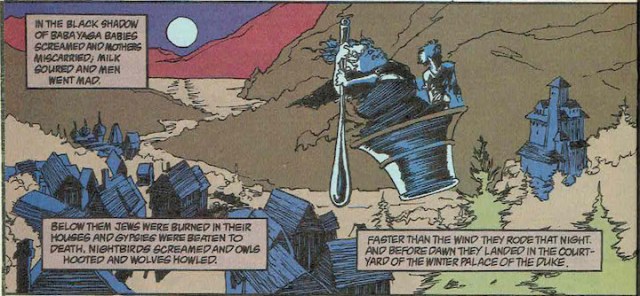
For those unfamiliar with the terms: a mortar is a bowl for grinding things in, and a pestle is the rounded rod used to smash or grind the mortar’s contents. In Slavic folklore, the Baba Yaga is sometimes portrayed as flying through the air riding in a mortar which she “rows” with a broom and/or pestle.

This saying is the entry of the Kyoto and Osaka iroha karuta sets, where it appears without the particle を – an acceptable alternative form.

Example sentence:

「今晩精一杯頑張って、明日ちゃんと宿題を出しなさい。連木で腹を切るほど難しくないはずだよ」

(“Konban sei ippai ganbatte, ashita chanto shukudai wo dashinasai. Rengi de hara wo kiru hodo muzukashikunai hazu da yo.”)

[“Work as hard as you can tonight, and turn in your homework tomorrow like you’re supposed to. It’s not impossible.”]

bymortarpestle

From Neil Gaiman’s Sandman comic, issue #38, “The Hunt.” Gaiman seems to have liked Baba Yaga, because this isn’t the only time she shows up in his stuff.

Posted in Japanese, Kotowaza | Tagged , , , , , , | Leave a comment

Squirtle used Waterfall!

Because as anime shows, all Japanese people are connected to interdimensional reservoirs of fluids.

冷汗三斗
rei.kan.san.to

Literally: cold – sweat – three – to [a unit of measure]

Alternately: Breaking into a cold sweat due to extreme fear or embarrassment.

Notes: A is equal to ten , or in more familiar terms, 18 liters. 三斗 is thus 54L, or about 14.26 gallons – a comically vast amount of sweat.

The final character may also be pronounced voiced, as do. A synonymous compound replaceswith mere (sui), “water.”

reikanzukan

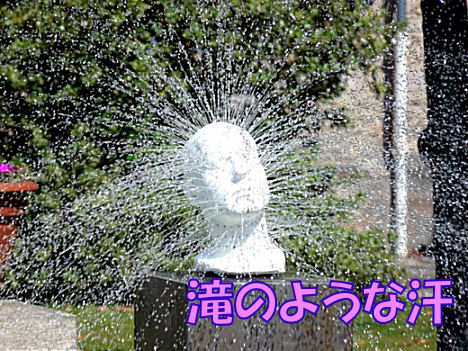
Gotta keep cool, see. Text says “sweat like a waterfall.”

Posted in Japanese, Yojijukugo | Tagged , , , , , , | Leave a comment

Magic Monday – God-eaters – The Wolf-Mother

The Wolf-Mother
(Moro, The Full-Moon Mother, The Huntress)

Description: Moro is a huge white wolf the size of a large horse or small elephant. Despite her mass and color, she is a surprisingly stealthy hunter. She and her family live in a craggy area near the ancient array of standing stones known as the Wolf Fane, but she claims the role of protector of all wolves in the region. The Wolf-Mother is a creature of strong passions, but also of cunning and of the wisdom that comes from long and hard experience. If she has a voice that isn’t a throaty growl or howl, no human has ever heard it.

Worshipers: No. Moro would be happier never having to deal with another human. She hates them all, but avoids conflict because she recognizes that opening hostilities would only doom her people, and perhaps large swaths of the forest population, to genocide.

Servitors: Yes. While they aren’t “servitors” in the sense of being under her control, all wolves in the region respect Moro. Even those who dislike her personally will tend to answer her requests, follow her advice, and fight together with her against outside forces. Dogs, who view her as a particularly overwhelming primal deity, will refuse to act against her and will abandon or even turn against a party that attacks her.

Confrontation: Moro tends to avoid humans when possible, preferring to gather intelligence on those in her territory from as great a distance as possible. She does this both through other animals, in return for various debts or favors, and by direct observation from chosen vantage points. If forced or goaded into battle (she does have a bit of a temper, and doesn’t respond well to threats) she is a brilliant tactician and fearsome combatant, albeit one who has never had to develop long-term strategies. Moro tends to favor hit-and-run tactics that strike at an opponent’s weaknesses. If she is killed, the rest of her pack will hunt the killers until one side or the other is dead.

Aspect: Tungsten; speed; ferocity. Those present at defeat may boost Dexterity, Stamina, and Reflex save, and put two points each into combat and Perception skills.

Powers – Tier 1: The character gains +1 to every Perception skill and to one combat skill, and may take a point of fatigue to take one extra action in a given round.

Powers – Tier 2: The character gains night-vision and may take any number of extra actions in a round, although each costs one more points of fatigue than the previous. Their Stamina and Health meters both increase by one. Their face becomes leaner, their canines more pronounced, their eyes turn yellow or red, and their hair will begin to whiten prematurely. They may add one more skill point to a combat and a perception skill.

Powers – Tier 3: The character grows fiercer and more determined They may spend a point of stability each round to ignore all ongoing emotional and physiological effects such as fear or pain. They may add one more skill point to a combat and a perception skill.

Powers – Other: The essence of the Wolf-Mother makes the character an object of awe and veneration for all lesser canines; dogs will obey them unquestioningly. The character also gains +4 to all social rolls made with wolves, and -4 to all social rolls made with wargs.

Example Checks: Anyone who has absorbed part of Moro’s essence must check Humanity (difficulty d20) in order to harm any wolf or dog. They must also check (d10) to refrain from attacking an enemy who shows weakness, or any warg on sight. Finally, if hearing wolves howling, they must check (d6) to avoid answering.

Notes: Moro will minimize contact with humans, but has been known to deal with or even adopt people who renounce their humanity and become honorary animals. (This costs an actual point of Humanity in addition to the need to perform some quest or favor for a sponsoring animal-god.) Naturally, she and her people are mortal enemies of the wargs.

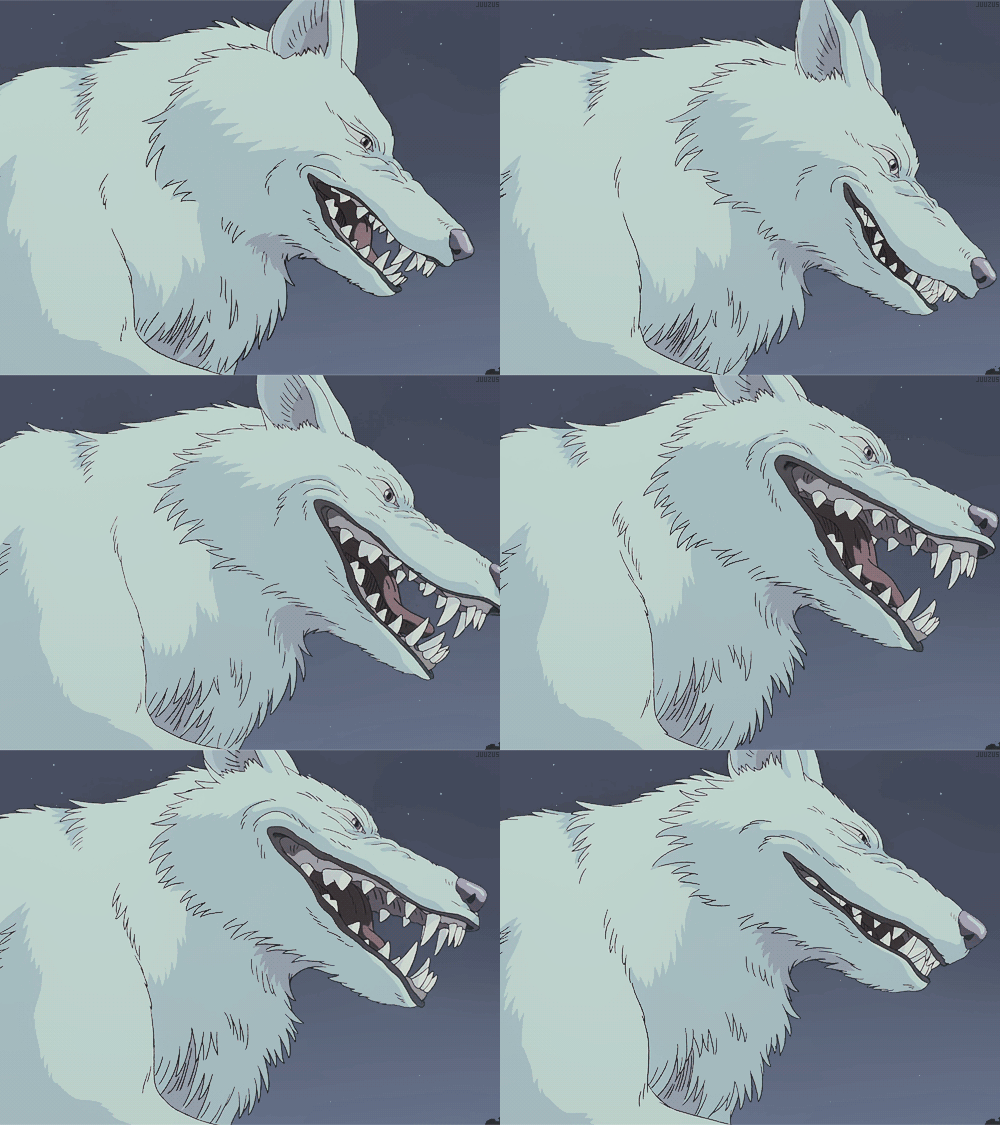
morolaugh

Posted in Rules, Setting, World-Building | Tagged , , , , | Leave a comment

Rui-san calls her friends?

類は友を呼ぶ
(Rui wa tomo wo yobu; “Like calls unto like”)

Definition:

People will naturally self-sort. People who are similar will tend to find each other, group together, and become close. “Birds of a feather flock together.” Nerds sit at lunch with nerds, jocks with jocks, band geeks with band geeks.

Breakdown:

The topic of discussion, as shown by the topic-marker particle (wa), is the noun (rui), “kind,” “type,” “equal,” “peer,” etc. In this case it refers to people who resemble each other in some aspect or who get along well. What they do (technically, the verb associated with this topic) is 呼ぶ (yobu), “call (out to),” and the direct-object marker (wo) shows that what is called to is (tomo), “companions.”

Notes:

Despite the English parallel given at the top, it’s an error to replace with a second .

This saying is derived from the synonymous phrase 類を以て集まる (rui wo motte atsumaru), which in turn is derived from a saying in the I Ching.

Example sentence:

類は友を呼んで、いつの間にかこの学校に文芸サークルができたみたい」

(Rui wa tomo wo yonde, itsu no ma ni ka kono gakkou ni bungei saakuru ga dekita mitai.”)

[“I guess like called to like, and before you knew it our school had a literature club.”]

Posted in Japanese, Kotowaza | Tagged , , , , | Leave a comment

Spinning everyone’s wheels

and spinning and spinning and spinning and spinning and

縷縷綿綿
ru.ru.men.men

Literally: thread – thread – cotton – cotton

Alternately: Someone speaking, talking, or just generally carrying on in a long-winded, verbose, wordy way, possibly with lots of repetition or redundancy, that goes on for far too long and never seems to end despite the lack of content, whether any content whatsoever or merely an amount of content that stands in any sort of reasonable proportion to the actual number of words they’re using or the actual amount of time they’re spending on uttering those words, leading to a general feeling in the listener of boredom, discontent, and the general wasting of their precious time.

Notes: This is another compound of the type that uses doubling for emphasis. 縷縷 is something going on in a long, thin way (like a thread); 綿綿 is describes something that seems to never pause or end.

This phrase can be written with the doubling mark (縷々綿々) and/or with alternate character for men.

Also a small-time pop song!

Posted in Japanese, Yojijukugo | Tagged , , , , | Leave a comment

Magic Monday – God-eaters – Echo

The Knocker
(Echo, Kobold)

Description: The Knocker is the genius loci of a specific mine, and never ventures beyond the mine’s entrance – only even approaching areas where the outside light is visible under extreme circumstances. It rarely takes physical form, most commonly manifesting as random creaking, tapping, knocking, and other sounds from somewhere close by but just out of sight. Such sounds also occur naturally underground, so usually the Knocker’s presence can only be detected by increased frequency, or by the unpleasant effects of its attention. In addition to spooky or misleading noises, the Knocker can generate patches of bad smell or even bad air.

Rarely, the Knocker may manifest as a small flame (like a candle or lantern, seen at a distance), or as an animal or humanoid figure. At first this latter appears to be a human child, but soon it will show its anger, and its features will twist into monstrous shapes. This is its most vulnerable manifestation, but also the only one in which it can speak in human tongues. It will generally take on visible form in an attempt to lure invaders to their doom. These forms are material, and can be killed, but they can also levitate (which allows it to walk over pits and drop-offs as if they were solid floor) and, with a round of concentration, can even sink into a wall or floor and disappear.

Worshipers: Yes. All the miners and their families carry out a number of rituals, and wear special tokens on their gear, to avert Echo’s wrath. It still doesn’t like them and will occasionally throw a tantrum. But local lore keeps the miners well-versed in the signs, and few are actually killed. A party openly moving against Echo will raise controversy among the locals, as the community is torn between hope (that it might be eliminated) and fear (of reprisals).

Servitors: No. However, the Knocker does seem to have an understanding or symbiotic relationship with the local grue population. One of the ways it will attempt to deal with interlopers is to put out their lights, raise some noise, and allow the grue to come feed.

Confrontation: To enter its mine is to invite harassment from the Knocker. It mostly ignores the miners, though, so blending in with them – and especially following their worship traditions – offers a decent amount of protection. Those who stand out, who fail to show proper deference, or who seem to be actively causing trouble will paradoxically be denied a response for a while as it watches, plans, and nurses its anger, and then face a campaign of increasingly direct tricks, traps, threats, and harassment. Echo is generally confident in its ability to become incorporeal and hide away within the walls, and will repeatedly use its visible forms as bait for various traps. If all else fails, it will lead invaders to specific points and attempt to cause a cave-in – not necessarily to kill them directly, but to trap them and watch them starve, go mad, or be eaten by the other dwellers of the darkness.

Aspect: Cobalt; air; darkness; grudges. Those present at defeat may boost Intuition or Presence, and Psychic or Corruption saves, by one each. In addition, each character gets three skill points to distribute among Conceal, Sneak, and Survival (Underground).

Powers – Tier 1: The character gains +2 to Sneak and Wariness skills. They also gain the ability to create audible illusions of natural noises (water, stone, wind, and so on) or of their own voices anywhere in the vicinity.

Powers – Tier 2: The character can sense the composition of nearby earth and stone, and when touching it may cause it to shift. This ability can’t form complicated structures, but it can collapse weak areas, bring embedded objects such as veins of ore to the surface, or even be used to contaminate or purify ore, gems, or various types of stone. They also increase their Sneak, Wariness, and Survival (Underground) skills by another +2 each.

Powers – Tier 3: Anyone who has lost more than half of their Humanity after embracing Echo’s essence becomes grayer and smaller. They may become intangible to merge with nearby earth or stone; while intangible they do not need to breathe, and can see and hear everything that happens in the area. Sneak and Survival (Underground) gain an additional +2, and the character gains another three points to apportion among Perception skills as they see fit.

Powers – Other: The essence of the Knocker carries an affinity for the dangers of deep caverns. Grue will no longer harm the character unless directly attacked. The character can intuitively tell good ores, air, and waters from ones that are poisonous.

Example Checks: Anyone who has absorbed part of Echo’s essence must check Humanity in order to endure direct scrutiny or to let go of a grudge.

Notes: Echo is based to a degree on real folk beliefs. It’s intended to be qualitatively different from the “super-powered animals” image I’d been coming up with so far (although there are a few more of those rattling around in my headspace). While physically formidable and often surrounded by allies, animal-type deities are relatively easy to defeat when careful planning and concentrated effort are involved. The Kobold isn’t especially dangerous, but should provide an entirely different kind of challenge.

Posted in Rules, Setting, World-Building | Tagged , , , , | Leave a comment

Never trust anything strawberry-flavored

In fact, when in doubt, just go with the most masochistic option available.

良薬は口に苦し
(Ryouyaku wa kuchi ni nigashi; “Good medicine is bitter in the mouth”)

Definition:

Good advice is hard to listen to. The advice that we most desperately need is that which points out and helps us to escape our most damaging failings… which is exactly what we least want to face and grapple with. Unlike the English equivalent line about “a spoonful of sugar,” this saying primarily refers to the pain of receiving this kind of feedback.

Breakdown:

We begin with the noun 良薬 (ryouyaku), literally “good medicine.” This is marked by the particle (wa) as the topic of discussion in the sentence. Next we get the noun (kuchi), “mouth,” marked by the location particle (ni). What is it in the mouth? The adjective 苦し (nigashi), “bitter.”

Notes:

This saying appears in the Edo iroha karuta set, but not under as you would expect from modern orthography. Instead, this is the entry. According to older conventions the compound that is now りょう would have been written as れう. (The most amusing example of this phenomenon may be けふ – which, read in modern terms, would say kefu – as kyou.

This saying is derived from the first part of the same longer Chinese passage that gave us 忠言耳に逆らう.

Example sentence:

「小僧よ、良薬は口に苦しと言うのはよくわかってるのだが、これからの忠告を素直に聞け」

(“Kozou yo, ryouyaku wa kuchi ni nigashi to iu no wa yoku wakatteru no da ga, kore kara no chuukoku wo sunao ni kike.”)

[“Okay, brat, I know all about how good medicine is bitter, but be good and listen to the advice I’m about to give you.”]

Posted in Japanese, Kotowaza | Tagged , , , , , , | Leave a comment

Apple tree turning yellow

(林檎黄変)

臨機応変
rin.ki.ou.hen

Literally: meet – opportunity – reply – change

Alternately: Adapting to the current situation. Playing things by ear. “Facing the current situation and responding to changes.” Specifically, responding appropriately to changing situations, with the knowledge that it is impossible to predict and plan ahead with perfect accuracy.

Notes: Some people may replace with homophone or even , but both of these replacements are considered errors.

This compound can be traced back to Chinese antiquity, attributed in turn to the History of the Southern Dynasties, the History of Song, and the teachings (as collected by his disciples) of Song dynasty Confucian scholar Zhu Xi.

rinkilego

For example, you might turn into a bunch of Lego bricks. Then what would you do?

Posted in Japanese, Yojijukugo | Tagged , , , , , , , , | 2 Comments

They’ll let you have next Tuesday, though

来年の事を言えば鬼が笑う
(Rainen no koto wo ieba oni ga warau; “Oni laugh when you talk about next year”)

Definition:

Nobody can accurately predict the future, so there’s no use in trying to say what’s going to be happening next year. People who try are being so ridiculous that even supernatural beings will take notice and make fun of them. This saying is generally used to poke fun at people who talk thoughtlessly about what the future is going to be like.

Breakdown:

We’ve got a couple clauses here. The first begins with the noun 来年 (rainen), “next year.” (Literally “the coming year.”) This is linked by the associative particle (no) to the noun (koto), “thing,” which in this case serves a function similar to “the matter of” or simply “about.” The final verb of the first clause is 言う (iu), “to say,” in conditional form, and the particle (wo) marks the preceding noun phrase as its direct object.

The second clause is a simple subject-verb arrangement. The noun is (oni), a humanoid monster whose name is variously translated as “demon” or “ogre,” but is perhaps often best left as-is. This noun is marked as the subject by the particle (ga). And the verb is 笑う (warau), “to smile” or “to laugh,” in sentence-final form.

Notes:

This is the entry of the Kyoto iroha karuta set.

Another version of the same saying replaces 来年 with 明日 (asu), “tomorrow.” Other variants simply use the alternate conditional structure 言うと in place of 言えば or elide の事. Finally, a couple versions replace the laughing oni with birds or even with a mouse on the ceiling.

Example sentence:

「計画を立てるのはいいけど、必ず予想通りに成し遂げられるなどと思い込むな。来年の事を言えば鬼が笑うぞ」

(“Keikaku wo tateru no wa ii kedo, kanarazu yosou doori ni nashitogerareru nado to omoikomu na. Rainen no koto wo ieba oni ga warau zo.”)

[“It’s good to make plans, but don’t fool yourself into thinking that you’re definitely going to be able to carry them out exactly as planned. ‘When you talk about next year, oni laugh at you!’”]

Posted in Japanese, Kotowaza | Tagged , , , , | 1 Comment

Ah, spring

…When love shoots you with arrows of ruination?

落花流水
ra-.kka.ryuu.sui

Literally: fall / drop – flower – flow – water

Alternately: Today’s yojijukugo is interesting because it has a series of seemingly unrelated meanings. The image invoked is of falling flowers and running water, specifically of petals flowing away down a stream. ① This invokes the sense of springtime passing away. The sense of loss and evanescence is also reminiscent of ② an object or person that has come to ruin or been reduced to poverty.

However, the phrase can also refer to ③ mutual love and understanding between two people, especially romantic love between a man and a woman.

Notes: Writing 落花 with homophone 落下, “a fall,” is an error. However, the elements of the compound may be reversed and written as 流水落花.

rakkamanga

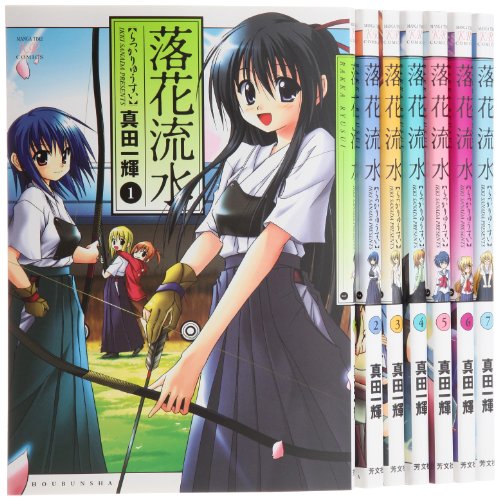
Also the title of a four-panel-format comic about the antics of an archery club at an all-girls school.


(Note: Tomorrow is Yom Kippur, so the usual Wednesday 四字熟語 post is going up a bit early.)

Posted in Japanese, Meta, Yojijukugo | Tagged , , , , , , | Leave a comment