A GOP Parable: On Neighborliness

On one occasion, Drumpf stood up to test Jesus. He wasn’t an expert in the law, but he sure had opinions anyway. “Teacher,” he asked, “What must I do to gain a facade of basic human decency?”

“What is written in the Law?,” Jesus replied. “How do you interpret it?”

Drumpf answered. “I don’t know about you, and the Law is very complicated and all that, but let me tell you this. I’m an okay guy. I do things that are good. And there are people, I have lots of friends, and they call me up and they say, ‘You did good. Keep it up.’ And I do.”

“Do good things for whom?” Jesus prompted, very patiently.

Five minutes later, when it was clear that Drumpf wasn’t going to give a straight answer, Jesus told him, “Your neighbor. The answer is your neighbor. Love your neighbor as yourself, and treat them as you would want to be treated, and you will be living a worthwhile life.”

But Drumpf wanted to justify himself, so he asked Jesus, “And who counts as my neighbor?”

In reply, Jesus said: “A man was commuting from Mexicali to Brawley, when he was attacked by racists. They stripped him of his clothes, beat him, and went away, leaving him half-dead. A Republican happened to be driving down the same road, and when he saw the man, he swerved a little to avoid him. Next came a Tea Partier; when he came to the place and saw the man, he too swerved and went on his way.

“But a gay transvestite Tumblrina came to where the man was, and saw him, and took pity. They put the man in the back seat of their own car, brought him to a hospital, and did his paperwork for him.

“Which of those three do you think was a ‘neighbor’ to the man who was beaten up by racists?”

Drumpf replied, “I don’t know about you, but let me tell you this. What if the guy who got beaten up was a rapist? What if he had drugs? I hear there are people out there with drugs. There are people out there with rape. We have to keep them out. If we help them, they’ll just bring us their drugs and rape. Now I don’t know or care about either of those things, but there are lots of people who are worried. They say the situation is bad. And that makes me worried. So, you know, we need to take action. If we want to get rid of drugs and rape, bam, build a wall.”

And Jesus facepalmed. “Father,” he said, “Help me out here. I have found a creature that is immune to parables.”

Jesus Facepalm

Posted in Musing, Nonfiction, Short Fiction | Tagged , , , , | Leave a comment

Purple mountain majesties + brightly-shining streams

山紫水明
san.shi.sui.mei

Literally: mountain – purple – water – bright

Alternately: The purple color of mountains reflecting sunlight and the clarity of (mountain) streams or lakes. This phrase suggests the purity and beauty of natural landscapes in general. “Nature is pretty.”

Notes: This phrase was taken from one of the poems of Edo-era writer Rai Sanyou.

SanShiSuiMeiShot

The irony being that the water in that rice field, while very pretty, is full of mud and all sorts of little animals. Source.

Posted in Japanese, Yojijukugo | Tagged , , , , , , | Leave a comment

Magic Monday – Don’t try this at home, kids

Heart’s Blood

This ritual is related to the Altar-Chant and, despite being far more benign to others than its cousin, is similarly suppressed by the Order, albeit to a lesser degree. This is the spell by which a magician may sacrifice some of their own life-force to power magic that they would otherwise not have the focus to command. While the stereotypical Heart’s Blood ritual involves literal blood-letting, the cost to the user’s health is not always so obvious. Even for experienced practitioners, caution is advised when tapping their deepest reserves in this way.


The base difficulty is d4, and the simplest form of this spell allows the caster to choose a die-size of damage to take with a d1 return of energy, which may be spent on an immediately-ensuing ritual or spell in place of strain or fatigue costs, per point of damage taken. A medical skill check at d8 allows a specified rather than random amount of damage to be taken. The energy that can be extracted from each point of damage can be increased by a step if the difficulty is increased by a step (any number of times), or by increasing the casting time for this ritual to an hour (one time only).

Posted in Rules, Setting | Tagged , , | Leave a comment

I never look back, darling

It distracts from the now.

後悔先に立たず
(Koukai saki ni tatazu; “Don’t put regret in front.”)

Definition:

An admonition: Don’t regret things that are over and done. Don’t spend time ruing something that can no longer be changed. “Don’t cry over spilled milk.” It is better to spend extra time and effort being careful before anything bad happens than losing the same time and energy to regret after it happens.

Breakdown:

We have a brief but complete sentence here. The verb is 立つ (tatsu). Generally translatable as “stand,” this form is only used intransitively in modern Japanese (the transitive form is 立てる), but classically it could be used either way. The verb appears in imperfective form with negative suffix (zu) in sentence-final form. The “location” of the verb is indicated by the particle (ni) and specified by the noun (saki), “before,” “front,” “future.” Finally, although it’s not marked as such by any particle, we’re given the object of the verb, the noun 後悔 (koukai), which can be translated as “regret,” “remorse,” or even “repentance.” The subject (the person being addressed) is implied rather than explicitly included.

This doesn’t come out well in translation, but I’m tickled by how the in koukai means “after,” while means “before.” It might just be a linguistic coincidence, or it might be the whole point of the saying, but it serves to emphasize how nonsensical it can be to go on inserting the past into the future by keeping regrets in mind.

Notes:

That said, I disagree with the tenor of the above paragraph, to an extent. Regret itself is not inherently nonsensical, nor is it necessarily a waste of time. It’s a tool that evolution left us with. I believe that regret is all about remembering how one’s actions led to an undesirable outcome, and its purpose is to help us avoid undesirable outcomes by not repeating those actions. Regret, used correctly, is a spur to make you inspect your own actions and methods and do better next time. In short, as I try to suggest with the last line in the “definition” section above, regret should be part of the backdrop against which you plan for the future, instead of being held in front of your face so that it blinds you.

Some versions of this saying expand the compound noun 後悔 to 後の悔い (nochi no kui) – the exact same content presented in a less Chinese-like style. One of my sources gives a comma between 後悔 and , although it’s not necessary and I wouldn’t recommend it. Replacing 立つ with 建つ, a homophone of somewhat similar meaning, is considered an error.

Apparently some versions go on with a second clause that warns against putting one’s lantern-bearer behind one, but to be honest I feel like this confuses the issue by introducing either an outdated and unrelated specific warning, or by suddenly throwing an unclear metaphor into what was previously a clear statement.

Example sentence:

子供の頃から何度も失敗して後悔を激しく覚えて来た美智子であったが、その日、後悔先に立たず積極的に頑張ることを心の中で誓った。

(“Kodomo no koro kara nando mo shippai shite koukai wo hageshiku oboete kita Michiko de atta ga, sono hi, koukai saki ni tatazu to sekkyokuteki ni ganbaru koto wo kokoro no naka de chikatta.”)

[“Since her youth, Michiko had erred time and time again and had known fierce pangs of remorse. But that day, she swore to herself that she would forge forward without letting regret get in the way.”]

Posted in Japanese, Kotowaza | Tagged , , , | 1 Comment

Pen-and-paper RPG thoughts: an “unlock campaign”

Impetus:

Inspired by Delta’s post on “oil” as a weapon, found here. Long longago I read that and got to thinking, what if there were a fantasy campaign with some sort of weaponized flammable liquid (Greek fire, alchemist’s fire, wildfire, dragonfire, napalm, what-have-you)? But instead of merely limiting its use by making it dangerous to carry or expensive (options brought up in the comments of the linked post), you (also) limited its availability spatially? What if PCs had to go to a specific place on the map to get it? What if they had to use special measures to get their hands on it? The trope has plenty of precedent, and is easy to justify in-world.

Maybe the alchemist’s guild controls the production and sale of alchemist’s fire, and limits distribution to trusted customers. Maybe wildfire can only be bought from goblins at their seasonal Goblin Market in the depths of the woods. Maybe the only explosively flammable liquid around is dragon bile, which can only be procured from Mikel the Wyrm-Tamer. Maybe such a dangerous substance is controlled by the government, and you need a license or the right black-market connections to buy and use it. The point is that by going to the right place and doing the right things (making friends, performing favors, paying money, conducting a raid, etc.), the PCs can get their hands on a special resource and as a result, expand their options.


The campaign structure idea:

Then I got to thinking: You could probably build the backbone of a campaign from this conceit. One of the problems with “sandbox” or “crawl” campaigns is finding goals to motivate the players, especially at the beginning. But if the party knows that they can expand their list of available resources, and thus their range of options and efficacy, they have strong incentive to go off in any number of directions, and can happily spend time strategizing about which resources to pursue and what order to do it in.

So you make a list of resources that, by logic or fairness, would be available from the start: basic tools of the trade like some kind of weapon, some kind of armor, some source of light, rope, clothing, basic magical training, etc. Give this to the players so they know what they have – and next you’ll want to give them some clues about what they don’t have, and how they might get it.

Make a list of things that they’ll need to go through some effort to possess. Maybe standard arms and armor are available, but better versions (steel or other special material, high-quality products, magical items, etc.) are harder to get. Maybe a limited selection of spells is available, and the party needs to search for rarer magics for their magicians to learn. Maybe even mercenary hirelings, libraries of information, and other services need to be “unlocked.”

When you’ve got your list, you can start seeding your maps with not only the usual arbitrary caves, fortresses, tombs and dungeons, but also resource sites. That is, make sure the party will have the chance to expand their list of available equipment at some of the caves, fortresses, etc. Don’t fill the map with nothing but resource sites, of course, unless you want to eliminate the feel of adventure and discovery and make it into more of a puzzle, in which the players try to decide on the best order to tackle the available challenges.

Do make sure that the party starts out knowing about a few of the resources to be won and the sites to win them at. This information could be given in the form of entries in a rumor table, as explicit quests from NPCs, as common knowledge imparted as part of your opening exposition, or even as meta knowledge given directly to the players. There’s no need to show your whole hand, though. While high-level resources can be teased long before you believe the party is capable of getting them or using them effectively, knowledge of “hidden” resources can itself be a goal for the party to pursue or a form of treasure or reward for the characters to win.

As may have been obvious, part of the inspiration for this train of thought is computer games. It’s a time-honored tradition to have aspects of play “locked” until you pass the right hurdle, whether that be a boss fight, a puzzle, a skill challenge such as platform-jumping, or just some minimum of exploration or other proof of having played for a set amount of time. The question is how to fit these elements in a naturalistic and fun way into a RPG world instead of a video game one.

Posted in Miscellaneous, Musing, Setting, World-Building | Tagged , , , | 1 Comment

Gori in the mist

(Title cf.)

五里霧中
go.ri.mu.chuu

Literally: five – ri – fog/mist – middle

Alternately: Completely lost. Unable to grasp the current situation, and therefore unable to foresee what may come or lay out any sort of meaningful plan.

Notes: The ri (sometimes called a “Japanese league” or “Chinese mile,” depending on which culture you’re interacting with) is a unit of distance ranging from about 600 m to about 4 km. The character can also refer to a village or small town, specifically one’s hometown (in contrast to “the city”), or to an administrative division of 50 homes, or to an equivalent area. There’s a lot of history bundled up in there, and I suggest looking into it, but for our purposes here it essentially means that the fog is extensive.

This yojijukugo apparently comes from a brief story in the Book of the Later Han, in which Zhang Kai is famed for being able to magically raise a fog-bank five ri wide.

Some people mistakenly render the latter half of this compound as 夢中 (also pronounced muchuu). The term means “engrossed,” or “in a daze / trance,” so it may seem appropriate, but this is an error that loses the reference to the five-ri fog.

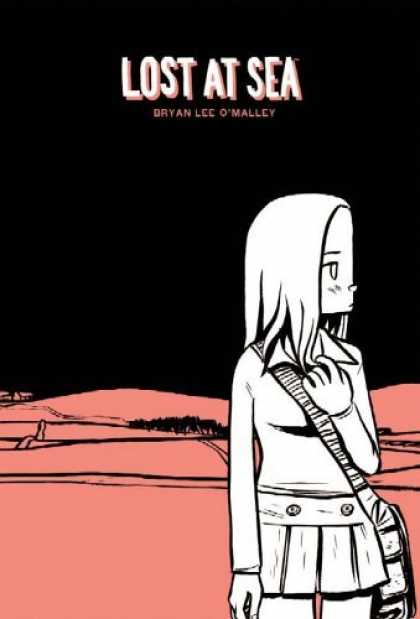
GoRiLoSea

It’s not Japanese culture, but I thought I’d take the chance to recommend this less-famous but quietly moving story by the creator of the Scott Pilgrim series.

Posted in Japanese, Yojijukugo | Tagged , , , , , | 2 Comments

Magic Monday – A cult classic!

Altar-Chant

Here’s a spell for your standard evil ritual, performed by maddened (or rapidly maddening) devotees of dark deities. Sometimes what you want to do with your magic is possible in theory, but impractical or impossible due to the cost. Well (goes the reasoning), if your need is great enough, why not offload that cost to others? All you need to do is scream the Altar-Chant’s invocation, let the blood out of a few victims, and you’re in service and can get on with summoning Ycnàgnnisssz or the Nameless Mist or what-have-you.


The altar-chant is a brief ritual. The base difficulty is d8, and the cost is not strain, but rather the permanent sacrifice of one point of stability. For as long as concentration is maintained after the Altar-Chant is completed, blood can be let from victims and the damage (enough to fill the victim’s HP meter) used in place of the strain or fatigue that a spell or ritual would normally demand. It is theoretically possible, with an appropriate medical skill check (d10), to limit the blood loss so that a sacrifice isn’t killed in the process. If none of the sacrifices die, the caster’s stability loss is temporary rather than permanent.

Using an enchanted altar and blade, or similarly specialized tools, decreases the difficulty of the Chant by one step. Extending the length of the Altar-Chant to one hour per victim doubles the amount of “energy” that can be harvested from each sacrifice. Repeated bouts of sacrifices will have a deep and lasting impact, over time, on the local nature of the Shadow, among other effects.

Posted in Rules | Tagged , , , | Leave a comment

Juggling for a rainy day

芸は身を助く
(Gei wa mi wo tasuku; “An art saves the body”)

Definition:

Take the time to learn a skill or develop a talent, because the time may come when you’ll need it to make a living. Even hobbies can be useful in practical terms.

Breakdown:

We have another full sentence! The verb this time is 助く (tasuku), “to help” or “to save,” in sentence-final form. This usage is archaic, though: modern Japanese uses either transitive 助ける (tasukeru) or intransitive/passive 助かる (tasukaru). The verb is attached by object-marker (wo) to noun (mi), “body,” and by extension “person” or even “one’s station in life.”

Notes:

One of my sources asserts that it can be rude to say this to a person! This is supported by another saying, 芸が身を助けるほどの不仕合せ (Gei ga mi wo tasukeru hodo no fushiawase), “Unhappiness equal to that of needing to live off your hobbies.” The implication is that making money from an artistic skill that would otherwise simply be a hobby offers lower income and a lower standard of living than a “normal” job (or caste role, perhaps), and that to be reduced to such straits one must have already suffered some great misfortune.

It’s worth noting that there are other sayings considered antonymical to this one, which say that pursuing an art is harmful to your . I suspect that this is a warning against obsessive pursuit of a given skill, meaning that both ideas can be correct and a happy medium, as usual, is probably best.

The final verb may also be given in its modern transitive form 助ける, and the particle may be replaced with subject-marker (ga), without any significant change in meaning.

This saying is the ke entry in the Edo iroha karuta set.

Example sentence:

「不況だからこそ木彫り教室に行きたいんだよ。芸が身を助ける日が来る恐れもあるし」

(“Fukyou dakara koso kibori kyoushitsu ni ikitain da yo. Gei ga mi wo tasukeru hi ga kuru osore mo aru shi.”)

[“It’s exactly because we’re in a recession that I want to go to wood-carving classes. There might come a day when we have to live off of our hobbies.”]

Posted in Japanese, Kotowaza | Tagged , , , , , | 1 Comment

A GOP Parable: On Strategies and Consequences

The word of the Constitution came to Mitch, son of Addison: “Go to the Senate floor and hold a vote on confirming a supreme court justice nominee, because a vacancy has come before me.”

But Mitch ran away from the Constitution and headed for Tarshish. Thus, as time went on, evenly split decisions came down, and there was a mighty tempest in the nation, so that the rule of law was like to be broken. And every administrator was afraid because many policies existed in a state of legal limbo, so that enforcement was lightened, and confusion and corruption flourished. But Mitch was hiding in a corner with his fingers in his ears, pretending to be fast asleep.

The administrators searched for the source of the problem, and found that the chain of causality led back to Mitch. They said to him: “Tell us, why is this evil upon us? What is your job? Where do you come from? Who are your people?”

He replied, “I am from Kentucky, and I serve the Constitution, on which all the laws of the land depend.”

The administrators were terrified. They asked him, “What on Earth are you doing?” For they knew that he had turned his back on the Constitution, and was setting an ever-stronger precedent of petty obstructionism and partisan gridlock. The inevitable result would be increased governmental dysfunction, dwindling trust in its mechanisms by the people, and the rise of demagogues without any respect for negotiation, nuance, or the rule of law. They asked him, “So what are we supposed to do now? We want our governance to go smoothly, with cooperation and trust from our constituents.”

And Mitch replied, “That’s not my problem. Stopping the current president from building a legacy is more important to me than anything else in the world.”

So they got fed up and threw him out of their boat.

And an oversize beast with tiny vestigial hands and fake hair came up out of the slimiest depths of the sea to swallow up Mitch. And Mitch was in the belly of the beast for an entire election cycle. And Mitch prayed to the Constitution, his master, from the beast’s belly.

But for some reason this was an age when crass willfulness trumped the rule of law, and the Constitution did not save Mitch from the monster he, and those like him, had summoned.

(To be continued…???)

Posted in Musing, Nonfiction, Short Fiction | Tagged , , , , , , | Leave a comment

Do what I say, say what I do

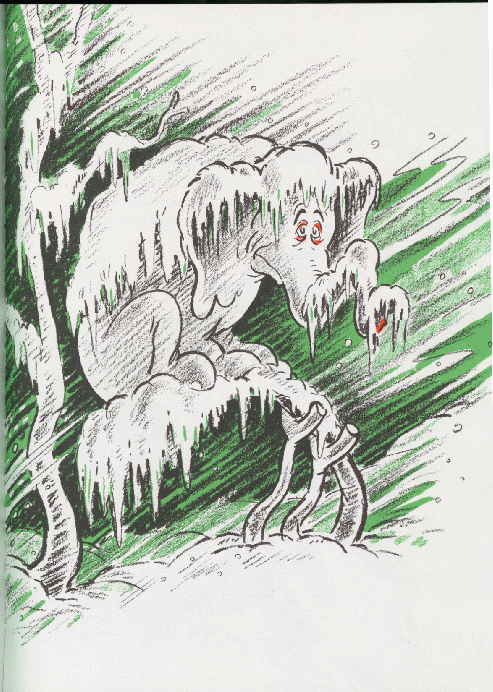
An elephant’s faithful, one hundred percent!

言行一致
gen.kou.i-.cchi

Literally: speak – go/act – one – do

Alternately: One’s words and actions are in accord. Doing what one says. Walking the walk as well as talking the talk. The opposite of hypocrisy.

GenKouHorton

Another moral of the story is, think about whether you’re truly willing to see something through before you promise to do it.

Posted in Japanese, Yojijukugo | Tagged , , , , | 1 Comment