Better to be thought a fool

…than to be shot down.

怜悧なる頭には閉じたる口あり
(Reiri naru atama ni wa tojitaru kuchi ari;
“In the clever head, a closed mouth.”)

Definition:

A wise person doesn’t speak any more than necessary, and thus doesn’t say foolish, boring, or pointless things. “Silence at the proper season is wisdom.”

Breakdown:

We begin this complete sentence with the compound noun 怜悧 (reiri), “cleverness,” “wisdom.” This is followed by the copular particle なり (nari) in prenominal form as なる, allowing it to attach to and modify the noun 頭 (atama), “head.” Next we get the locational particle に (ni), doubled up with the topic marker particle は (wa); that is to say, the topic of this phrase is “as for in-the-head-that-is-wise.”

The comment on this topic centers on the noun 口 (kuchi), “mouth.” It is preceded by the intransitive verb 閉づ (todzu), “to close,” in conjunctive form and taking the auxiliary verb たり (tari), which indicates that the verb it modifies is in a conclusive or continuative state; also in prenominal form so that it may prefix the noun. And following kuchi is the copular verb あり (“to be”), in conclusive form.

Notes:

This obscure saying is attributed to an admiral of the Imperial Japanese Navy, Yamamoto Isoroku; perhaps it’s appropriate then that he died thanks to a broken code allowing his plane to be targeted by the US Air Force.

Example sentence:

「学生時代は社会不安のせいであまり口を利かなかったが、そのせいで怜悧なる頭には閉じたる口ありで控えているのだと思われて、クラスメイトには格好良いと分不相応な称賛を受けていた」

(“Gakusei jidai wa shakai fuan no sei de amari kuchi wo kikanakatta ga, sono sei de reiri naru atama ni wa tojitaru kuchi ari de hikaeteiru no da to omowarete, kurasumeito ni wa kakkou ii to bunfusouou na shousan wo uketeita.”)

[“When I was a student I almost never spoke out of social anxiety. But people thought that I was holding back because of how the wise speak only when necessary, and my classmates showered me with undeserved praise about how cool I was.”]

Posted in Japanese, Kotowaza | Tagged , , , , , , , , | Leave a comment

Not a problem if you’re Solo?

(Yes, that’s a source text / Star Wars joke.)

党同伐異
tou.dou.batsu.i

Literally: faction – same – strike / punish – different

Alternately: Blind partisanship. Supporting one’s associates and attacking one’s rivals without any regard for what is actually correct or proper.

Notes: This phrase comes to us from our friend, the Book of the Later Han (Japanese 『後漢書』 = Gokanjo). It also has a more Japanese-style reading based on kanbun rules, 同じきに党がり異なるを伐つ (Onajiki ni muragari kotonaru wo utsu). Its parts may also be rearranged to give 党同伐異 (toudou ibatsu) or 伐異党同 (batsui toudou).

 
It's scary how some people idolize Sparta, which was an authoritarian slave state in which the rich elites literally had license to murder the peasantry at will.

When a threat is felt, impartiality often takes a back seat compared to closing ranks and bristling up.

Posted in Japanese, Yojijukugo | Tagged , , , , , , , , , , , | Leave a comment

Wonder is the seed of knowledge

(France is bacon)

大疑は大悟の基
(Taigi wa taigo no motoi;
“Great doubts are the foundation of great enlightenment”)

Definition:

Great doubt is the first step toward great realizations. Doubt leads to asking questions, which leads to seeking answers, which – in theory at least – eventually leads to finding answers that leave you with a broader and deeper understanding.

Breakdown:

We begin with the compound noun 大疑 (taigi), “big doubt,” marked by the particle は (wa) as the topic of discussion. The comment on this topic is another noun phrase; compound noun 大悟 (taigo), “big revelation,” marked by the associative particle の (no) as attaching to and possessing the noun 基 (motoi), “foundation.” One may imagine an elided copula to make the phrase into a complete sentence.

Notes:

Keep in mind that 悟 isn’t just any random realization; it refers specifically to Buddhist enlightenment about the true nature of the universe.

基 may also be read as moto without any change in meaning; my sources seem evenly split on which is considered the “main” reading and which the alternate. Variant phrasings may make the same general point with a double negative, such as 疑わぬ者に悟りなし (utagawanu mono ni satori nashi), “for those who do not doubt, there is no satori.” Another variant takes this form but replaces 疑わぬ with 迷わぬ (mayowanu), i.e. “getting lost” instead of “doubting.”

One possibly-interesting footnote is that, since for my current いろは-ordered series I’ve been trying to use phrases from the major iroha karuta sets, my original plan was to do a write-up for a saying that goes 大食上戸の餅食らい (taijiki jouto no mochi-kurai). (This is the た entry in the Osaka/Nagoya set; I’ve already used the entries for the Edo and Kyoto sets.)

The thing is, there doesn’t seem to be much reliable information on this phrase online. None of my regular sources include it, and a further search only pointed me to a handful of rambling blog posts that give opinions without citing authoritative sources. There’s a chance that a trip to the East Asian collection at the local university library would provide something more solid (they have several books on kotowaza), but in the end it was simply more efficient to choose a better-documented phrase.

Example sentence:

大疑は大悟の基だと専門家の主張を躱すことは決して悪いことではないけど、自分の考えに対する疑問も持つべきだ」

(Taigi wa taigo no motoi da to senmonka no shuchou wo kawasu koto wa kesshite warui koto de wa nai kedo, jibun no kangae ni tai suru gimon mo motsu beki da.”)

[“It’s not necessarily a bad thing to say that ‘great doubt is the basis of great understanding’ to deflect what experts have declared, but it is necessary to entertain questions about your own thinking.”]

Posted in Japanese, Kotowaza | Tagged , , , , , , , , , | Leave a comment

Gaijin, he zen

変幻自在
hen.gen.ji.zai

Literally: change – illusion – self – exist

Alternately: Able to change one’s form or appearance, or appear and disappear, at will. Shapeshifting; protean; phantasmal.

Notes: This is a compound of compounds; 変幻 refers to an illusion or vision that flickers into and back out of existence, while 自在 refers to being able to act freely at will.

A close synonym is 変幻出没 (hengen shutsubotsu), replacing the “at will” part with explicit “appearing and disappearing”; compare and contrast 神出鬼没. Another synonym emphasizes the changeable nature of the thing in question: 千変万化 (senpen banka), literally “one thousand changes, ten thousand transformations.”

 
A scaly rainbow zen boi

A lot of Japanese image sites seem to feel that the chameleon is the definitive poster child for this phrase

Posted in Japanese, Yojijukugo | Tagged , , , , , , , , | Leave a comment

Maybe that’s why we always wear our hats

夜目遠目笠の内
(Yome toome kasa no uchi;
“Seen at night; seen from afar; wearing a hat”)

Definition:

This phrase asserts that women are most beautiful when seen in the dark, or from a distance, or when mostly obscured by something like a large hat. Like the horror-movie trope that a monster is always scarier when implied to be present but not actually shown so that your mind can fill in the gaps… except kind of sexist. The power of deliberate vagueness stimulating the human imagination.

Breakdown:

We begin this series of noun phrases with compound noun 夜目 (yome), literally “night eye.” This can refer to either night-vision, or to “something seen in the dark”; this saying uses the latter meaning. Next comes compound noun 遠目 (toome, literally “far eye”), which can be long-distance vision, farsightedness, or in this case “something seen at a distance.” And finally we get the noun 内 (uchi), “inside,” with associative particle の (no) connecting it to, and modifying it with, the noun 笠 (kasa), a classic woven-straw peaked hat.

Notes:

Variant phrases may place the woman under the hat (笠の下, kasa no shita) or put 遠目 in front and follow it with the even more distant 山越し (yamagoshi, “on the other side of a mountain”), among others. However, replacing 笠 with homophone 傘 (“umbrella”) is an error.

This saying apparently comes to us from a joururi play titled 『山城の国畜生塚』 (Yamashiro no kuni chikushoudzuka) by way of our friend, the Edo-era poetic-theory text 『毛吹草』 (Kefukigusa). It is the yo entry of the Kyoto iroha karuta set.

Example sentence:

夜目遠目笠の内というけど、正直に言うと、顔は関係ない。あんなに凄い帽子を被ろうと思った人と話してみたいんだ」

(Yome toome kasa no uchi to iu kedo, shoujiki ni iu to, kao wa kankei nai. Anna ni sugoi boushi wo kaburou to omotta hito to hanashite mitai nda.”)

[“There’s that saying about how women are prettier at night, or at a distance, or when they’re covered up, but to be honest this isn’t about her face. I just want to talk with whoever would think to wear such an amazing hat.”]

Posted in Japanese, Kotowaza | Tagged , , , , , , , , , , | Leave a comment

Sing as though no one can hear you

Why can’t they hear me? I’d better sing even more loudly.

放歌高吟
hou.ka.kou.gin

Literally: release – song – high – recite / chant / sing

Alternately: Singing in a loud voice, without worrying about whether you may be bothering anybody else.

Notes:

This is a compound of compounds, and its parts may be flipped to produce 高吟放歌; unlike many such compounds, the first halves of the parts may also be swapped, to produce 高歌放吟 (kouka hougin). Both of these variants seem to be significantly less common than the original order (presented above), though.

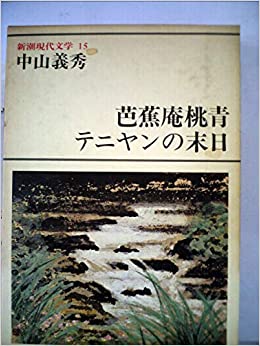
This phrase is surprisingly modern: it is attributed to a 1948 short story titled 「テニヤンの末日」 (Teniyan no matsujitsu), by 中山義秀 (Nakayama Gishuu).


HouKaKouGinTeniyan

Posted in Japanese, Yojijukugo | Tagged , , , , , , | Leave a comment

Truffles before swine

Or just about anything at all before a goat

鰹節を猫に預ける
(Katsuobushi wo neko ni azukeru;
“Entrusting katsuo shavings to a cat”)

Definition:

A dangerous situation where one can’t afford to let one’s guard down. Risking a loss by presenting someone with an overpowering temptation. Setting a fox to guard the henhouse. Like placing your katsuo shavings – a tasty delicacy – next to a cat, who is almost certain to immediately try to eat them.

Breakdown:

We begin at the end with the verb 預ける (azukeru), to leave something in someone’s care; to entrust something to someone for safekeeping or proper use. This verb appears in conclusive form. Before it we find the directional particle に (ni), “to,” marking the indirect object of the verb. This object is the noun 猫 (neko), “cat.” And preceding this we find the indirect-object particle を (wo), marking the compound noun 鰹節 (katsuobushi). This refers to thin flakes or slices of dried meat from a skipjack tuna, a.k.a. the “arctic bonito,” which is closely related to – but not quite the same as – the “true” bonito genera, and commonly translated as “bonito.”

Notes:

鰹節 may also be read as katsubushi (dropping the o), although this is nonstandard.

This phrase may be shortened and flipped to 猫に鰹節 (neko ni katsuobushi) without any change in meaning. This is just the first in a panoply of synonymous phrases: one may leave the cat in charge of dried skipjack (in chunk form), or just a fish; a fox in charge of adzuki-rice; a thief in charge of a key, or in charge of guarding the storehouse; or even a goldfish in charge of mosquito larvae (!).

Alert readers may remember phrases such as 猫に小判 and wonder if this phrase is an antonym. It doesn’t seem to be counted as one, though – and this makes sense. Despite the syntactic similarity, the meanings aren’t actually in opposition.

One of my sources attributes this saying to a work titled 『根無草』 (Nenashigusa), although further details are scant.

Example sentence:

「妻の誕生日ケーキをちゃぶ台に置いて、ろうそくを取りに行ったら、娘が手づかみでケーキを食べていた。残念なことにケーキは二歳児の手の届く位置にあったのだ。流石に、そんな鰹節を猫に預けたような油断をしたのは大失敗だった」

(“Tsuma no tanjoubi keeki wo chabudai ni oite, rousoku wo tori ni ittara, musume ga tedzukami de keeki wo tabeteita. Zannen na koto ni keeki wa nisaiji no te no todoku ichi ni atta no da. Sasuga ni, sonna katsuobushi wo neko ni azuketa you na yudan wo shita no wa daishippai datta.”)

[“I put my wife’s birthday cake on the coffee table and went to get candles, and then our daughter was eating it by the handful. Unfortunately, the cake was in a place where a two-year-old could reach it. And yeah, dropping my guard and creating such a tempting target was a really big mistake on my part.”]

Posted in Japanese, Kotowaza | Tagged , , , , , , , | Leave a comment

Getting a leg up on the cooperation

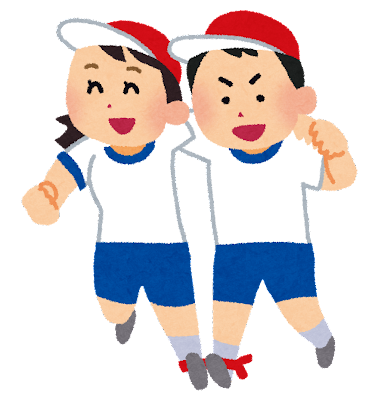
二人三脚
ni.nin.san.kyaku

Literally: two – person – three – leg

Alternately: A “three-legged race”: an event (often seen in Japanese school Sports Days) in which competitors attempt to race in teams of two, with the right leg of one member tied to the left leg of the other. By extension, this phrase can refer to any situation with two people acting in concert or cooperating and coordinating to mutual benefit.

Notes: Phrases such as 一致協力 and  一致団結 are considered synonyms, although they refer to larger groups where this one is specifically about a partnership of two.

 
Pro tip: don't close your eyes.

Image courtesy of irasutoya.com

Posted in Japanese, Yojijukugo | Tagged , , , | Leave a comment

Gather ye rosebuds while ye may

and sleds are still a-flying

若い時は二度無い
(Wakai toki wa nido nai;
“There is no second youth”)

Definition:

You only have your youth once, so it’s best to get out there and do stuff wholeheartedly while you still have the time and energy.

Note that this formulation is very broadly applicable and can be read as encouraging the listener to brush up their skills, work and save money, start a business, go on adventures, sow wild oats, experiment with different experiences and lifestyles, and so on and so forth. But apparently an older and longer version has a more specific agenda: it talks about how one’s youth is specifically wasted by going through life without appreciating the wonder of nature and the beauty of the four seasons.

Breakdown:

We begin with the adjective 若い (wakai), “young,” preceding but not modifying the noun 時 (toki), “time,” which is marked as the topic of discussion by the particle は (wa). The comment on this topic begins with the number-noun 二度 (nido), elides all particles, and ends with the adjective 無い (nai), “not.”

Notes:

This phrase comes to us from our friend the Wen Xuan (Japanese 『文選』 = Monzen), an early Chinese literary anthology. On the way it seems to have been referenced (or independently invented) in – and is sometimes attributed to – a number of other works including an ukiyo-zoushi titled 『当世銀持気質』 (Tousei kanemochi katagi), roughly “The modern-day rich-person mindset.” The longer phrase cited in the Definition section is attributed to a Muromachi-era official named Ise Sadachika (伊勢貞親).

This phrase is the wa entry in the Osaka iroha karuta set.

At least one variant phrase exists, replacing 時 with 内 (uchi), “within,” and following 二度 with particle と (to), which changes it from a noun into an adverb.

Example sentence:

「賢太、もうゲームを止めて、友達と外で遊んで来い。若い時は二度ないぞ」

「父さん、俺、今、建ちゃんと一緒に作ったゲームの品質を確認するためにテストをしてるんだ。俺らの若い時を無駄にしてるはずがない」

(“Kenta, mou geemu wo yamete, tomodachi to soto de asonde koi. Wakai toki wa nido nai zo.”

“Tousan, ore, ima, Ken-chan to issho ni tsukutta geemu no hinshitsu wo kakunin suru tame ni tesuto wo shiteru nda. Orera no wakai toki wo muda ni shiteru hazu ga nai.”)

[“Kenta, quit playing that game and go play outside with your friends already. You won’t get to be young a second time.”

“Dad, right now I’m doing a quality-assurance test for the game Ken-chan and I made together. I don’t think we’re wasting our youth.”]

Posted in Japanese, Kotowaza | Tagged , , , , , , , , , , , , | Leave a comment

Iconoclasm

廃仏毀釈
hai.butsu.ki.shaku

Literally: discard – Buddha – break – Shakyamuni*

Alternately: This historical term describes the idea that Buddhism should be rooted out of Japan. This may either be in general, or specifically as part of the changes that swept over the country in the early Meiji era; this movement saw the widespread destruction of Buddhist artifacts.

Notes: This idea of de-Buddhification is often entangled with nationalism: Buddhism was imported from India via China (and Korea), and is easy to set up as a foil for the collection of folk beliefs and ritual court practices that we know as Shinto.

*Note that 釈 on its own is “explanation”; it appears here as shorthand for its phonetic use in 釈迦 (Shaka), a name of the Buddha.

This phrase may be given the native-Japanese reading of Hotoke wo hai shite shaku wo soshiru. Alternatively, 廃 may be replaced with homophone 排 (“expel”) and 毀 with homophone 棄 (“throw away”) without any significant change in meaning, although this seems to be less common and may be a derivative phrase. However, replacing 仏 with homophone 物 (“thing”) is an error.

 
HaiButsuKiShakuKane

The destruction of a temple bell

Posted in Japanese, Yojijukugo | Tagged , , , , , , , , , | Leave a comment