Four Mamas; Three Ducks

A story.

The kid has learned “mama.” What’s more, where at first he just used something like mum-um-um-um-um-um-um as a complaining noise, now he actually uses “mama” as a word to refer to his mother. Sometimes when we’re at home and he’s observing the world through the window, or when we’re on the bus heading for campus, he’ll say “mama,” and I think it means he’s thinking of her.

But… that’s also what he calls me. He can say “pen” (heavily aspirated and nasalized, but still recognizable), and he uses babaa~ to ask for things, but for some reason he refuses to combine the phonemes to make “papa.” So, papa is also “mama.” A select group of other people he meets are “mama” as well – a couple of female acquaintances, and most recently his grandmother and grandfather.

We spent the Thanksgiving break with my parents, and during the course of the visit he referred to each of us – my mom, my dad, my wife, and me – as “mama.” Perhaps there was some subtle variation in pitch or emphasis, and often you could tell whom he was talking about through context… but it was still a weird experience. One to save and tell him when he’s grown up, so here it is.  🙂


A story.

We have a set of small but powerful magnets, embedded in little duck figurines. I think I got them in Japan for classroom use, maybe. In case case they’re with us still, and just recently the kid found them and took an intense liking to them. I think he’s fascinated with magnets in general: the behaviors that seem counterintuitive in a world largely defined by Newtonian mechanics; the fact that we tend to dress them up in various shapes and colors for household use.

Anyway, he took a liking to these ducks, and spent a while last night taking them off of the fridge door and sticking them back on again. There were three within reach, so we got into a nice little cycle where he’d have one in one hand, another in the other hand, and then give one of them to me in order to take the third, allowing me to put the one he’d given me back onto the fridge for him to take.

Today, again, he indicated that he’d like to play with the ducks. So we went over and he took one in each hand… but this time, he palmed one and tried to use his thumb and index finger to take the third. When this didn’t work (they’re pretty strong magnets, and he was trying to pull it straight away from the fridge rather than working laterally), he changed his strategy. He passed the one in his palm off to the other hand so that he had a whole hand free to work with. And it worked! I’m pretty proud of his problem-solving skills.

Every time I take my eyes off of him he crams those ducks in his mouth and wanders around chewing on them, of course. Probably one of those teething things, and in any case a reminder that he isn’t even a year and a half old yet. Still  cute, though!
Posted in Nonfiction | Tagged , , , , , | 1 Comment

Jack of no trades, master of one?

I’m typing this up on Thanksgiving, appropriately enough.

無芸大食
mu.gei.tai.shoku

Literally: no – art – big – eat

Alternately: A person whose only outstanding skill is eating. Someone is lacking in any special skills, but they sure can eat.

Notes: Can be used to mock others or for humble self-deprecation.

TaiShoku Taishou

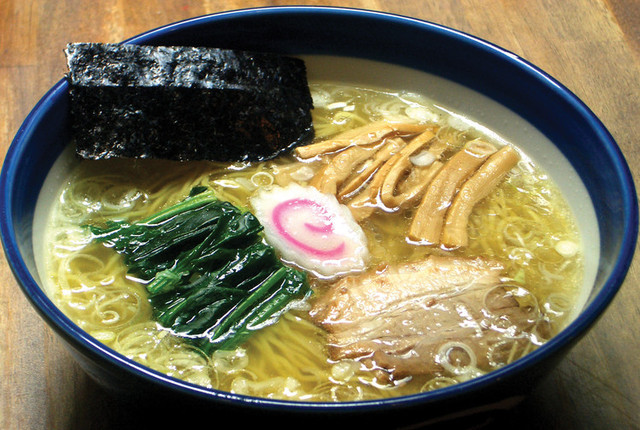
A huge number of the image-search results were for ramen, so here you go. Real Japanese Ramen! (Image from an online review of a shop in Tokyo.)

Posted in Japanese, Yojijukugo | Tagged , , , , | Leave a comment

Magic Monday – They found not a heart within the beast

Augury

Some variant of this spell exists in every land, in response to humanity’s voracious need for knowledge. The details are not important compared to the process: the magician must enter a meditative state, observe a source of randomness, and consider the shape of the universe. If the process is successful, they gain mystical insight into things hidden or yet to come. Example focal rituals include drinking tea and then observing the leaves, dropping hot metal into cold water, throwing bones, drawing a series of cards, burning special substances and watching the smoke or flames, and so on.


The basic format of an Augury involves a question and an answer. The base cost of an augury is one point of strain. Multiple questions may be answered, although each costs one more in strain than the previous; especially complex or specific questions may also have an extra cost in strain beyond this. The difficulty is exactly the same as it would be for a knowledge check if an expert in the field were to try and answer, for hidden truths; seeing the future begins at d3 for “the next hour or so” and increases by one step for each step up in time units: days, weeks, months, seasons, years, decades, centuries. Answers will tend to be vague or cryptic, though; attempting to get a definitive answer increases the difficulty by two steps. A critical failure produces false results and the magician must immediately make a Psychic save or double the strain they take.

Posted in Rules | Tagged , , | Leave a comment

Play it again, Sam – ?

I like this kotowaza so much, I think I’ll post it next week too!

馬鹿の一つ覚え
(Baka no hitotsu oboe; “The one thing a fool remembers”)

Definition:

“He that knows little often repeats it.” A foolish person clings to one thing, and proudly repeats it (says the same thing over and over, does the same action over and over) in every situation, regardless of whether it’s appropriate or not. Used to poke fun at people who commit such repetition, especially if they seem overly enamored of the concept they’ve glommed onto.

Breakdown:

馬鹿 (baka) is a fool, an idiot, a simple-minded or unthinking person. Note that the characters literally mean “horse deer,” and it’s unclear how the combination came to have this meaning – you can read about some extant theories here (in Japanese). Next comes the associative particle (no), in this case taking on a possessive function that refers to everything that follows. First we have the number 一つ (hitotsu), “one,” “single,” and the nominalized form of the verb 覚える (oboeru), “to remember.”

Notes:

Nothing special about this one that I can find. It doesn’t even seem to be that old, with attestation since 1951.

Example sentence:

馬鹿の一つ覚えみたいにどんな現象であっても原因が量子力学だろうと、この科学者は常に言っている」

(Baka no hitotsu oboe mitai ni donna genshou de atte mo gen’in ga ryoushirikigaku darou to, kono kagakusha wa tsune ni itteiru.”)

[“Like the one thought in a fool’s mind, this scientist was always talking about how this, that, or the other phenomenon was probably based in quantum mechanics.”]

Posted in Japanese, Kotowaza | Tagged , , , , , | Leave a comment

Or, can a dog be French?

Another yojijukugo using the rare “dog” character that we saw last week:

狗子仏性
ku.shi.bu-.sshou

Literally: dog – child / (zodiac) rat – Buddha – nature / gender

Alternately: “Does a dog have a Buddha nature?” – a classic zen koan.

Notes: This apparently comes from a Buddhist dialog recorded in a Chinese text. Keep in mind that koans are not supposed to be answered; they are intended to confound the mind with unanswerable questions until it is freed from the need to answer, thus gaining distance from the material world.

Note that 狗子 in its entirety is another word for “dog”; the second character does not add meaning.

can be replaced with its older form without any change in meaning or pronunciation.

KuShiOhNo

CAN I HAVE A BUDDHIST NATURE? OH NOES! [Source: a temple blog!]

Blank Husky

Yes, but can a cat haz cheezburger? Oh, I crack me up.

Posted in Japanese, Yojijukugo | Tagged , , , , , | Leave a comment

The Tragedy at Panera

A couple days ago we were changing the kid’s diaper before his midday nap. To express his displeasure over some aspect of the process, he was kicking his legs: raising them up and then bringing them back down with a thump, as if they were spring-loaded. This is something he hasn’t done in a while, although for a while it happened every time his diaper was changed, and the recurrence reminded us of the event that made him stop….

We were driving with family to visit family, as I recall, and pulled over semi-arbitrarily at a Panera somewhere for a restroom break. (I think someone also bought some bagels as a conciliatory gesture.) My dad and I took the kid into the men’s room to change his diaper.

Our traveling diaper-change kit contains a sheet. One side is cottony and the other side is plasticky, for some modicum of protection and padding. But as essentially a single layer of thin cloth, it’s not a significant amount of padding. And changing stations are made of hard, sturdy plastic.

Well, we put down the sheet. We took the kid’s shoes and pants off and laid him down to change his diaper. He objected to this treatment, wound up his legs, then released the spring and dropped them. But not with a thump; no, this was a hard plastic bang, and the sound of it was quickly followed by seriously upset screaming because now the kid’s feet hurt. To top it off, being upset made him cut loose and flail his legs around more, leading to a short-lived cycle of escalating upset before we restrained him. He was so loud that my wife heard him from the women’s restroom and was wondering what could possibly have happened.

The next time we had to change him at a public restroom station, we were prepared… but he didn’t kick. Apparently he’d learned his lesson! And he has barely kicked at all in the year or so since that time… until today.

And it’s almost Thanksgiving break. And this year, again, we’ll be traveling with family to visit family. Doubtless, we’ll stop somewhere a couple times for restroom breaks, and we’ll change his diaper. We’ll see how things go….

Posted in Musing, Nonfiction | Tagged , , , , | Leave a comment

Magic Monday – A breath of strong air

Breath of Av-Beleren (Blast of Ufbalaran)

This peculiar spell is primarily used by the Order to teach novices the art of focus, and a certain breed of practicing wizards judge their fellows by whether they allow the knowledge to languish, or find applications outside of the academy. The magician must cup their hands and gather winds, restrain the increasing pressure of those winds trying to escape, and choose the right moment to set them free in a controlled blast. The demands placed on the magician’s body and mind can become very intense, but masters of the art have been known to produce incredible results.


The mechanics of this spell are a bit different from most: the base difficulty is d10, and the base cost is a single point of fatigue. However, a new check must be made for each round spent collecting winds; on a failure, the only consequence is gaining a single point of temporary fatigue or strain (at random). If the accumulation of fatigue or strain would impose a break or drop roll then instead, the magician loses control of the wind; they (and everyone within arm’s reach) are buffeted by an intense whirling blast that does 1d4 damage and threatens to knock them down with a Strength challenge; the wind has an effective Strength equal to the number of rounds the wind spent accumulating.

If the spell is released intentionally, then instead it forms a cone (again, with a Strength equal to the number of rounds it spent accumulating) extending away from the caster in a chosen direction, for a distance in meters equal to its Strength. Increasing the difficulty by a step (for each) allows experienced casters to control the shape of the wind when it is released (forming a jet or fan shape, for example, or even bending it around a single corner) or to split the wind into two separate cones of half Strength, one released from each hand. Increasing the difficulty by two steps allows the caster to double the rate of wind accumulation.

Tenzin Air Blast

I swear I wrote the original version of this spell years ago, before I’d seen any of the Avatar show at all. [Source: a Reddit thread via Image Search]

Posted in Rules, Setting, World-Building | Tagged , , , | 1 Comment

Now I’m caught on the phrase “ear-spoon.”

Counterpoint:

杓子は耳掻きにならず
(Shakushi wa mimikaki ni narazu; “A ladle can not be used as an ear-spoon.”)

Definition:

This saying directly opposes last week’s 大は小を兼ねる. It declares that a larger thing can not necessarily fulfill the role of a smaller one, by offering a clear example in which it would be impossible.

Breakdown:

We start with the noun 杓子 (shakushi), “ladle.” The particle (wa) marks it as the topic of the phrase, and implicitly contrasts it with the following noun – 耳掻き (mimikaki), “ear pick” aka “ear spoon.” (This noun is formed from 耳 – mimi, “ear” – and the verb 掻く – kaku, “to scratch,” in conjunctive form.) Next we have the directional particle in a somewhat abstract mode, and finally the verb なる (naru), “to become,” in imperfective form so that it can take the sentence-final negative suffix (zu).

Notes:

It’s a complex issue and all generalizations are false, as they say: whether a “big” pen can do the work of a “small” pen might depend on whether the “bigness” is the result of it being longer or having a thicker tip, for example, and there comes some upper limit beyond which a ridiculously large pen might be good for a novelty or a world record, but useless as a writing implement.

Example sentence:

「う~ん、素敵なジャケットだけど、やっぱりもっと小さいのが良いかも。杓子は耳掻きにならずよ」

(“Uuun, suteki na jaketto da kedo, yappari motto chiisai no ga ii kamo. Shakushi wa mimikaki ni narazu yo.”)

[“Hmmm, it’s a lovely jacket, but I really think a smaller one would be better. Big things can’t always stand in for small things, you know.”]

Posted in Japanese, Kotowaza | Tagged , , , , , | 1 Comment

Thoughts on toddler cognitive development, part 3

A while ago we got the kid a set of rubber balls: one basketball, one soccer ball, and one football; each around the same size as a large grapefruit. He can’t really use them as freely as he’d like, yet; in fact, his actions are limited to picking them up, dropping them, and tossing them in a weird upward chuck motion. He says “ball” (or baooo, since the L sound is still a bit difficult for him) several dozen times a day – pretty much every time he sees one.

A couple of days ago he said baooo while I was fanning him off during a diaper change. I thought that perhaps he had simply remembered their existence, or was saying he wanted one to play with, but my wife pointed out that the plastic sheet we use as a fan has… circles on it. Abstract representation!

I also have a DS, a Japanese one, that I picked up exactly one program for: kanji kentei study software. Since the summer I’ve been trying to do at least a little study with it every day, to keep my reading and writing from getting too rusty, and of course this bright yellow box with the buttons and lights and stylus on a stretchy cord are intensely interesting to the kid.

So this evening (actually Tuesday the 17th; I’m scheduling this to post later on to avoid conflicting with the regular Wednesday post) I did a bit of study with him on my lap watching, and after I finished a set it saved the results. When it’s saving, both screens go black and a  red box with the phrase 「セーブ中」appears, bounces a couple times across the screen, and then fades away again.

When the red box appeared and bounced, the kid said baooo!

In other words, from limited experience with a handful of rubber balls, he’s been able to abstract at least two important qualities (roundness and bounciness) and recognize them in other phenomena that are otherwise very un-ball like – the circle on the fan is round but immobile; the box on the screen is mobile but square, and both are two-dimensional. Take that, Plato!

Posted in Musing, Nonfiction | Tagged , , , , , , | Leave a comment

Is this where I snark about Apple products?

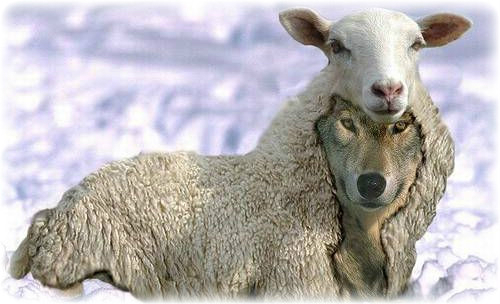
羊頭狗肉
you.tou.ku.niku

Literally: sheep – head – dog – meat

Alternately: A lack of truth in advertising. Advertising something better than what you’re actually selling. Something seems high-quality, but its actual nature or essence is substandard.

Notes: This is another phrase from ancient China, where apparently meat-sellers would advertise that they had mutton by posting an actual sheep’s actual head (as proof that they had in fact slaughtered a sheep – it’s unclear how old such an advertisement was allowed to get before it had to be thrown out!). Some unscrupulous merchants, unfortunately, would sell cheaper alternatives such as dog meat.

The four-character compound was derived from the more complete phrase, 羊頭を懸げて狗肉を売る (Youtou wo kakagete kuniku wo uru), “Hanging (up) a sheep’s head and selling dog meat.”

Note that the character for “dog” used here, , is different from the contemporary standard .

Cue obligatory "dogs aren't wolves!"

A literal rendition borrowed from this Korean website (which I can’t read at all).

Posted in Japanese, Yojijukugo | Tagged , , , , , | Leave a comment