Ningen shikaku

(More or less)

四角四面
shi.kaku.shi.men

Literally: four – corner – four – face

Alternately: Square. Four (equal) angles and four (equal) sides, just like it says. By extension, a “square” personality: extremely, perhaps even overly, serious. Meticulous; stiff; formal; lacking a proper amount of flexibility and vagueness.

Notes: This really does seem to be setting up a certain “vagueness” as a virtue; several of my sources cite a surfeit of はっきり (“clearly,” “distinctly,” definitively”) as one of the problems of squareness.

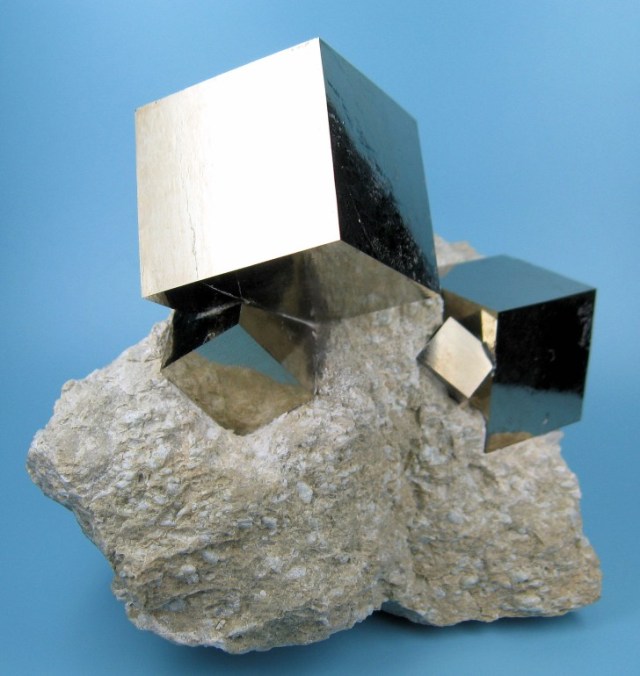
OBEY THE CUBE; FEAR THE HYPERCUBE

What could be more serious and formal than a squared square?

Posted in Japanese, Yojijukugo | Tagged , , , , , , | 1 Comment

On the benefits of job security

Or ego security, perhaps.

名人は人を謗らず
(Meijin wa hito wo soshirazu;
The master speaks not ill of others”)

Definition:

True masters of their art do not go out of their way to find fault with others. If you are an expert, then you should be free of the insecurity and jealousy that drive some people to drag down, badmouth, or harshly criticize others.

Breakdown:

We begin with the particle は (wa) marking our topic of discussion, which is the noun 名人 (meijin), “master,” “expert.” The comment on this topic centers on the verb 謗る (soshiru), “ to criticize,” or by extension “to blame,” “to slander,” “to vilify.” This appears in imperfective form, with negative suffix ず (zu) in conclusive form. Particle を (wo) marks the noun 人 (hito) as the direct object of this verb; bear in mind that while 人 literally means “person” or “people,” by extension it can mean “others,” and that is the meaning it takes here.

Notes:

Some versions may elide the は; a variant replaces 謗る with 叱る (shikaru), “to scold,” with the same grammar rendering it as 叱らず.

This saying is attributed to our friend the Zhan Guo Ce, a.k.a. the Annals of the Warring States (Japanese 『戦国策』 = Sengokusaku).

Example sentence:

「先生は一年中僕らのエラーを聞いて、優しく教えて下さった。さすが、名人は人を謗らずね」

(“Sensei wa ichinenjuu bokura no eraa wo kiite, yasashiku oshiete kudasatta. Sasuga, meijin wa hito wo soshirazu ne.”)

[“Our teacher spent the year listening to our errors and gently correcting them. It’s true; a real master really doesn’t speak badly of others.”]

Posted in Japanese, Kotowaza | Tagged , , , , , | Leave a comment

Still better than a superspreader event

酒池肉林
shu.chi.niku.rin

Literally: pond – alcohol – meat – forest

Alternately: A great and sumptuous meal. A dinner party with staggering amounts of food and drink. Enough drink to fill a pool and enough meat to decorate a forest. This phrase can often be used to imply a drunken and perhaps debauched excess of consumption, so be careful about using it to praise someone’s spread at dinner!

Notes: Apparently in China the same phrase means an extravagant lifestyle in general, rather than a single extravagant event. The phrase comes from a fabled event in the life of king Zhou of Shang,  (紂, Japanese Chou) who literally had a pool filled with alcohol and had (in some versions, dried) meat hung from trees to simulate the drooping boughs of a lush forest. It is said that his excesses led directly to his downfall.

https://www.youtube-nocookie.com/embed/BvNKzfWX8dc
(Link is to Youtube; a children’s cartoon of the story for about the first two minutes.)

Posted in Uncategorized | Tagged , , , , , , , , , , | Leave a comment

Keep your debrief brief

敗軍の将は兵を語らず
(Haigun no shou wa hei wo katarazu;
The defeated commander speaks not of war.”)

Definition:

Someone who has failed at something has no authority to speak on the topic; a defeated general should not give their opinions on warfare. Often used specifically to mean that one shouldn’t be a sore loser, or go around making excuses or casting blame after a failure; just own it and carry on.

Breakdown:

We begin with the noun 敗軍 (haigun, pronounced “hi, goon!”), “defeated army.” The associative particle の (no) shows that this noun is attached to and modifying the noun 将 (shou), “commander,” which in turn is shown by the particle は (wa) to be the topic of discussion.

The comment on this topic centers on the verb 語る (kataru), “to speak of,” “to narrate [a story],” in imperfective form and taking the negative suffix ず (zu) in conclusive form. The particle を (wo) marks as its direct object the noun 兵 (hei), “warfare,” “strategy.”

Notes:

It’s worth paying attention to the nuance here; I think there’s value in dissecting one’s own mistakes and failures in order to extract lessons from them. There’s a line between analysis and excuse-making, though, and another between that and straight-up whining, and it’s better not to cross either of those.

Variants warn that a defeated general should 謀らず (hakarazu), “not lay plans,” or 以て勇を言うべからず (motte yuu wo iubekarazu), “(with that,) must not speak of courage.”

Although the character 兵 can mean “soldier” in some contexts, reading it as such in this case is an error.

This saying is yet another selection from our friend, the Records of the Grand Historian. (Japanese 『史記』 = Shiki).

Example sentence:

「四浪の従兄が入試の日の天気などについて弱音を吐きに来たけど、僕は敗軍の将は兵を語らずと言って、聞くのを拒否した。本当に鬱陶しい奴だ」

(“Yonrou no itoko ga nyuushi no hi no tenki nado ni tsuite yowane wo haki ni kita kedo, boku wa haigun no shou wa hei wo katarazu to itte, kiku no wo kyohi shita. Hontou ni uttoushii yatsu da.”)

[“My cousin, a four-year ronin, came to whine about how bad the weather was on the day of the entrance exam, but I refused to listen. I was all, ‘a general who lost shouldn’t talk about strategy.’ What a pain in the butt.”]

Posted in Japanese, Kotowaza | Tagged , , , , , , , , | Leave a comment

I have seen tempests

櫛風沐雨
shi-.ppuu.moku.u

Literally: comb – wind – wash – rain

Alternately: Wind-blasted and rain-drenched. With one’s hair blown about by wind and one’s body washed by rain; by extension, someone who is out struggling in stormy weather because of work that needs to be done. By further extension, any hardship or toil.

Notes: This compound is attributed to a passage in our friend the Zhuangzi (Japanese 『荘子』 = Souji or Soushi) about a king who worked tirelessly, regardless of the weather, to improve his kingdom with road-building and river-works.

Elemental... like Avatar?

The title of a song by singer ChouCho, apparently used as the closing song for a widely-panned… revenge-romantic-dramedy anime?

Posted in Japanese, Yojijukugo | Tagged , , , , , , , , , | Leave a comment

The wascal of small minds

株を守りて兎を待つ
(Kabu wo mamorite usagi wo matsu; “Watching a stump, awaiting a rabbit”)

Definition:

Being unable to advance because one is fruitlessly invested in old habits or customs, or in a strategy that was successful once but no longer applies. A foolish consistency; overblown and harmful conservatism. Waiting for a rabbit to ram into a tree-stump so you can collect a free meal.

Breakdown:

This complete sentence ends with the verb 待つ (matsu) in conclusive form. The direct object of this verb, marked by the particle を (wo), is the noun 兎 (usagi), “rabbit.” This clause is parallel in structure (and in time) with the preceding one. For the introductory clause, the verb is 守る (mamoru), “to protect,” “to watch over,” this time in conjunctive form to facilitate the conjunction, with another を marking the noun 株 (kabu), a cut stump or stalk, as its direct object.

Notes:

株 may be read as kuize, although this is less common. The entire phrase can be condensed down to the two-character compound 守株, shushu, or to a yojijukugo as 守株待兎 (shushu taito). And one variant replaces the sentence-final verb with 覗う (ukagau), “to await [an opportunity].”

This comes from a story in our friend the Han Fei Zi (Japanese 『韓非子』 = Kanpishi), an eponymous philosophical text, in which a farmer sees a rabbit collide with a tree stump and collapse dead, which allows him to pick it up and get some free rabbit meat. Instead of returning to work, though, he stays by the stump and continues to watch it in the hopes that he will be able to go on collecting rabbits. Compare and contrast 柳の下にいつも泥鰌は居らぬ.

Example sentence:

「幼い子供が皆株を守りて兎を待つような考え方をするということに対する証拠は、何度も飽きもせず同じ冗談を同じ人に聞かせて笑ってもらおうとする現象にあるだろう」

(“Osanai kodomo ga mina kabu wo mamorite usagi wo matsu you na kangaekata wo suru to iu koto ni tai suru shouko wa, nando mo aki mo sezu onaji joudan wo onaji hito ni kikasete waratte moraou to suru genshou ni aru darou.”)

[“I believe that proof that young children have a way of thinking akin to the meaningless preservation of old customs lies in the phenomenon where they will tirelessly tell the same joke to the same person, over and over again, in order to get a laugh.”]

Posted in Japanese, Kotowaza | Tagged , , , , , , , , , , | Leave a comment

Dotted Is and red E

用意周到
you.i.shuu.tou

Literally: use – mind – circumference – arrive

Alternately: Thorough preparations, without any oversights. Being incredibly careful; doing everything possible to get ready for something. A good way to be, if you can manage.

Notes: This is a compound of compounds. 用意 refers to “preparation” (and often given as a command before “start” for various sporting competitions), while 周到 refers to “meticulosity,” which, yes, is a real word.

Replacing 到 with homophone 倒, “fall down,” is an error, of course.

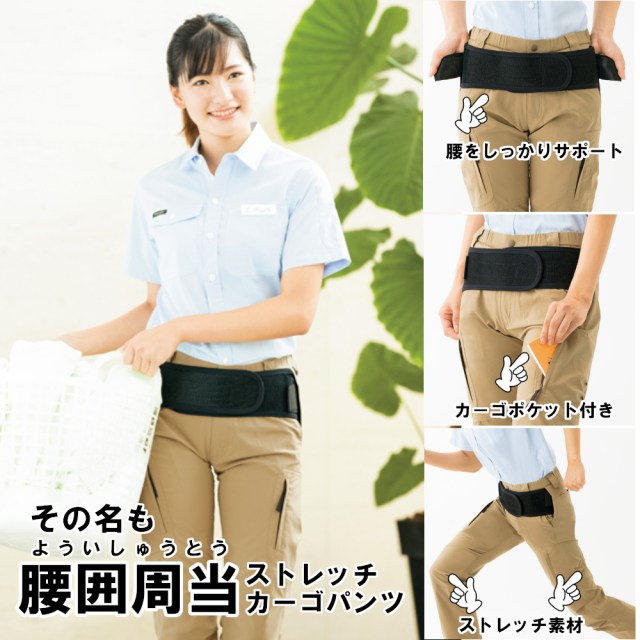
This strikes me as just about the most useless possible version of cargo pants you could make.

An actual ad for hip-support cargo pants that puns on ¾ of the characters. The you here is “hips/waist.”

Posted in Japanese, Yojijukugo | Tagged , , , , , | Leave a comment

“It is useless to meet revenge with revenge; it will heal nothing.”

(J.R.R. Tolkien, The Return of the King)

彼方を立てれば此方が立たず
(Achira wo tatereba kochira ga tatazu;
If one raises that side, this side will not rise.”)

Definition:

It’s difficult, almost impossible, to get all sides of something equally accepting and happy about the result; to protect the honor and dignity of both sides of a dispute. For one side of a seesaw to rise, the other must fall. “You can’t please everyone.” As Jim Carrey said: “Unfortunately, there are situations in life… where there must be a winner and a loser.”

Breakdown:

We begin with the pronoun 彼方 (achira), “over there,” marked by the particle を (wo) as the direct object of the transitive verb 立てる (tateru), “to stand [something up],” “to raise,” in prenominal form and taking the potential suffix る (ru), which in turn appears in imperfective form as れ (re) and takes the hypothetical suffix ば (ba).

This is followed by another clause in parallel, beginning with pronoun 此方 (kochira), “over here.” This time the pronoun is marked as the subject of a verb by particle が (ga), and the verb in question is again 立つ, this time in imperfective form and taking the negative suffix ず (zu) in conclusive form.

Notes:

It is acceptable to write achira and kochira in hiragana (あちら, こちら). In many cases, the early を will be elided. And in many cases we’ll see the final negative rendered as prenominal ぬ rather than ず, presumably because the sentence continues – a longer variant continues the theme by declaring that if both sides rise, the center must fail (双方立てれば身が立たぬ, souhou tatereba mi ga tatanu).

This is probably not new news for any regular readers of the blog, but I want to stress here that yes, this is a comment on contemporary American politics. And I want to make it crystal clear that I feel an enormous sense of relief that a setback has finally been delivered to the forces of fascism. But I want to temper this with a reminder that just because the previous president getting fired is objectively good for the entire world, doesn’t actually mean that everybody is happy about it: forces remain in play that can and will cause problems even after the Oval Office is decontaminated, and we need as many people working together to face those problems as possible.

The line between relief-powered joy, and triumphal mockery, can also decide how many victims of a system that goes out of its way to instill hate and fear can be saved from that system. It would be good for everyone in the long term if those victims, who were tricked into voting for their own destruction at the hands of uncaring robber barons, can be shown enough sympathy, empathy, kindness, and understanding that their pride doesn’t prevent them from turning to the side of good.

A huge part of why Biden won is that he knows this: The greatest victory is not in destroying your enemies, but in turning them into your allies. And this starts with empathy.

Example sentence:

彼方立てれば此方が立たぬ喧嘩に挟まれたら困るんだ。俺に聞くな」

(Achira tatereba kochira ga tatanu kenka ni hasamaretara komaru nda. Ore ni kiku na.”)

[“I don’t want to get caught in a fight where one side or the other has to lose face, so don’t ask me.”]

Posted in Japanese, Kotowaza, Musing | Tagged , , , , , , | Leave a comment

Ta’anit umikveh?

斎戒沐浴
sai.kai.moku.yoku

Literally: purification – admonition / precept – wash – bathe

Alternately: Ritual purification in advance of an important holiday, ceremony, or time of prayer; in particular, fasting and bathing.

Notes: This is a compound of compounds. 斎戒 refers to a practice of fasting or shutting oneself away at home (to avoid inauspicious activities); 沐浴 refers to washing oneself (body and hair). In some cases the order may be reversed (沐浴斎戒), although this is less common.

I really wish I knew the context for this discussion

From a manga adaptation of the “Hoichi the Earless” story by Mizuki Shigeru, most well-known for the yokai-centric manga GeGeGe no Kitaro. The yokai ritual bath is different from what… most humans would use.

Posted in Japanese, Yojijukugo | Tagged , , , , , , , , , | Leave a comment

Darkened minds are worse than darkened eyes

真の闇より無闇が怖い
(Shin no yami yori muyami ga kowai;
“Thoughtlessness is more frightening than pitch darkness”)

Definition:

Being caught in utter darkness is scary, because you can’t be sure where everything is, or even what actually is and isn’t there at all. But more frightening by far is someone who acts irrationally or rashly, who lacks common sense and discernment. They can’t be counted on to do what is needed or right, and they may end up causing terrible harm whether they intended to or not. You just don’t know what they might do… only that they won’t do it with any degree of care or planning.

Breakdown:

This time we begin at the end, with adjective 怖い (kowai), “frightening,” in conclusive form. Before that, the particle が (ga) marks this adjective as a predicate, and as its subject, the noun 無闇 (muyami), “recklessness,” “excess,” “indiscriminateness.” The particle より (yori) marks muyami as “more [scary] than” something else; in this case 闇 (yami), “darkness,” which the associative particle の (no) allows to be modified by the noun 真 (shin), “truth,” “reality” – note that in this case, the phrase 真の is taking on an adjectival role.

Notes:

無闇 is an interesting word of unclear origins; most of what I can find suggests that it’s some sort of ateji – that is, kanji assigned, purely for their phonetic properties, to a previously-existing word, and that the pre-existing word may be the result of a slurring or phonetic shift acting on a longer phrase of similar meaning.

This kotowaza unfortunately does not show up in many of my usual sources, and none of the sources I can find (without an in-person visit to a library, at least, which is off the table right now) even suggest a possible source, although one blog does at least list the physical dictionary they got their definition from.

Example sentence:

真の闇より無闇が怖い、と信じているから班長としての一番の仕事は一貫性を守ることだと肝に銘じた」

(Shin no yami yori muyami ga kowai, to shinjiteiru kara hanchou to shite no ichiban no shigoto wa ikkansei wo mamoru koto da to kimo ni meijita.”)

[“I believe in the idea that blind action is more dangerous than mere darkness, and so I keep it firmly in mind that my primary job as team leader is to maintain consistency.”]

Posted in Japanese, Kotowaza | Tagged , , , , , , | Leave a comment