There’s a storm coming

(Not to mention the storm that’s already here)

前途多難
zen.to.ta.nan

Literally: before / front – road – many – difficult / trouble

Alternately: Hard times ahead.

Notes: Compare and contrast 前途有望 and 多事多難.

ZenToTaNanStorm

Now imagine that instead of rain, this is thousands of people dying of a preventable plague

Posted in Japanese, Yojijukugo | Tagged , , , , , | Leave a comment

When your stat spread make you crabby

蟹は甲羅に似せて穴を掘る
(Kani wa koura ni nisete ana wo horu;
“A crab digs its hole to match its shell”)

Definition:

People think and act according to their personal circumstances and abilities. Just as a small crab will dig a small burrow and a large crab will dig a large burrow to live in, matching their size, so will people think and act based on their understanding of a given situation and the tools and skills they possess and can bring to bear. A more general version of “to a man with a hammer, every problem looks like a nail.”

Note that this saying can be used descriptively, as above, and also prescriptively: “Everyone should tailor their actions to their strengths, limitations, and needs.” “Cut your coat according to your cloth.” In this sense, the saying becomes a slightly cynical admonition against trying to reach beyond your station in life or predetermined function or role.

Breakdown:

We begin with the noun 蟹 (kani), “crab,” marked as the topic of discussion by the particle は (wa). Skipping forward, we find that the crab is also the implied subject of the comment on this topic. The object, marked by particle を (wo), is noun 穴 (ana), “hole,” and the verb is 掘る (horu), “to dig,” in conclusive form. Finally, in the middle, we have a verb phrase that gives us extra details about the digging: the noun 甲羅 (koura), “shell,” is marked by the particle に (ni) as the indirect object of the verb 似る (niru), “to resemble,” in causative form.

Notes:

This saying comes to us from the writings of Zen Buddhist priest Takuan Sōhō (沢庵宗彭), via the poetic haikai treatise Kefukigusa =『毛吹草』.

There are a number of variations on the theme of this saying, from a variant that simply contracts 甲羅 to 甲 (kou) without any change in meaning, to an alternate metaphor that replaces crab, shell, and hole with bird, wingspan, and nest: 鳥は翼に従って巣を作る (tori wa tsubasa ni shitagatte su wo tsukuru, “the bird makes its nest in accordance with its wings”).

Example sentence:

蟹は甲羅に似せて穴を掘るというが、一日中テレビを見てばかりいる人には不適切な職もあるかもしれない」

(Kani wa koura ni nisete ana wo horu to iu ga, ichinichijuu terebi wo mite bakari iru hito ni wa futekisetsu na shoku mo aru kamoshirenai.”)

[“They say that the crab matches its hole to its shell… perhaps if you watch TV all day long there are some jobs you’re not suited for.”]


Posted in Japanese, Kotowaza | Tagged , , , , , , , , , , , | Leave a comment

As above, so below

(Wet)

上漏下湿
jou.rou.ka.shuu

Literally: above – leak – below – damp

Alternately: A poverty-stricken household; a dilapidated house. Water leaks in from above when it rains, and damp seeps up from below; a double threat not to be taken lightly in any region with a rainy season, especially if the houses are mostly made of wood frame, straw mats, and paper walls.

Notes: 湿 may also be pronounced shitsu without any change in meaning.

This phrase comes to us from the writings of our friend, Warring States era philosopher Zhuangzi (a.k.a. Zhuang Zhou) (Japanese 荘子, Soushi). Unlike some sayings and yojijukugo derived from the Chinese classics, today’s compound seems to be relatively rare in Japan.

JouRouKaShuuBouShitsu

A modern technique in which a water-resistant sheet in the crawlspace is covered in absorbent sand, from this “house support” company website.

Posted in Japanese, Yojijukugo | Tagged , , , , , , , , , | Leave a comment

A Sangaria sangria

国破れて山河在り
(Kuni yaburete sanga ari;
“A country, destroyed; mountain and river, existing”)

Definition:

The works of humankind – castles, towns, countries – may fall or be destroyed, but the mountains and rivers remain. Kings and kingdoms pass, but Nature endures. The phrase’s origins and implications suggest that war and unrest are the cause of the destruction at hand.

Breakdown:

We begin with the noun 国 (kuni), “country.” Next a particle is elided, but context tells us that this noun is the subject of the verb 破れる (yabureru), “to break,” “to fall into ruin.” This verb appears in conjunctive form, which points us to the following clause. This in turn comprises the compound noun 山河 (sanga), “mountains and rivers,” and the copular verb 在り (ari), “to be,” in conclusive form.

Notes:

This is from the first line of the poem 「春望」 (“Chūn Wàng,” Japanese “Shunbou,” commonly rendered in English as “Spring View”) by Chinese Tang-era poet Du Fu (杜甫, Japanese To Ho), whose work was enormously influential in both China and Japan. The latter part of his life saw massive war and unrest in the form of the An Lushan Rebellion.

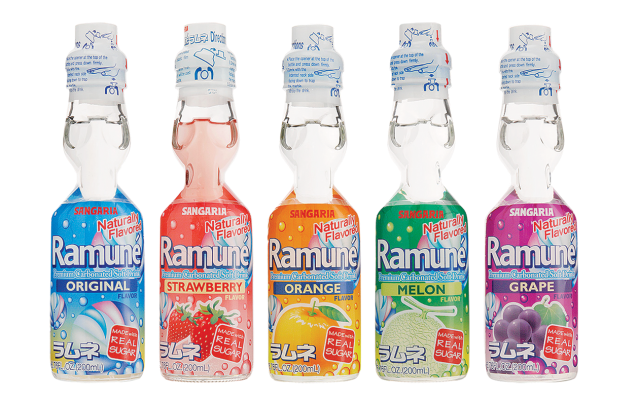
Japanese drink company Sangaria, probably best known in the US for its distinctively-shaped ramune drink, is named after this poem! The final two characters are transposed; presumably ~garia had a better sound and rolled off the tongue more easily than ~ga’ari.

Replacing 破れる with homophone 敗れる (“to fail,” “to be defeated”) is an error. However, writing ari in all kana as あり is perfectly acceptable.

Example sentence:

「昔の人は、国破れて山河在り、という言葉で傷心を癒すことができたが、現在の人類は地形を壊す技術や生命を滅ぼす力を持つ武器を発明してしまったから、それすら失ってしまったのではなかろうか」

(“Mukashi no hito wa, kuni yaburete sanga ari, to iu kotoba de shoushin wo iyasu koto ga dekita ga, genzai no jinrui wa chikei wo kowasu gijutsu ya seimei wo horobosu chikara wo motsu buki wo hatsumei shite shimatta kara, sore sura ushinatte shimatta no de wa nakarou ka.”)

[“The people of the past were able to console themselves in times of sorrow with the words ‘The country is broken, but mountains and rivers remain.’ But now humanity, having invented landscape-shattering technology and extinction-level weapons, has lost even that.”]

RamuneAri

Posted in Japanese, Kotowaza | Tagged , , , , , , , , , , | Leave a comment

Words, words, words

千言万語
sen.gen.ban.go

Literally: thousand – say – ten thousand – word

Alternately: Very many words. A vast number of words. Really quite a very large number of words indeed. Speech or writing that is long-winded, meandering, overdone, prolix, repetitive, tedious, verbose, and/or, well, wordy.

Notes: 千 and 万 are both common examples than can simply mean “a very large number or amount” rather than one or ten thousand specifically. There are quite a few yojijukugo that use them, either in the form 千A万B as above, or in the form XY千万, to express “a whole lot of [something].”

In this particular compound, 万 can also be pronounced as man without being strictly wrong, but ban is far more common and is the preferred reading.

This phrase comes to us from the poetic words, I mean works, of late Tang era poet Zheng Gu (鄭谷, Japanese Teikoku).

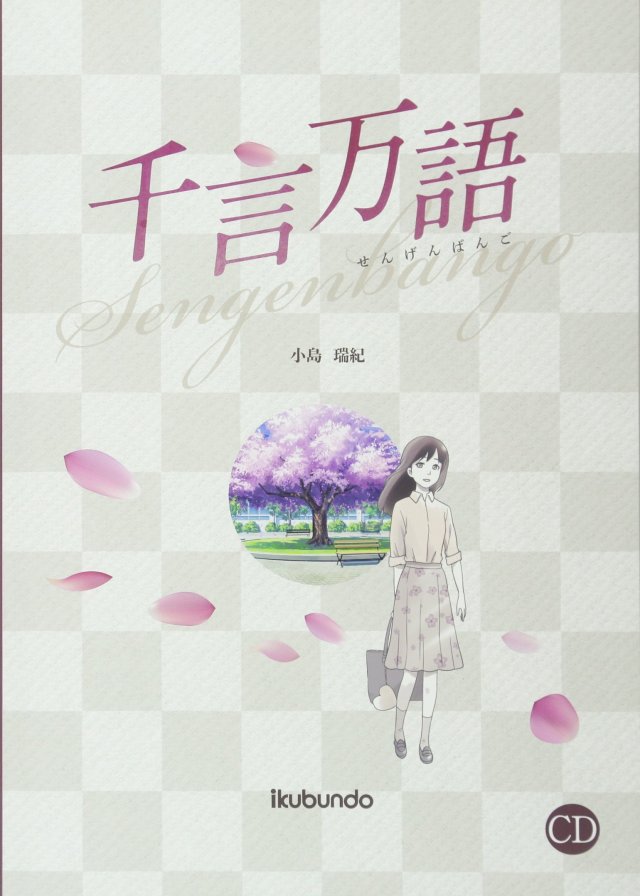
SenGenBanGoHon

An elementary-level Chinese textbook, appropriately enough!

Posted in Japanese, Yojijukugo | Tagged , , , , , , , , | Leave a comment

In my outrage, I caught dozens of flies

開いた口が塞がらない
(Aita kuchi ga fusagaranai; “The open mouth does not close”)

Definition:

To be in a state of utter shock, especially in response to someone’s condition, attitude, words, or behavior. To be left speechless, with one’s mouth hanging open. Agape (but not in the Greek sense).

Breakdown:

We begin with the verb 開く (aku), “to open [a thing],” “to have one’s [mouth/eyes] opened,” appearing in a form that is technically past tense, but which functions in this case as a prenominal. This allows it to attach to and modify the noun 口 (kuchi), “mouth,” which is marked by the particle が (ga) as the subject of a sentence. The predicate for this subject consists entirely of the verb 塞ぐ (fusagu), “to block,” “to shut,” in imperfective form and taking the negative ending ない (nai) in conclusive form, which wraps the sentence up nicely.

Notes:

While the cause of the shock can be something good, bad, or extreme-but-neutral, it seems to be most commonly used in response to something negative, especially bad behavior.

This comes to us from a line in a jōruri rendition of the famous 『忠臣蔵』 (Chuushingura) story – the tale of the 47 ronin.

Example sentence:

「何度も同じ嘘をついて、バレてるのに、今回もまたつくのかよ?開いた口が塞がらないな!」

(“Nando mo onaji uso wo tsuite, bareteru no ni, konkai mo mata tsuku no ka yo? Aita kuchi ga fusagaranai na!”)

[“You’ve told the same lie over and over again, and everyone knows it’s a lie, but here you go again? I’m just dumbfounded!”]

Posted in Japanese, Kotowaza | Tagged , , , , , | Leave a comment

On words, the eating thereof

If it happens too often, you might want some grains of salt.

前言撤回
zen.gen.te-.kkai

Literally: before – say – withdraw – revolve

Alternately: “I take it back.” A phrase that negates a previous phrase, opinion, or comment.

Notes: This “practical” yojijukugo doesn’t appear as such in many dictionaries; it appears to be parsed less as a “four character compound” than as “a compound phrase that happens to have four characters.”

It seems that while this phrase can be used in a straightforward way when you’ve said or thought something that you no longer agree with, it can also take on an ugly connotation. A “take-back” arising from sincere regret is okay, but slyly disavowing something awful that you still support for the sake of a moment’s convenience can make the same phrase into a cheap and dishonest dodge.

ZenGenTeKkaiShinji

Shinji regrets giving Asuka the benefit of the doubt – from 新世紀エヴァンゲリオン Volume 4, by Yoshikyuki Sadamoto

Posted in Japanese, Yojijukugo | Tagged , , , , , , , | Leave a comment

As surprising as a plink to the coo

鳩が豆鉄砲を食ったよう
(Hato ga mamedeppou wo kutta you;
“Like a pigeon got shot by a pea-shooter”)

Definition:

Dazed; amazed; puzzled; left staring in shock by something sudden or completely unexpected. A bit like a deer in headlights, except more like a pigeon that has been bopped by a relatively harmless but still unignorable low-energy projectile.

Breakdown:

We begin with the noun 鳩 (hato), “pigeon,” “dove,” marked as the subject of a clause by the particle が (ga). Next comes compound noun 豆鉄砲 (mamedeppou), literally “bean iron cannon” – in other words, a pea-shooter. This in turn is marked by the particle を (wo) as the object of the verb 食う (kuu), literally “to eat,” or in this case the more figurative “to receive” (with a negative connotation), and finally the noun よう (you, rhymes with “go”), “appearance,” “similar to,” etc. The final-position noun means that this saying is actually a noun phrase rather than a complete sentence.

Notes:

The phrase can be rearranged into 豆鉄砲を食った鳩のよう (mamedeppou wo kutta hato no you), “like a pigeon that got shot by a pea-shooter.” It can also be contracted to just 鳩に豆鉄砲 (hato ni mamedeppou), “a pea-shooter to a pigeon.” But in every case, make sure you don’t lose the 豆. The pigeon is extremely startled, but it’s not dead.

Viewers of certain genres of anime will be familiar with くらう (kurau), which has a similar meaning to 食う’s usage in this saying. A number of my sources stress that no, the pigeon is not eating the pea-shooter, nor its ammunition (at least not yet). Rather, it “ate” a hit, and is still recovering from the shock.

Example sentence:

プレゼントを開けて豆鉄砲を食った鳩のように目を丸くして無言になった男の子は、ガッカリしているのか、それとも喜びのあまり声がでないのか、僕にはしばらく分からなかった。

(Purezento wo akete mamedeppou wo kutta hato no you ni me wo maruku shite mugon ni natta otoko no ko wa, gakkari shiteiru no ka, sore tomo yorokobi no amari koe ga denai no ka, boku ni wa shibaraku wakaranakatta.)

[After opening the present, the boy was left wordless and wide-eyed as a stunned pigeon. Whether he was disappointed, or unable to speak in overwhelming joy, was not clear until later.]

Posted in Japanese, Kotowaza | Tagged , , , , , , | Leave a comment

Selfless love

Like, literally selfless and universal

兼愛無私
ken.ai.mu.shi

Literally: already / and – love – no – self / I

Alternately: Equal affection for all people, without drawing lines between oneself and the Other. Universal love without bias or petty tribalism.

Notes: A kundoku variant – that is, one that sounds a bit less like pure Chinese and more like regular Japanese – goes 兼愛私無し (ken’ai watakushi nashi) but remains unchanged in meaning. Synonyms include 一視同仁.

That said, this compound does come to us from Chinese; specifically, from the writings of Zhuangzi (荘子, Japanese Sou shi), a.k.a. Zhuang Zhou, a Warring States era Taoist philosopher whom we’ve met before.

KenAiMuShiPaper

It’s not about erasure of identity, just that identity and its politics shouldn’t get in the way of love.

Posted in Japanese, Yojijukugo | Tagged , , , , , , , , , | Leave a comment

Lessons from Toad Hall

柳に雪折れなし
(Yanagi ni yukiore nashi; “The willow is not broken by snow”)

Definition:

Gentleness and flexibility may appear weak, but are actually stronger than hardness. The supple, drooping branches of a willow tree aren’t as impressive as the rigid branches of an oak or pine, but neither do they break under heavy snowfall. Knowing how to give makes you strong, while obsessing over “toughness” actually makes you easier to break.

Breakdown:

We begin with the noun 柳 (yanagi), “willow tree,” followed by the directional marker に (ni), “to,” here filling a sort of attributive role. Next comes the noun 雪折れ (yukiore), comprising noun 雪 (yuki), “snow,” and verb 折れる (oreru), “to bend,” “to break,” in conjunctive form and acting as a noun. This noun is followed and modified by the adjective なし (nashi), “not,” in conclusive form.

Notes:

Several variants replace 雪 with 風 (kaze), “wind.” In one case this is the only change, but there seem to be quite a few different versions, including the brief 柳に風 (yanagi ni kaze, “a wind in the willow”) and, equally, 風に柳 (kaze ni yanagi, “a willow in the wind”).

Example sentence:

「若い頃は、命を差しおいてでも自分の理想を大切に守るべきだと思っていたけど、長年に渡る世の中の観察の末に、柳に雪折れなし臨機応変に対応する姿勢の方が良い結果を招くということが分かってきた」

(“Wakai koro wa, inochi wo sashioite de mo jibun no risou wo taisetsu ni mamoru beki da to omotteita kedo, naganen ni wataru yo no naka no kansatsu no sue ni, yanagi ni yukiore nashi, rinki ouhen ni taiou suru shisei no hou ga ii kekka wo maneku to iu koto ga wakatte kita.”)

[“When I was young I thought that you needed to defend your ideals even if it meant laying down your life. But after long years of observing how the world works, I’ve come to see that the willow that bends does not break – that you get better results with a stance that adapts itself as necessary to circumstances.”]

Posted in Japanese, Kotowaza | Tagged , , , , , , , | Leave a comment