It’s a new wind, so blow no ill

明日は明日の風が吹く
(Ashita wa ashita no kaze ga fuku;
“Tomorrow, tomorrow’s wind will blow.”)

Definition:

Things might be bad today, but tomorrow could well be better, so don’t let it get you in a funk. Alternately: you don’t know what the future may hold, so helpless anxiety on the assumption that it will be bad doesn’t do you any good. In either case – whatever will be, will be, and it doesn’t do you any good to just sit and worry.

This is not a happy-go-lucky declaration that we should assume the best and let the chips fall where they may,  of course. It’s still good to plan ahead and prepare for what may come. The point is rather that fretting or pessimistic rumination are also harmful.

Breakdown:

We begin with the noun 明日 (ashita), “tomorrow,” marked as the topic of discussion by the particle は (wa). The comment on this topic begins with another 明日, marked by the associative particle の (no) as connected to and modifying the noun 風 (kaze), “wind.” This is marked by the particle が (ga) as the subject of the verb 吹く (fuku), “to blow,” which appears in conclusive form.

Notes:

明日 may also be read as asu without any change in meaning. This phrase is close to, or synonymous with, a number of other phrases, including one asserting that events tomorrow will be protected by tomorrow’s gods, presumably different entities from the gods influencing today: 明日は明日の神が守る (ashita wa ashita no kami ga mamoru).

This saying comes to us from a kabuki play titled 『上総綿小紋単地』 (Kazusa momen komon hitoeji) by Japan’s most prolific playwright, 河竹黙阿弥 (Kawatake Mokuami), whom we’ve heard from before.

Example sentence:

「今日は寝坊しちゃって色々上手くいかなかったからって、そのまま明日もダメになっちゃうかもなんて思い込んじゃダメだよ。明日は明日の風が吹くさ」

(“Kyou wa nebou shichatte iroiro umaku ikanakatta karatte, sono mama ashita mo dame ni nacchau kamo nante omoikonja dame da yo. Ashita wa ashita no kaze ga fuku sa.”)

[“Don’t fool yourself into thinking that just because you slept in today and a bunch of stuff got messed up, that things will go on being messed up tomorrow. It’s a new day, after all.”]

Posted in Japanese, Kotowaza | Tagged , , , , , , , | Leave a comment

Lose yourself in the public flats

公平無私
kou.hei.mu.shi

Literally: public – even – no – private

Alternately: Impartial; unprejudiced; unswayed by personal interests. Fair.

Notes: This comes from our friend the Han shi waizhuan (Japanese 『韓詩外伝』 = Kanshi gaiden). It also has an expanded Japanese-style reading, 公平にして私無し (kouhei ni shite watakushi nashi), approximately “being impartial, without self.”

Naturally, writing mushi as homophone 無視 (“ignore”) is an error.

This phrase is considered an antonym of 依怙贔屓, and I have to say that the one is much, much healthier than the other for the general public, on multiple levels.

Saigo-don!

Apparently an attribute of Saigō Takamori, a major player in the Meiji Restoration who helped abolish the old feudal system

Posted in Japanese, Yojijukugo | Tagged , , , , , , , , , , , , | 1 Comment

Chopped short by the writer’s block

文は遣りたし書く手は持たず
(Fumi wa yaritashi kakute wa motazu;
“Wanting to send a letter, but lacking the hand to write it”)

Definition:

This phrase expresses a desire to write a letter to someone (especially a family member, close friend, or lover), accompanied by writer’s block arising from a perceived inability to express one’s thoughts adequately in writing. The pain and worry of feeling unable to correspond effectively. May also include the embarrassment-driven inability to ask for someone to write on your behalf.

Breakdown:

We begin with the noun 文 (fumi), “writing,” “letter” (as in snail-mail), with the topic-marker particle は (wa). This particle also overrides the を that might otherwise mark 文 as the direct object of the verb 遣る (yaru), “to do,” “to send,” etc. This appears in conjunctive form and attaches to the adjective たし, which expresses a desire – the ancestor of the modern ~たい verb suffix. This appears in conclusive form and effectively breaks the saying up into two parallel, but not grammatically entwined phrases.

The second half again begins with a noun phrase followed by topic-marker は, so that the two はs also form an explicit contrast. The second noun phrase begins with the verb 書く (kaku), “to write,” in prenominal form, attached to and modifying the noun 手 (te), “hand.” This time the verb that takes this noun phrase, “writing-hand,” as its object is 持つ (motsu), “to have,” in imperfective form and taking the negative suffix ず (zu) in conclusive form. For both halves, the writer (or speaker) is themselves the implied subject, as is so often the case in Japanese.

Notes:

Modern orthography will forgive a writer who renders yaritashi all in kana as やりたし; the 遣 character is still in the standard set, but mostly tends to be used in other contexts, such as 派遣 (haken), “dispatch,” rather than in the verb yaru, which itself has taken on a bit of a charged meaning. The final negative suffix may also be rendered as ぬ (nu) without any change in meaning.

This saying is attributed to an Edo-era book of sayings called the 『譬喩尽』 (Tatoe-dzukushi), literally “an exhaustive list of metaphors.” It also appears as the ふ entry in the Edo iroha karuta set.

Example sentence:

「ああああどうしよう、好きな先輩からSMSが来たけど、文は遣りたし書く手は持たぬで完全に行き詰っちゃって、もう丸二日たったのに一言も返事ができてないんだ!」

(“Aaaa dou shiyou, suki na senpai kara SMS ga kita kedo, fumi wa yaritashi kakute wa motanu de kanzen ki yukidzumacchatte, mou maru futsuka tatta no ni hitokoto mo henji ga dekitenai nda!”)

[“ARGH, what should I do? I got a text from that upperclassman I like, but even though I want to write something I don’t know what to say and it’s got me completely blocked. Two whole days have already gone by but I haven’t even sent a single word!”]

Posted in Japanese, Kotowaza | Tagged , , , , , , , | Leave a comment

Wrack, wrack, wrack your brains

And your body too! Merrily… ?

意匠惨憺
i.shou.san.tan

Literally: mind – artisan – harsh – calm

Alternately: Doing one’s utmost in an act of creation (especially artistic creation) or design; painstaking attention to detail and agonizing effort for the purpose of devising something good, or to come up with a good way to get something done.

Notes: This is a compound of compounds; 意匠 refers to “design,” while 惨憺, despite the base meaning of its second character, refers to a truly awful situation – or to “taking pains” in a course of action.

憺 may be replaced by related character 澹 without any change in pronunciation or meaning.

As the rare and complicated kanji usage might suggest, this comes from the Chinese literary tradition – specifically from the writings of our friend, Tang-era poet Du Fu (Japanese 杜甫 = To Ho).

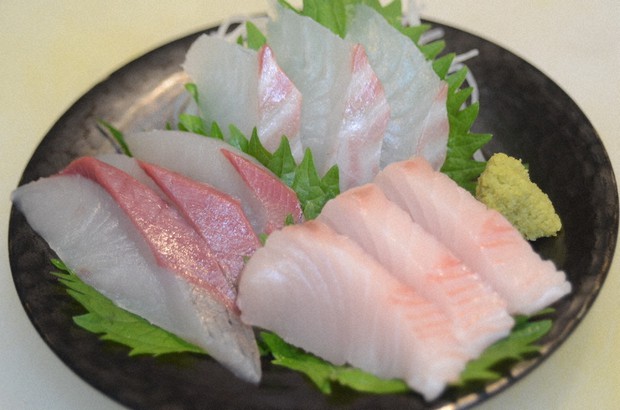
But did you realize that this is a cube of sashimi?

You don’t have to like the food, but you do have to appreciate the amount of thought that has gone into its presentation

Posted in Japanese, Yojijukugo | Tagged , , , , , , , , | Leave a comment

The attack of Not A Number

Beware lest your calculations be all messed up

一難去ってまた一難
(Ichinan satte mata ichinan; “One trouble goes; another trouble.”)

Definition:

No sooner have you escaped one danger or difficulty than the next arises. Out of the frying-pan and into the next frying-pan. Alternately, a state of discombobulation arising from being hammered by an unrelenting string of disasters. A warning to be on guard even after a problem has been overcome, and a comment on how life is full of troubles. Compare and contrast 前門の虎後門の狼 and 泣き面に蜂.

Breakdown:

We begin with number-noun 一難 (ichinan), “one hardship,” “one disaster.” Any particles are elided, but this is the subject of the verb 去る (saru), “to leave,” which appears in conjunctive form, signaling a shift to a dependent clause. This clause begins with adverb また (mata), “again,” and ends with a repeat of number-noun 一難, with any verbs or copulae elided.

Notes:

It is acceptable for 去る to appear in perfective form with conditional particle ば (ba) as 去れば (sareba), “when one trouble leaves,” with or without the また included. However, replacing the verb with 過ぎる (sugiru), “to pass [by],” in either form is considered an error.

Example sentence:

「通学途中で自転車のタイヤがパンクして、直した途端に俄雨に降られて、やっと学校に着いたと思ったら、今度は宿題がないことに気づいた。そんな調子で今日は朝からずっと一難去ってまた一難だ」

(“Tsuugaku tochuu de jitensha no taiya ga panku shite, naoshita totan ni niwakaame ni furarete, yatto gakkkou ni tsuita to omottara kondo wa shukudai ga nai koto ni kidzuita. Sonna choushi de kyou wa asa kara zutto ichinan satte mata ichinan da.”)

[“On the way to school my bike got a flat tire, and as soon as I’d fixed it I was caught in a sudden rainshower, and then when I’d finally gotten to school I realized that my homework wasn’t in my bag. And that’s how it’s been all day, just one thing after another.”]

Posted in Japanese, Kotowaza | Tagged , , , , , | Leave a comment

Touch and touch and touch and touch and touch and touch and touch and touch and touch and go

九死一生
kyuu.shi.i-.sshou

Literally: nine – die – one – live

Alternately: To somehow survive a very seriously dangerous situation. To be alive after escaping a 90% chance of dying.

Notes: This comes to us from the Chu Ci, aka the Songs of Chu (Japanese 『楚辞』 = So ji), an extensive and influential poetic anthology attributed, at least in part, to the Warring States period.

This compound may be expanded into a whole phrase as 九死に一生を得る (kyuushi ni isshou wo eru), “to receive one life out of nine deaths.” There are also a surprising number of variants, such as 死一生 (juu shi isshou), which changes the chance of death from 9 to 10. Beyond that, though, we find 死一生 (ban shi isshou), replacing 9 with 10,000, or the quirky 生 (ban shi kyuu shou), respectively replacing 9 and 1 with 10,000 and… 9.

I see he opted for female-style battle armor

I’m going to just assume that this is how the Japanese media portray Joseph R Biden

Posted in Japanese, Yojijukugo | Tagged , , , , , , , , | 1 Comment

Don’t just tread on it

Make sure your neighborhood is friendly to mongooses

蛇の生殺しは人を噛む
(Hebi no namagoroshi wa hito wo kamu;
“A half-killed snake bites a person”)

Definition:

If you take action but don’t finish the job, you only invite harm. A snake wounded but not finished off, or left only half-dead, will lash out and bite. Once you’ve started something – especially the defeat of a vicious foe – finish the job lest it come back and haunt you. While the “action” left unfinished may be general, this saying often carries a connotation of something potentially dangerous that is not dealt with thoroughly.

Breakdown:

We begin four (and five) characters in, with the verb 殺す (korosu), “to kill,” in prenominal form and acting as a noun. This is compounded with the noun 生 (nama), “raw” or “live,” or in this case “unfinished.” The associative particle の (no) attaches this compound to, and allows it to be modified by, the noun 蛇 (hebi), “snake.” This entire noun phrase is marked as the topic of discussion by the particle は (wa). The comment on this topic begins with the noun 人 (hito), “person,” which is marked by the particle を (wo) as the direct object of the verb 噛む (kamu), which appears in conclusive form.

Notes:

Writing hebi with katakana (ヘビ) or writing kamu as 咬む is a perfectly acceptable orthographic variation.

The phrase 蛇の生殺し on its own can refer to leaving an opponent to suffer after wounding but not killing them, or by extension, any job left half-finished. Things may also be rearranged to give 生殺しの蛇に噛まれる (namagoroshi no hebi ni kamareru), “to be bitten by a half-killed snake,” i.e. “to be harmed after failing to completely root out something bad.”

Example sentence:

「当分の間は犠牲も無くテロを防ぐことができたが、蛇の生殺しは人を噛むことにならないように、陰謀に加わった者を皆逮捕するまで休まずに努め続けるつもりだ」

(“Toubun no aida wa gisei mo naku tero wo fusegu koto ga dekita ga, hebi no namagoroshi wa hito wo kamu koto ni naranai you ni, inbou ni kwawatta mono wo minna taiho suru made yasumazu ni tsutome tsudzukeru tsumori da.”)

[“For the time being, we’ve managed to avert a terror attack without any victims. But to prevent a half-finished job from coming back to bite us, we intend to continue working until every member of the conspiracy is behind bars.”]

Posted in Japanese, Kotowaza | Tagged , , , , , , | Leave a comment

Wolves among the flowers

落花狼藉
ra-.kka.rou.zeki

Literally: fall – flower – wolf – spread

Alternately: Things are scattered or disorganized. Chaos and disorder. Violence, especially violence directed towards women and children.

Notes: As with last week’s yojijukugo, this is a compound of compounds, with 落花 referring to scattered flower petals and 狼藉 being the flattened grass where a wolf has bedded down. The image of flower petals may be taken as an example of disorder, or (as in the final usage mentioned), as a metaphor for the supposed fragile beauty of noncombatant women and children.

This phrase comes to us from the Wakan rōeishū (『和漢朗詠集』, a thousand-year old poetry collection including both Chinese and native Japanese works.

Writing 落花 as homophone 落下, “fall,” “descent,” or 藉 as close relative 籍 is naturally an error.

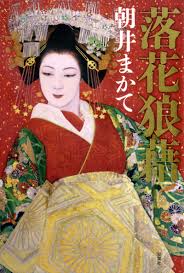
""""Geisha""""

It’s a book title. I have no idea what about. You can buy it if you’d like.

Posted in Japanese, Yojijukugo | Tagged , , , , , , | Leave a comment

An ounce of prevention is worth….

Buy it when prevention is cheap, not when cure is costly

治に居て乱を忘れず
(Chi ni ite ran wo wasurezu; “In peace, do not forget strife”)

Definition:

Even in times of peace and safety, it’s still necessary to plan ahead in case something goes wrong. In times of plenty, prepare for scarcity; in times of peace, be ready to deal with disaster or violence. Even when things are going well, make a point of thinking about ways that they could go poorly, and lay plans accordingly.

Breakdown:

We begin with the noun 治 (chi), “peace,” although note that in contemporary Japanese this usage is obscure and often adds the meaning of “governance” to compound terms, e.g. 治安 (chian, “public safety/order”). This is marked as the (temporal) location of the verb 居る (iru), “to sit,” “to be,” in conjunctive form and taking the perfective suffix つ (tsu), also in conjunctive form. The following clause begins with the noun 乱 (ran), “disorder,” “war,” marked by the particle を (wo) as the object of the final verb 忘る (wasuru), “to forget,” which is in imperfective form (as 忘, wasure) and takes the negative suffix ず (zu) in conclusive form.

Notes:

This comes to us from a commentary appended to the I Ching (Japanese 『易経』 = Ekikyou) known as the “ten wings” (十翼 = juuyoku) – specifically the “Great Commentary” (繁辞伝 = Keijiden).

Writing chi with homophone 地 (“earth”) is, of course, an error. However, writing ite in kana as いて is acceptable. As we might expect based on the fame and antiquity of its source, this saying also boasts multiple variants, e.g. by replacing 治 with some grammatical form of 安 (an, also “peace”) and 乱 with 厄 (yaku, “disaster”) or 危 (ki, “danger”), and/or perhaps the final verb with the affirmative form of 思う (omou, “to think [of]”), among others.

Example sentence:

「適切な行政官と言ったら、ほとんどの人が想像するのは緊急事態になったら冷静に臨機応変に対応出来る人物だと思うけど、僕はそもそも緊急事態が起きる前に、治に居て乱を忘れずで、しっかりと備えておくのが一番だと思います」

(“Tekisetsu na gyouseikan to ittara, hotondo no hito ga souzou suru no wa kinkyuu jitai ni nattara reisei ni rinkiouhen ni taiou dekiru jinbutsu da to omou kedo, boku wa somosomo kinkyuu jitai ga okiru mae ni, chi ni ite ran wo wasurezu de, shikkari to sonaete oku no ga ichiban da to omoimasu.”)

[“If you talk about what makes a good public administrator, I think most people imagine someone who stays calm and adaptable during emergencies. But I believe that what’s best is actually someone who thinks about trouble even when things are calm and prepares thoroughly before an emergency situation actually arises.”]

Posted in Japanese, Kotowaza | Tagged , , , , , , , , | Leave a comment

Sedition

乱暴狼藉
ran.bou.rou.zeki

Literally: disorder – violence – wolf – spread

Alternately: To engage in violent and unlawful behavior; to ignore reason and act wildly and destructively. Rioting; committing outrages.

Notes: It is an error to replace 藉 with homophone 籍, “register” (note the 艹 “crown” in one and the ⺮ in the other). So is reading 暴 as baku, although that can be a valid pronunciation in other contexts.

This is a doubled-for-emphasis type of yojijukugo; both 乱暴 and 狼藉 refer to “violence.” Supposedly the latter invokes the image of a patch of disturbed grass where a wolf has lain down to sleep. The compound may be made into a verb phrase by following it with ~を働く (~wo hataraku).

Read it yourself; I'm tired right now: https://www.daitakuji.jp/2014/03/13/%E5%BD%93%E3%81%9F%E3%82%8A%E5%89%8D%E3%81%AE%E4%B9%B1%E5%8F%96%E3%82%8A-%E4%B9%B1%E6%9A%B4-%E7%8B%BC%E8%97%89%E3%81%AE%E7%84%A1%E6%B3%95%E5%9C%B0%E5%B8%AF

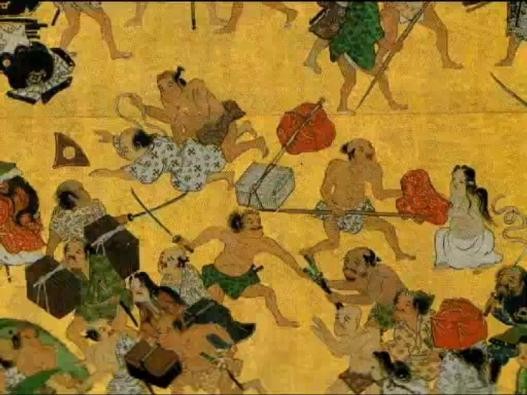
Scenes of violence from a historical text at Daitakuji (大澤寺), a Buddhist temple in Shizuoka that is – and I am not making this up – just a couple minutes walk from a goldfish shop called White House. Topical!

Posted in Japanese, Yojijukugo | Tagged , , , , , , , | 1 Comment