A tip for an umbrella

濡れぬ先の傘
(Nurenu saki no kasa; “(Opening) an umbrella before getting wet”)

Definition:

Thorough advance preparation. Like opening an umbrella before any rain has even started falling. Prevention is better than cure; better early than late.

Breakdown:

We begin with the verb 濡れる (nureru), “to get wet,” with negative suffix ず (zu) in prenominal formぬ (nu). This attaches to the noun 先 (saki), “before.” In turn, the entire noun phrase that we’ve seen so far is connected by the associative particle の (no) to the noun 傘 (kasa), “umbrella.” Rendered in a clunky literal fashion, the whole saying becomes a noun phrase along the lines of “umbrella of before-getting-wet.”

Notes:

At first blush I assumed that this phrase was about opening an umbrella long before the rain, to check whether it works or even as practice to ensure that you know how to operate it. But the actual nuance is rather one of opening an umbrella as soon as one anticipates rain, rather than waiting for the drops to actually start falling. The idea is that if you wait until the last minute, then any mistakes will leave you wet, so it’s better to be walking along with an as-yet-unnecessary umbrella open above you, than to wait until the last moment and risk getting drenched.

This theme of cautious precaution is common, and there are a wealth of sayings that are considered synonymous with this, including at least a couple that we’ve seen before. Another one using the exact same pattern as 濡れぬ先の傘 is 転ばぬ先の杖 (korobanu saki no tsue), replacing “get wet” with “fall down” and “umbrella” with “cane.”

Example sentence:

濡れぬ先の傘を差そうと思って、赤ん坊がまだハイハイ出来ないうちに書斎の入口に安全ゲートを取り付けることにした」

(Nurenu saki no kasa wo sasou to omotte, akanbou ga mada haihai dekinai uchi ni shosai no iriguchi ni anzen geeto wo toritsukeru koto ni shita.”)

[“Thinking that I had better get ahead of the game, I decided to put up a safety gate in the study doorway before the baby could crawl.”]
Posted in Japanese, Kotowaza | Tagged , , , , , , | 4 Comments

An iceberg… of detergent

潜在意識
sen.zai.i.shiki

Literally: submerge – exist – mind – know

Alternately: Subconscious. This modern compound comprises 潜在, “dormancy,” and 意識, “awareness,” and stands in contrast to terms such as 前意識 (zenishiki, “preconscious”) or 無意識 (muishiki, “unconscious”).

Notes: I have nothing more to add about the phrase itself, but I did want to comment on the so-called “collective unconscious” (集合無意識, shuugou muishiki). While mystical misreadings of the term hold this up as some sort of unbodied supernatural repository of eternal Platonic truths, all it really refers to is… tropes. If an idea is used multiple times in a given culture, it enters the consciousness of many people (i.e. it becomes “collective”) but most people aren’t consciously thinking about it (i.e. it’s “unconscious”).

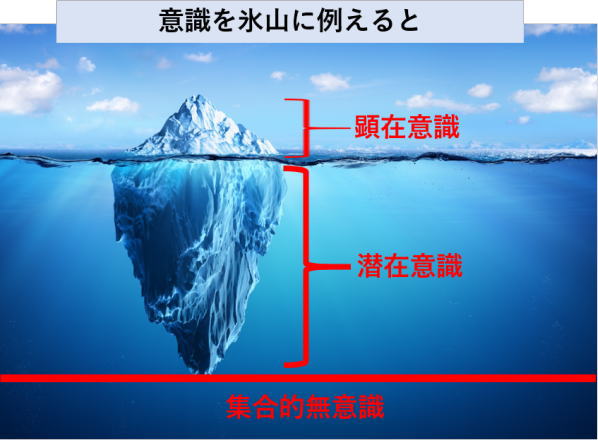
I speg, you sperg, we all sperg for icebergs.

Icebergs were a common image search result. Note that this example (incorrectly!) posits a “collective unconscious” as the lowest layer.

Posted in Japanese, Yojijukugo | Tagged , , , , , , | Leave a comment

Ready to go, but never to return

傘と提灯は戻らぬつもりで貸せ
(Kasa to chouchin wa modoranu tsumori de kase;
“Lend umbrellas and lanterns with the awareness that they will not return”)

Definition:

People are forgetful. Human nature being what it is, there are certain things that you should expect, such as loaned umbrellas not being returned. You only take out an umbrella when there’s danger of being rained on, and you only take out a lantern when you need to go somewhere after dark, so both are easy to forget about when the sun is out. If you lend one to somebody, they’re likely to stow it away when it’s not needed, and forget about it, and not return it. When it is needed, of course, they’ll want to use it, and tell themselves that they’ll return it afterwards – but you probably won’t be there at the right moment, so they’ll stow it away until they have the chance, and the cycle continues. In short, be prepared to never see it again.

Breakdown:

The topic marker は (wa) tells us that we’re talking about the noun 傘 (kasa), “umbrella” and the noun 提灯 (chouchin), an old-style rounded paper lantern, joining them with と (to), “and.” The comment on this topic begins with intransitive verb 戻る (modoru), “to return,” in imperfective form and with negative suffix ず (zu) in prenominal form as ぬ (nu). This allows it to connect with the noun つもり (tsumori), “intent,” “belief,” which in turn is marked by the particle で (de), in this case, “with.” The verb performed with the belief that the implements won’t return is 貸す (kasu), “to lend,” in imperative form.

Notes:

While my interpretation generalizes the principle for an age in which we tend not to travel by the light of hand-held lanterns, the use of と rather than や suggests an exclusive list rather than two primary examples from an implied expansive list. Whether this is a mere coincidence, an example of usage shifting over time, or a deliberate attempt to separate forgettable things like umbrellas from things that you really shouldn’t forget (like money), is unclear.

Example sentence:

「おい、貸熊、クロックさんが着てるのってお前のセーターじゃないの?」 「うん、でも、別に大丈夫ですよ。傘と提灯と同じように戻らぬつもりで貸したの」 「…なんだよ」 「ううん、ただ、私のセーターだってよく気付きましたね、先輩」

(“Oi, Kashikuma, Kurokku-san ga kiteru notte omae no seetaa ja nai no?” “Un, demo, betsu ni daijoubu desu yo. Kasa to chouchin to onaji you ni modoranu tsumori de kashita no.” “…Nan da yo.” “Uun, tada, watashi no seetaa datte yoku kidzukimashita ne, senpai.”)

[“Hey, Kashikuma, isn’t that your sweater that Clock-san is wearing?”

“Yeah, but it’s fine. I lent it to her knowing that, like an umbrella, it would probably never come back.”

“…What.”

“Nooothing, just, I’m impressed that you noticed it was my sweater, senpai.”]

Posted in Japanese, Kotowaza | Tagged , , , , , , , , | Leave a comment

Consider the lotus of the pond

It toils and spins SO HARD

難行苦行
nan.gyou.ku.gyou

Literally: difficult – go / undertaking – suffering – go / undertaking

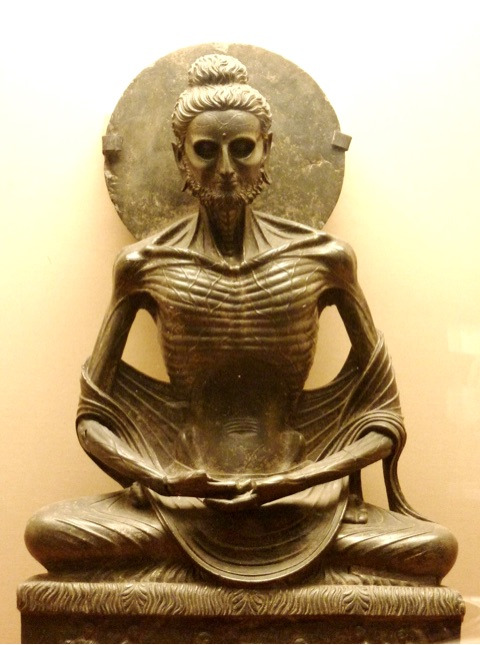
Alternately: Extreme difficulties or suffering. In particular, this describes when someone is enduring privation and hardship as part of (Buddhist) ascetic training in search of enlightenment.

Notes: 行 in this case refers to 修行 (shugyou), “ascetic training.”

This compound comes to us from the Lotus Sutra (法華経, Hokekyou or Hokkekyou).

Ascetic Buddha statue

S K E L E T A L ・A E S T H E T I C ・A S C E T I C ・D E F ・N O T ・D I A B E T I C

Posted in Japanese, Yojijukugo | Tagged , , , , , , , | Leave a comment

If the cattle are horny, you shouldn’t care if they’re straight

角を矯めて牛を殺す
(Tsuno wo tamete ushi wo korosu; “Straightening the horns, killing the cow”)

Definition:

A situation where trying to fix a small problem ruins the whole thing. The cure being worse than the disease. Hammering and pulling on a cow’s curved horns in an attempt to straighten them is only going to be bad for the beast itself.

Breakdown:

This saying comprises conjoined verb phrases. The first begins with noun 角 (tsuno), “horn(s),” marked by particle を (wo) as the object of verb 矯める (tameru), “to straighten,” “to correct,” which appears in conjunctive form. The second phrase uses を to take as its object the noun 牛 (ushi), “cow,” and the verb being done to the cow is 殺す (korosu), “to kill,” in conclusive form.

Notes:

Replacing 矯める with homophone 溜める, “to amass,” is of course an error. Replacing it with 直す (naosu, “to fix”), however, is perfectly fine.

This saying has a surprising number of synonymous phrases. My favorite are the ones declaring that trying to repair or polish a Buddha statue, or a Jizou statue, will break off its nose.

Example sentence:

角を矯めて牛を殺したように、ソフトにちょっとだけ手を加えてみたら、途中でパソコンが不意にブルースクリーンになってしまった」

(Tsuno wo tamete ushi wo koroshita you ni, sofuto ni chotto dake te wo kuwaete mitara, tochuu de pasokon ga fui ni buruu sukuriin ni natte shimatta.”)

[“As if I’d killed the cow by straightening its horns, when I tried tweaking the software just a bit, all of a sudden my computer went BSOD.”]

Posted in Japanese, Kotowaza | Tagged , , , , , , , , , | Leave a comment

Like yourself; like Mt. Tai

泰然自若
tai.zen.ji.jaku

Literally: calm – “sort of thing” – self – (young) / similar

Alternately: Unflappable. Calm and self-controlled.

Notes: This is another compound of synonymous compounds; 泰然 means “composed; unmoved,” while 自若 means “self-possessed.”

This yojijukugo has a number of both synonyms, including 余裕綽々, and antonyms, including 小心翼翼 (“fearful”) and 右往左往 (“disordered”).

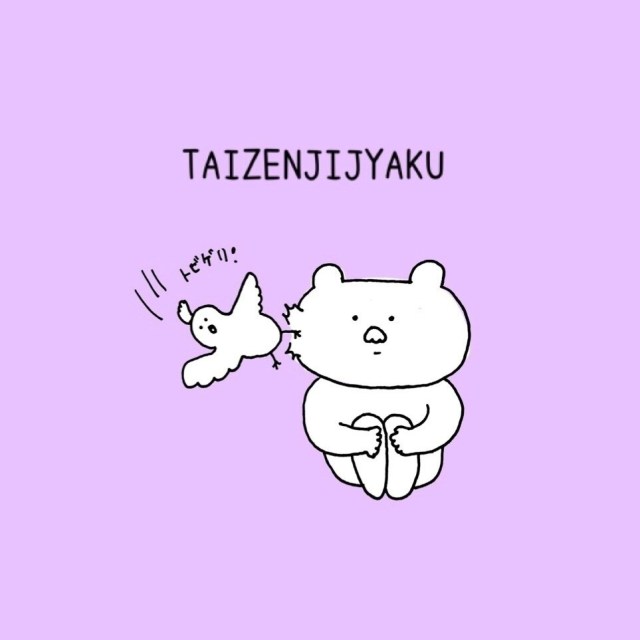
TaiZenJiJakuGeri

From this “note” account. The bird is saying “Flying kick!”

Posted in Japanese, Yojijukugo | Tagged , , , , , | Leave a comment

The audacity of crime

盗人猛猛しい
(Nusubito takedakeshii; “An impudent thief”)

Definition:

Remaining calm and self-assured even when doing something wrong. Alternately, when you get caught doing something wrong, acting defiant or even becoming aggressive toward the person who caught you, instead of being properly embarrassed or contrite. Brazening out your own crimes and wrongdoings. Evil chutzpah. Currently, acting presidential.

Breakdown:

This simple subject-predicate phrase begins with compound noun 盗人 (nusubito, although see below), “thief” or “robber.” We can imagine an elided topic marker here, but what we actually get is a comment in the form of adjective 猛猛しい (takedakeshii), “shameless,” “bold,” “ferocious,” in modern conclusive form but with any sort of copula elided.

Notes:

盗人 can also be read as nusutto. The adjective may alternately be written using the kanji doubling mark, as 猛々しい, and/or with an old-fashioned conclusive form by leaving off the final い. Replacing takedakeshii with hanahadashii is an error.

Multiple sources translate this into English as “He bites the ear yet seems to cry for fear,” which I have never heard in my life. Some research indicates that in this case “bite” is slang for “caress,” as seen in Shakespeare’s Romeo and Juliet (Act II scene IV), but that doesn’t make the meaning any clearer or explain why someone thought it the best translation for what boils down to “brazen wrongdoing.”

Example sentence:

「ネコってさ、本質は盗人猛猛しいけど、家のペロちゃんは違うんだよ」

(“Neko tte sa, honshitsu wa nusubito takedakeshii kedo, uchi no Pero-chan wa chigau nda yo.”)

[“You know, by their very nature cats are bald-faced criminals, but our little Pero is different.”]

Posted in Japanese, Kotowaza | Tagged , , , , , , , | Leave a comment

Pull your sheep, a good life to keep

牽羊悔亡
ken.you.kai.bou

Literally: pull / lead – sheep – regret – perish

Alternately: You’ll be unhappy unless you take an active part in shaping things. If you see something through properly instead of just letting it run its natural course, you will have no regrets. A flock of sheep left to their own devices will wander, lock horns, and otherwise run into trouble, so human guidance is necessary – and so it is in other facets of life as well.

Notes: This comes to us from the I Ching (易経, Japanese Ekikyou). Interestingly, the compound can be read, kanbun-style, as 羊を牽けば悔い亡びん (Hitsuji wo hikeba kui horobin).

Keep in mind that 悔亡 doesn’t mean “suffer and die”; it means “suffering will disappear.”

KenYouKaiBouEma

What looks like an ema (prayer plaque) at a shrine.

Posted in Japanese, Yojijukugo | Tagged , , , , , , , , | 1 Comment

The ease of TITO

上げ膳据え膳
(Agezen suezen; “Table-clearing; table-setting”)

Definition:

Not doing anything; having everything done for one. Can be positive, as when describing the service at a luxury resort, or negative, as when describing a friend or family member who isn’t pulling their weight.

Breakdown:

This compact phrase comprises paired noun phrases, each centered on the noun 膳 (zen). These are, traditionally, low lacquered tables used in “high-class” eating situations, small enough to be loaded with food and carried into and out of a room like trays.

In the first half of the phrase, this noun is modified by the verb 上げる (ageru), “to raise,” or in this case “to pick up [and clear away],” in conjunctive form, which allows it to function as a noun – that is, 上げ・膳 is grammatically a compound noun. The same happens in the second half with 据える (sueru), “to place [something in position].”

Notes:

It is acceptable to insert particle に (ni), in the sense of “(adding A) to (B),” in between the two halves. Replacing 据える with 下げる (sageru, opposite of 上げる) is considered an error.

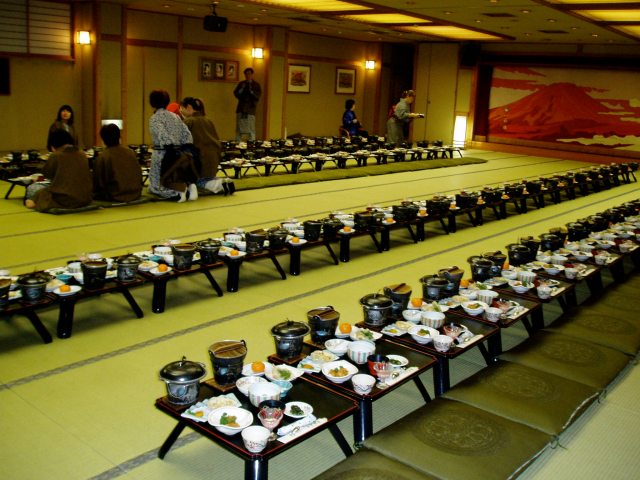
Keep in mind that traditionally, moneyed people sat on thin cushions on tatami flooring and lived in houses where many of the rooms were multi-purpose. Servants would bring out, or put away, implements such as standing screens, futons, writing tables, and 食膳 (shokuzen) – “eating tables.” In a modern context, without ubiquitous paid or roomed-and-boarded household staff, the nuance associated with having one’s place set out and cleared away seems to have changed from “exactly what you’d expect” to “luxury” or even “being lazy.”

Incidentally, you will still see zen in contemporary Japan; in keeping with their aristocratic origin, they tend to be limited to expensive, nostalgia-invoking venues like formal parties or ryokan inns. Miniature versions may sometimes be used with household shrines.

Example sentence:

「旦那さんに家事をさせないで上げ膳据え膳の生活を許してしまったら、何も出来ない状態で年老いちゃうから、夫婦の将来をダメにするんじゃありませんか。今の時代、夫婦で家事をするのがデフォルトですよ、部長。」

(“Danna-san ni kaji wo sasenaide agezen suezen no seikatsu wo yurushite shimattara, nanimo dekinai joutai de toshioichau kara, fuufu no shourai wo dame ni suru nja arimasen ka. Ima no jidai, fuufu de kaji wo suru no ga deforuto desu yo, buchou.”)

[“If you always allow your husband to sit idly by without having him do any chores, he just gets old without learning to actually do anything. And won’t that be harmful to the couple later on? Chief, in this day and age, the default is for husband and wife to do the housework together.”]

OLYMPUS DIGITAL CAMERA

A room full of zen for a fancy dinner party.

Posted in Japanese, Kotowaza | Tagged , , , , , , | Leave a comment

On catching oneself red-handed

赤手空拳
seki.shu.kuu.ken

Literally: red – hand – empty – fist

Alternately: Doing something on one’s own, without receiving (and often without asking for) help from anybody. Alternately, facing an enemy without any weapons but one’s fists.

Notes: This is a repetition-type yojijukugo, in which 赤手 (in contrast to the English-language idiom) refers to a bare or empty hand, and 空拳 means that you’ve got nothing in your hand, just making a fist. One variant replaces the 赤 with another 空, while another replaces it with 徒 (to), which can also be used to mean “empty.” The latter variant seems to specifically emphasize a lack of capital when starting a business venture.

This phrase comes from the famous Journey to the West (西遊記, Japanese Saiyuuki), part II. I’m a little surprised to find that this is the first time we’ve had something on the site from that source, given its widespread influence: the closest we’ve come is, essentially, its nonfictional counterpart.

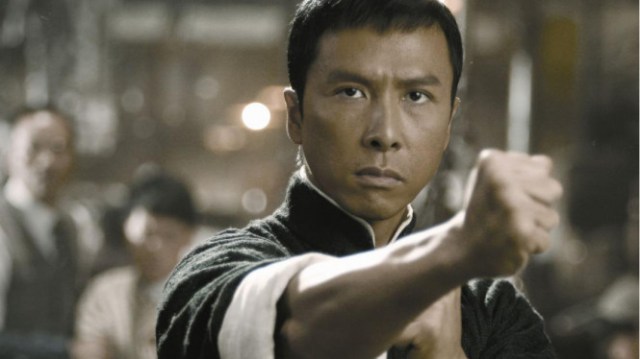
Donnie Yen with Fist

A lot of karate and kung fu in the image search results. Pictured: Donnie Yen in Ip Man 3.

Posted in Japanese, Yojijukugo | Tagged , , , , , , , , , , | Leave a comment