YAOSC: Opposition Tracks

Setting sail from Alexandria

Once again, I was reading someone else’s thoughts on tabletop RPGs when I was inspired to riff on one of the ideas to my own ends. In this case, it was Justin Alexander’s “Stealthy Thoughts,” and the part that caught my notice was the idea of lifting stealth out of a binary all-or-nothing state into a stepped state. He uses three states: Hidden, Detected, and Revealed. My first response was that I’d bump that up to four:

  • Unknown (observer is unaware of the stealthy character’s presence)
  • Suspected (observer has an idea that someone or something is nearby, but that’s all)
  • Known (observer is confident that someone is there in a general location/direction)
  • Found (observer knows where their target is)

Using YAOSC rules, stealth encounters would be resolved with skill challenges. Each degree of success on the observer’s part would move the stealth state from Unknown toward Found by one step, while degrees of success beyond the first would allow the stealthy character to cover their traces and move back in the other direction. (The first degree would simply maintain their current level; but them’s the breaks.)

Example: a scout has made a noise that alerted a nearby guard. The GM rules that the noise sounds like it could have come from an animal, so the scout’s alert state is raised to Suspected rather than Known, but now the guard is actively scanning for intruders, and it’s time for a challenge roll. The scout gets a 20, while the guard gets an 8, and the scout is able to shift their state back to Unknown by holding still until the guard relaxes. If they had only rolled a 12 (only one degree of success), they would have shifted, coughed faintly, or otherwise left the guard in a state of suspicion while remaining unseen. If they had rolled less than an 8, they would have moved enough,or made a sound loud enough, for the guard to become certain of their presence and begin zeroing in on their position.

From sneaking to fighting

Alexander also mentions that he’d extended the paradigm to other situations; in this case the way my mind went was using the same concept for combat. Note that I’m not talking about restructuring hit points here; I’m talking about partially divorcing combat results from hit points, because in the real world most combat-as-such (as opposed to, say, the act of a predator hunting prey) is designed by evolution to end in surrender rather than death. So, we’d have something like this:

  • Ready (100% up to a fight)
  • Pressed (starting to feel some pressure)
  • Disadvantaged (definitely going downhill)
  • Overwhelmed (just about ready to give up)
  • Defeated (not willing or able to fight any longer)

I envision the steps of this “opposition track” as representing an abstract mixture of the character’s available resources, positioning, stamina, and morale. If you whittle your opponent down to “Defeated,” maybe you disarmed them, backed them up to a cliff-edge, wore them down to exhaustion, or simply batted them around until they gave up in despair, or even a combination of the above. Narrating the details together can be part of the fun.

I like this idea a lot, and it would be nice to be able to use it in YAOSC, but I’d also rather avoid the complexity of a combat system that tracks abstract “readiness” on top of the D&D-style mutual whittling away of survival meters that’s already in place. The question of how I could integrate opposition tracks without things getting messy has stumped me every time I think about it for months.

From fighting to… a different way of fighting

Aside: Obviously, the idea of an opposition track is portable to a wide variety of situations, and the details can be adjusted to suit. (For example, you may have noticed that my example above had five steps instead of the four I suggested for stealth.) In its most general form, the format can be used to describe any changing situation. Even binary states are just tracks with only two entries. By this point, I’m left with the feeling that I’m just recreating and renaming the idea of “clocks” from the “Powered by the Apocalypse” family of RPGs.

But just now, I was re-reading this post about contests of will, and that’s when an answer to my dilemma suggested itself: instead of replacing or being layered over HP depletion for mortal-stakes combat, YAOSC can use opposition meters to describe nonlethal combat, contests of will, or any other situation where two forces are opposing each other in pursuit of opposed end states instead of attempting to deplete each other’s HP or other mechanical resources.

Nonlethal combat

In lethal combat you choose a skill to attack with, and either check it against the target’s passive defense, or roll a challenge against their chosen active defense. If you succeed, you roll your weapon’s damage and/or apply any other effects based on the skills chosen, the degrees of success scored, and relevant in-world factors. The damage inflicted is added up until it exceeds the the target’s HP meter and they fall down; meanwhile, they’re trying to do the same to you.

For nonlethal combat, you instead set up an opposition track. Start with an equal number of spaces (let’s say three, for a default?) on each side – in other words, expand the combat track above to something like this:

  • (Side A is defeated)
  • Side A is overwhelmed
  • Side A is disadvantaged
  • Side A is pressed
  • ~ Both sides are evenly matched ~ ◀ START HERE
  • Side B is pressed
  • Side B is disadvantaged
  • Side B is overwhelmed
  • (Side B is defeated)

Then you roll skill checks and challenges as usual until one side is defeated and stops. But instead of the specific effects and HP depletion of lethal combat, each degree of success that you score moves the track one space closer to your victory and the other side’s defeat. (As always, the mechanics should be coupled to the narrative: All players should be describing the in-world manifestations of their rolls, and the GM should be giving bonuses or penalties, when and as appropriate, to reflect the in-world situation.)

Variations on a theme

If you want to spice up the track a little bit, here are some things you can do:

  • Adjust the number of steps from start to defeat, depending on how long you think the struggle should continue.
  • Allow each side to add the modifier from a chosen ability score to their side, between “overwhelmed” and “defeated.” Call it “hanging on through sheer ~.” Characters who would otherwise be defeated may be able to hang on a little longer through sheer guts (Con), cleverness (Int), force of will (Pre), and so on.
  • Add a “death spiral” by having each step taken toward defeat apply a penalty to further rolls. The penalty might be anything from a mere -1 at the “overwhelmed” (or “hanging on”) step, to a cumulative.
  • If you want to get really wild, try a third (or more!):

For three or more sides participating in one conflict at the same time, you need to split up the tracks; go back to a track that ranges from “ready” to “defeated” for each side taking part. (If you want, you can add another space or two in a better position than “ready,” and call it “advantaged” or “upper hand” or the like.) Everybody takes turns taking actions and making rolls as usual. The only difference is that where a two-side opposition track means that one side’s loss is the other’s gain, here you have to choose. Each degree of success that you score in a roll can either move your target a step toward defeat, or move you one step away from defeat. This reflects the difficulty of pressing one of your opponents without also becoming vulnerable to the other.

  • Finally, there is one situation in which the nonlethal opposition track can overlap with HP-depletion combat: when one side is fighting to kill, but the other side is only fighting to subdue.

In this case, set up and use your track as normal… but based on the action narrated and the skills and equipment in play, each side can choose to use its successes to either shift their position on the opposition track, or inflict HP damage and other effects.

  • The grappler’s rule: the main problem for the side trying to cause lethal harm is that, if they are lower on the scale than “ready,” they’re limited to weapons that can actually be brought to bear.

Example: A grappler is facing off against a spearman. If the spearman is “ready,” they can jab at the grappler for real damage. But if the grappler succeeds on a challenge and the spearman is “pressed,” then the opponent is inside the spear’s distance and the weapon becomes more or less useless. The spearman must either use their rolls to regain a good distance (return to a “ready” or better state on the opposition track without focusing on causing harm) or abandon the spear and switch to a close-range weapon such as a dagger.

A more abstracted battlefield

This brings us back to contests of will and “turning undead.” As above, set up your opposition track, make rolls, and move along the track according to degrees of success scored while narrating the in-world action as appropriate.

Depending on the situation, various skills may be brought to bear: if you frame a courtroom drama as a contest of wills, perhaps each side will be rolling Profession: Lawyer, while two wizards facing each other down may use Concentration or even Gnosis. When no skill seems especially appropriate, the default tool for resolving contests of will should be Pre challenges.

As I discussed here (same link as above), I feel like contests of wills with a supernatural element should carry extra stakes. While a normal sports-duel or staring match can be called off at any moment, a psychic battle against a magician or sentient undead requires a Psychic save to escape, and the winner may inflict magical effects on the loser. For magicians, the default is to impose the effect of any spell known by either contestant; against undead, the default is the ability to make a simple command that must be obeyed. This should also be the default rule used by cursed swords, angry ghosts, and the like if they want to possess the body of a living character.

(While I’ve moved away from the previous post’s emphasis on strain, there might still be a part for the Stability meter to play in this. I haven’t discussed this yet, but I envision some aspects of physical combat leading to a buildup of fatigue, meaning warriors would need to keep their Endurance meters in mind whether a given combat is lethal or not.

Similarly, I imagine that some aspects of a contest of wills could inflict strain – whether as a cost of certain “moves,” or whether as psychic harm, similarly to how nonlethal combat can still be met with lethal intent, as described above. We’ll see how that goes as YAOSC continues to take shape.)

In summary

In YAOSC, opposition tracks are a tool for measuring the course of an abstracted conflict that is decided by relative advantage rather than by the amount of harm inflicted or some other mechanically-concrete effect. The GM should determine the parameters of the track, after which each side in the conflict makes rolls and uses its degrees of success to, essentially, push any and all opponents off of the track. Details such as the skills or attributes used, or the consequences of defeat, depend on the situation within the gameworld.

Uses for opposition tracks include: nonlethal combat, legal or political struggles, financial negotiations, social face-offs, arcane battles of pure willpower, and psychic struggles against supernatural forces.
Posted in Rules | Tagged , , , , | Leave a comment

Maybe they should make salmon streamers

鯉の滝登り
(Koi no takinobori; “A carp climbing a waterfall”)

Definition:

Spectacular success in life. A person being as successful in society or career – in “the world” – as a carp that manages to overcome rapids and waterfalls in its swim upstream.

Breakdown:

This simple noun phrase begins with the noun 鯉 (koi), “carp.” Next we have the noun 滝 (taki), “waterfall,” compounded with and modifying the verb 登る (noboru) – which is in prenominal form, allowing it to function as a noun itself. This compound noun is connection to the carp through associative particle の (no).

Notes:

Apparently this saying references a part of the Yellow River in China known as the 竜門 (in Japanese Ryuumon), “Dragon Gate,” and full of rapids and waterfalls. The legend tells of a carp that was able to overcome these challenges and successfully swim upstream, after which it became a dragon and flew off into the heavens.

Today (May 5th) was こどもの日 (kodomo no hi), “Children’s Day.” One of the day’s traditions is for families with children to fly carp streamers known as 鯉のぼり (koinobori), apparently in reference to the above legend. In any case, I dug up this carp-related kotowaza in honor of the day… which our son spent being ill, ironically enough. This story is attributed to the Book of the Later Han (後漢書, in Japanese Gokanjo.)

There’s also an idiom about “eels climbing” (鰻登り, unaginobori), indicating that something is climbing rapidly (i.e. “skyrocketing prices”). Conflating this with the carp’s climb is, of course, an error.

Example sentence:

「世の中には自分の子供には鯉の滝登りみたいな出世を望む親もいるかもしれないけど、うちは子供達が幸せなら地味な生活でもいいと思う」

(“Yo no naka ni wa jibun no kodomo ni wa koi no takinobori mitai na shusse wo nozomu oya mo iru kamoshirenai kedo, uchi wa kodomo-tachi ga shiawase nara jimi na seikatsu de mo ii to omou.”)

[“I’m sure there are parents out there in the world who wish for spectacularly successful careers for their children, but for us, I think an unexceptional lifestyle is fine as long as they’re happy.”]

Posted in Japanese, Kotowaza | Tagged , , , , , , , | Leave a comment

The last refuge of the incompetent

“Violence appears where power is in jeopardy, but left to its own course it ends in power’s disappearance.” – Hannah Arendt

暴虐非道
bou.gyaku.hi.dou

Literally: violence – oppress – not – road

Alternately: Inhumane cruelty and violence; atrocity and tyranny. By extension, an inhumanly cruel and violent person; a tyrant.

Notes: Perhaps due to how frequently applicable it across human history, this compound has a number of variants, including previous entry 悪逆無道.

Today’s post is in honor of Holocaust Remembrance Day, which begins this evening, but the sad truth is that human history, human memory, and even the present moment are filled to the choking point with examples.

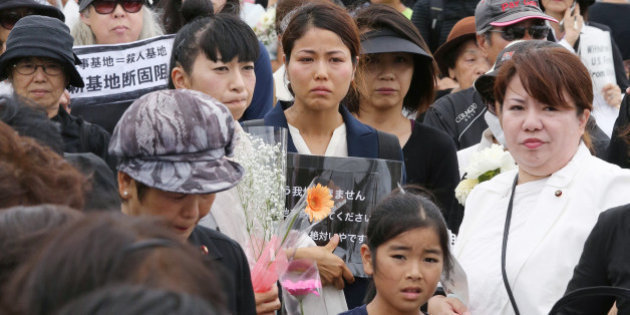
•ÄŒR‘®‘ߕ߁^•ÄŒRŠî’n‘O‚ōR‹cW‰

From this 2016 article about a rape and murder committed by a former US serviceman in Okinawa

Posted in Japanese, Yojijukugo | Tagged , , , , , , , | 1 Comment

YAOSC: Time to build some magic

Background

Recently I’ve been putting renewed thought into my fantasy heartbreaker RPG; in this case, the long-deferred question of how the magic system will actually work.

My Magic Monday series has ended up as a sort of catch-all for fantasy RPG stuff, including the God-eaters campaign outline, but its backbone is built of over sixty posts detailing magic spells based on my “Four Realms” setting and intended for use with YAOSC. These posts show a lot about the assumptions I was making about how magic would work:

  • Most spells are versatile but require planning and preparation to use effectively – or at all, in some cases.
  • Each spell’s power, difficulty, and resource cost could be balanced against each other depending on the caster’s needs or situation.
  • Magic has a major role in world-building, and most spells are intended to suggest either real-world “pragmatic” magical traditions or a mythic, fairy-tale feel. Magic is not designed to be used for direct harm as in D&D-style tactical combat.
  • Magic is available in a variety of forms, including rituals (time-consuming activities that can be powered by groups of participants), rotes (common “spell magic” as TTRPGs tend to use it), and gnosis (effects achieved through willpower alone).
  • Magic is cast through a normal skill check, adding together the caster’s scores in the Rote spellcasting skill and in the Spell Specialization skill for that spell (if they have it).
  • Spell-magic would be limited to trained magicians; everyone else would use items or participate in rituals.
  • The primary resource would be mental strain, with options to substitute fatigue or even hit points in limited situations.

After thinking things over for a while, I’ve decided to change the last two points.

Changes

I like the idea of almost any character potentially having access to a little magic. Previously, my working skill list had marked both Rote and Spell Specialization as off-limits to everyone but sorcerers, but now I’ve changed that to them being difficult skills (i.e. costing more skill points to buy) for warriors and priests. For the specialist class, Rote itself is difficult, but Spell Specialization is normal. These values might be tweaked again after more thought or maybe some playtesting, but for now it feels good.

The expected result is that a few characters will pick up a spell or two just to have a trick up their sleeve – and that specialists will have slightly broader options than other non-sorcerers – but that the bulk of magic will still be the province of dedicated magic-users. After all, after a certain level of investment, you might as well save yourself a load of skill points by being a sorcerer.

The more fundamental change that I want to make is to the resource cost. With strain alone being the primary fuel for magic, I felt enormous pressure to add in a bunch of kludges that would expand the number of points available for spellcasting, including roping in other skills to help grow and replenish the resource pool.

What I’ve landed on instead is two changes. First, any of the resilience meters can be used to power spells, as the caster decides. (For a handful of spells, a cost specifically taken from one of health, endurance, or mental stability feels thematically appropriate, but those will be the exceptions rather than a confusing standard.) And second, I want to standardize a number of tools that can be plugged into the power/cost/difficulty balance.

  • Every spell has a base cost, difficulty, and effect. Let’s set “effect” aside for the time being.
  • Unless otherwise noted, increasing the difficulty by a step will halve the cost (or vice-versa). Let’s say that fractions get rounded down, so a cost of 3 could be “halved” to 1 and then to 0 through a two-step difficulty increase.
  • Standard wizard tools will include items that decrease the difficulty of spellcasting, usually by one step.

This means that we can set the base cost and difficulty (for a given standard effect) according to how we want to see that spell used in the game. I came up with a list of questions that can be used in making those decisions:

  1. How often can an unaided first-level magician successfully cast the spell?
  2. At what level can casting become automatic? (i.e. the skill score surpasses the difficulty)
  3. At what level can casting become free / unlimited (i.e. the cost can be pushed to zero)?
  4. What can a specialist with specialized tools (a min-maxer) accomplish?

Mathemagic: resource cost

At first I was going to include the question “Will this spell be possible at all for a first-level magician?”, but in YAOSC there’s essentially always a chance of success. Even if you only have one point and are facing a d100 difficulty, that’s still a 1% chance of pulling it off. And while a challenge roll technically becomes impossible sooner or later, the (1%) chance of a roll of 21 (from 2d10+1) against an opponent’s roll means they’d need to have a score of at least 20 to automatically defeat you.

Assuming a system where some skills have a bonus from ability modifiers and where skill point investment is limited to one per level, we can guess that a first-level sorcerer will have one point each in Rote and the relevant spell, plus one point from a decent Intellect score, for an unaided score of 3.

Let’s assume that this first-level sorcerer is (wisely) unwilling to dip into HP as a spellcasting resource, or to zero out their other meters, outside of dire emergencies. Based on this character-creation outline, their starting EP are going to average in at 7, and SP at 3, giving a pool of up to 8 points that could be spent on a spell.

In other words, even a completely unaided (average) sorcerer can be expected to cast one of their trained spells more often than not (75% rate) at a d4 difficulty, and 50% of the time at a d6 difficulty. And they can double any casting cost of 4 or less to make the d6 spell a d4, with a 75% chance of succeeding, or make the d4 spell into an automatic success.

The minimum possible survival meter values at first level are 2 EP and 3 SP, for four usable points; the maxima are 14 EP and 6 SP, for eighteen usable points! That’s a lot of swinginess and it kind of makes me want to rethink the starting meter values, but for now we’ll say that if you want a spell to have guaranteed accessibility, it should top out at a cost of 4. On the other hand, a spell would have to have an abnormally high cost (at least 15) for that consideration alone to put it out of reach of even a first-level magician.

Mathemagic: to difficulties, and beyond!

Setting that aside to look at difficulty, let’s assume a base cost of 3 for a spell. This requires two steps of increased difficulty to completely ameliorate the cost and allow for unlimited casting; a base d3 difficulty would become d6, allowing even odds of success for a first-level caster. A standard base difficulty of d6 would become d10, for a 30% chance of success at casting the spell for free.

This sounds like it should be pretty meaningless, given that you have infinite zero-cost attempts and can theoretically just try over and over until you hit that 30% probability. The obvious solution is to plug in a spell-failure chart: if the first degree of failure carries a nonzero energy cost, then you avoid the “infinite retries” issue. And if each degree of failure beyond the first (i.e. every five points by which the roll was missed) imposes an even worse consequence, then a score of 3 on a d10 will give you not just a moderate chance of spending energy to no effect, but you’ll also have the exact same chance of some sort of arcane catastrophe as you do of succeeding. In other words, a spell-failure system transforms long odds from a boring numbers game into a gamble, to be reserved for desperate situations. That sounds good.

This number-tinkering has given me an idea of the shape of the power curve as well. Early levels will see a lot of influence over any skill-based roll from talent (ability score modifiers), luck (the dice themselves), and circumstances. All the more so for characters without ability bonuses who try to wing an untrained spell using only one point of Rote: with a mere score of 1, even a minimal d3 difficulty becomes a bit of a risk.

But over time, talent and luck will be overwhelmed by character skill and resources, and circumstances will be overcome at least in part by player strategy. At level 10, a magician casting a spell they’ve specialized in can expect to have at least 23 points: +1 from ability, +2 from tools, and +10 each from Rote and Spell Specialization. A score of 23 means that a d20 difficulty (something that a first-level magician would likely only risk when death was on the line) is an automatic success, and a d30 difficulty gives very good odds, especially if the caster is able to tinker with the casting time or pump in extra energy. In other words, YAOSC is a system where level 1 characters are normal humans, and level 10 characters are legendary heroes or demigods.

That seems like a good amount of theorizing for one post, so we’ll wrap things up here. What we’ve found is that:

  • Difficulties of d3 and d4 aren’t meaningless. They still present some risk to non-specialists, especially at low caster levels. On that note, it’s perfectly fine to open up magic to non-sorcerers without running afoul of “niche protection” issues, because getting really good at magic will consume a huge number of skill points.
  • Smallish resource pools aren’t a problem, in part because a dedicated sorcerer will be able to cast their signature spells for free soon enough.
  • A base difficulty of d6 and base cost of 3 are reasonable benchmarks for scaling spell power levels.
  • It’ll be necessary to impose some sort of cost on spell failure, if only to keep players from abusing a “roll ‘til you make it” strategy with cost-free spells.
  • It’s okay for spells to ask a lot when pushed to high levels of performance; a high-level character can face down d30 difficulties in their specialty without batting an eye.
  • By around 10th level, play will be shifting from a human to a mythic or cosmic scale.

And the best part is that these conclusions will also inform how all the other skill fields (outside of magic) should be balanced and structured. We’ll see how that looks.

Posted in Rules | Tagged , , , , | Leave a comment

Like an agate in the rough?

Or gold, silver, seashell, pearl, carnelian…

瑠璃も玻璃も照らせば光る
(Ruri mo hari mo teraseba hikaru;
Lapis and quartz both shine if illuminated”)

Definition:

People of good character or exceptional ability will stand out and reveal their worth no matter where they go – at least, if allowed the opportunity. Lapis lazuli is an opaque blue semi-precious stone, while quartz is a translucent crystal – but each of them, properly polished and lit, will sparkle beautifully. The cream of the crop will rise to the top.

Breakdown:

We begin with two nouns, 瑠璃 (ruri), “lapis lazuli,” and 玻璃 (hari), “quartz,” each marked by emphatic particle も (mo). Doubling も in this case can be translated as “both ~ and ~.” This noun phrase is followed by the verb 照る (teru), “to shine.” This appears in imperfective form, allowing it to take the causative suffix す (su), itself in conjunctive form as せ (se) and taking the hypothetical suffix ば (ba), which does not conjugate. This verb phrase is followed by another verb, 光る (hikaru), “to shine,” “to glitter,” etc.

Notes:

This is the る (ru) entry of the Edo iroha karuta set.

Lapis, and in some classifications quartz, are among the “seven treasures” (七宝 = shichihou, or saptaratna in Sanskrit) described in Buddhist writings such as the Infinite Life Sutra or the Lotus Sutra.

Example sentence:

瑠璃も玻璃も照らせば光るという考え方は能力主義の基本だが、現実の社会では照らされるどころか、隠される者もいるという批判の声もある」

(Ruri mo hari mo teraseba hikaru to iu kangaekata wa nouryoku shugi no kihon da ga, genjitsu no shakai de wa terasareru dokoro ka, kakusareru mono mo iru to iu hihan no koe mo aru.”)

[“The idea that all kinds of hidden gems will come to light is the basis of meritocracy. However in society as it exists, one also hears the criticism that there are people who are not illuminated, but rather hidden away.”]

Posted in Japanese, Kotowaza | Tagged , , , , , , , , , | Leave a comment

Pleasant at a distance

But you don’t want them hitting you in the face

花鳥風月
ka.chou.fuu.getsu

Literally: flower – bird – wind – moon

Alternately: The beautiful scenery of nature. By extension, the hyper-indolent aristocratic pastime of gazing out at gardens full of carefully-arranged “natural” scenery while composing poetry, drawing pictures, practicing calligraphy, and so on (and probably drinking). Modern usage tends to focus on expressing the beauty of the natural world.

Notes: There are many variants on this theme. Other elements that may appear are morning (朝 or 晨), evening (夕), dew (露), snow (雪), or seasonal words – especially spring (春) and fall (秋).

This particular compound comes to us from the Fuushikaden (風姿花伝), an early-15th-Century CE treatise on Noh drama by playwright Zeami Motokiyo.

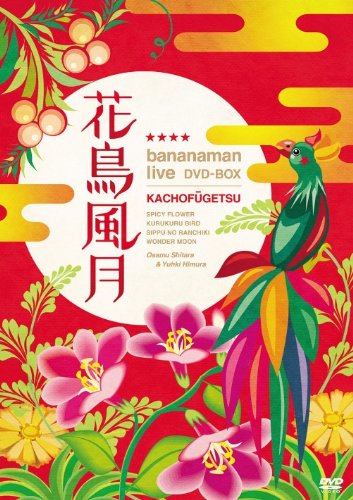
FLOWER BIRD CLOUD MOON WHADDAYA WANT

The title of a DVD box set from comedy duo Bananaman

Posted in Japanese, Yojijukugo | Tagged , , , , , , , , | 1 Comment

If possible, try to ween the exact right amount

Turns out it means “to suppose, to expect.”

驕る平家は久しからず
(Ogoru Heike wa hisashikarazu; “The haughty Heike are not for long”)

Definition:

Pride comes before a fall, and outright arrogance is especially vulnerable. The more a person becomes full of themselves, and allows themselves to preen and swagger and look down on others, the more likely they are to be taken down by their own overreach, or by the enemies they’ve made. A warning to be all the more circumspect when your star is in the ascendant.

Breakdown:

We begin with the verb 驕る (ogoru). These days it’s almost exclusively used to mean “to treat somebody,” but this is derived from an older usage, “to be (excessively) proud,” by way of expressing one’s pride through extravagant spending. The verb appears in prenominal form, attaching to and describing the proper noun 平家 (Heike), a common term for the Taira clan. (The compound can be read literally as the House = 家 of the Taira = 平.) This proper noun is marked by the particle は (wa) as being the topic of discussion, and the entire comment on this topic is a single adjective, 久し (hisashi), “long [time].” The しから (shikara) ending is an alternate version of the imperfective form, and is followed by negative suffix ず (zu) in conclusive form.

Notes:

As you’d expect, this comes from a passage in the Tale of the Heike (平家物語, Heike monogatari): 「驕れるも久しからず、ただ春の夜の夢のごとし」 (emphasis mine), Ogoreru hito mo hisashikarazu, tada haru no yo no yume no gotoshi – “The proud person is not for long, like unto a mere dream on a night in spring.”

A variant phrase replaces the specificity of the Heike with 驕る者 (ogoru mono), “a proud person.” Another, bleaker variant says that 驕る平家に二代なし (ogoru Heike ni nidai nashi), “the proud Heike have no second generation.” Given its cultural resonance, it should be no surprise that the Heike are associated with myriad sayings along these lines.

These days the character 驕 is a bit rare and one might be tempted – or pushed by an IME while typing – to use a homophone such as 奢 (a near-synonym referring to “extravagance”), but this is considered an error, presumably because it doesn’t accord with the original kanji usage.

Example sentence:

「ギー君は…IT業界に入ったとき、大金持ちになっても地味な生活を送るつもりだって言ってたのに、驕る平家は久しからずのように調子に乗りまくってからスキャンダルから抜け出せない状態に陥ったそうだ」

(“Gii-kun wa… IT gyoukai ni haitta toki, ookanemochi ni natte mo jimi na seikatsu wo okuru tsumori da tte itteta no ni, ogoru Heike wa hisashikarazu no you ni choushi ni nori makutte kara sukyandaru kara nukedasenai joutai ni ochiitta sou da.”)

[“Gii-kun… when he went into the IT world, he said that even if he got super rich, he’d lead a low-key lifestyle. But despite that, he went around getting carried away all over the place, and like how the arrogant Heike were short-lived, it seems he’s mired in scandal.”]

Posted in Japanese, Kotowaza | Tagged , , , , , , , | Leave a comment

Busy lake

(Yes, I know that that would actually be ビジー)

美辞麗句
bi.ji.rei.ku

Literally: beautiful – word – lovely – phrase

Alternately: Pretty turns of speech. Flowery phrasing. Artful rhetoric. As with previous post-fodder 外交辞令, there’s an implication of speech that is pleasing on the surface but hollow underneath. And while that phrase can also refer to tact or diplomacy, 美辞麗句 is almost always used critically, of someone who mouths insincere platitudes with an ulterior motive in their heart.

Not sure what the Xes on the hat are supposed to mean, if anything.

There’s a blogger out there who really doesn’t like Abe’s policies.

Posted in Japanese, Yojijukugo | Tagged , , , , , , | Leave a comment

Some Kind of Progress

It’s a small thing, in the grand scheme of… well, of things. But I can’t help but find it encouraging that over the course of approximately my lifetime, tabletop role-playing games have gone from a hyper-niche hobby for the nerdy sons of suburban families – and the target of a genuine moral panic over “demonology” – to a recognized form of play for anybody at all, across any and all walks of life, that genuinely helps people grow and develop as human beings… and is gaining recognition for being able to do so.

First, just for a sense of how crazy the early response was to this imagination game, here’s a convenient NYT retrospective, with focus on the “Satanic panic”:

But mostly what’s inspired me is an article from, of all things, a little local-news rag out in Seattle (which I’ve never really been to). Their blog has articles about local politics, fluff pieces what their writers had for breakfast, an extensive roundups of upcoming events and the Seattle music scene. The last thing I expected was a piece about how teachers at a girls’ middle school had turned Dungeons and Dragons from a tentative club to a whole series of interconnected activities and even a class, but here we are:

www.thestranger.com/features/2019/03/13/39576853/class-of-imagination

This gives me a spark of hope for the future. The article points to the good that can be done with TTRPGs. And while the field has dramatically expanded from what it was in the 1970s (just wait until these kids get their hands on some GMless storytelling games!), it feels like there’s lots of space for it to grow in ways that we can barely imagine right now.

Just off the top of my head: if D&D as-is can be used as the backbone for a class, what happens when smart, creative people start purposefully trying to design an RPG so that it both feeds on and supports a more comprehensive learning experience? There’s a lot of potential for fields such as history, at the very least. I just hope that I get to see some of that potential realized during the course of approximately my lifetime.

Posted in Miscellaneous, Musing, Nonfiction | Tagged , , , , , , | Leave a comment

Worse than the Hounds of Tindalos

煩悩の犬は追えども去らず
(Bonnou no inu wa oedomo sarazu;
“Even if you drive out the hounds of earthly urges, they don’t go away”)

Definition:

Earthly desires will remain with you even if, and no matter how many times, you suppress them. The fight against one’s own dark side can only be won temporarily, on a case-by-case basis, rather than won once and for all in some sort of climactic battle. A dog that’s fixated on you may be chased away, but still come back as soon as your back is turned or your guard is down. All the more so for the negative emotions that stand between humanity and the Buddhist goal of detached enlightenment.

Breakdown:

We begin with the noun 煩悩 (bonnou), “worldly desires,” “negative emotions,” or in Buddhist terms, klesha. The associative particle の (no) attaches this to and modifies the noun 犬 (inu), “dog,” which in turn is marked by the particle は (wa) as the topic of discussion. The comment about this dog comprises two verbs. The first is 追う (ou), “to chase after” or “to drive out,” in perfective form and taking the concessive particle ど (do), “even though,” intensified by the emphatic particle も (mo). The second is 去る (saru), “to go away,” in imperfective form and taking the negative suffix ず (zu) in conclusive form.

Notes:

The saying may be shortened to just the noun phrase 煩悩の犬, or the 追う may be replaced with 打つ (utsu), “to strike,” to give 打てども (utedomo), “even if you beat ~.”

This saying apparently comes from an early-Edo-period collection of linked verse called 世話尽 (Sewa tsukushi), compiled by a priest called 皆虚 (Kaikyo).

Example sentence:

「人を憎まないと心の中で誓っていたけれど、大学時代のライバルを見ると、煩悩の犬は追えども去らず、数々嫌なことを思い出し、自分でもびっくりするほど腹が立つ」

(“Hito wo nikumanai to kokoro no naka de chikatteita keredo, daigaku jidai no raibaru wo miru to, bonnou no inu wa oedomo sarazu, kazukazu iya na koto wo omoidashi, jibun de mo bikkuri suru hodo hara ga tatsu.”)

[“I’d sworn to myself that I wouldn’t hate anybody, but when I see my rival from my college days… the hounds of klesha return even when driven away. I remember a huge number of unpleasant things and get mad.”]

Posted in Japanese, Kotowaza | Tagged , , , , , , | 1 Comment