Magic Monday – God-eaters – Monkey

Monkey
(Master Monkey, Lord Monkey, Emperor Monkey, His Eminence the Monkey, The Grand Old Monkey, etc. etc.)

Description: Monkey is a gray-furred, red-faced macaque of the type commonly seen lounging about in the shade in the summer, or in warm mineral springs in the winter – except for the large opalescent gem embedded in his forehead. He can speak out loud in human tongues, and does so at every opportunity, even though it distorts his face horribly and he rarely has anything of real substance to say. Monkey is an irrational braggart and liar who pursues nothing but his own needs and whims from moment to moment. Those who please him will be showered with inordinate gifts and uncomfortably off-target praise. Those who displease him will be verbally abused or physically tormented. Despite having the attention span of a small child, he never forgets a grudge. He responds well to obsequious flattery and can be manipulated easily, but he will betray even his most pampered “pet” at a moment’s notice or casually try to rewrite history despite the most glaring proof.

Monkey has no fixed home, tending to wander across mountain and valley alike in the search for more hedonistic pleasures and distractions. He leaves a trail of negative emotions, filth, and destruction in his wake.

Worshipers: Yes. Many villages in his path have elaborate rituals to avert his wrath while also subtly encouraging him to move on as quickly as possible, so shrines and altars with his image are surprisingly common. Most people categorize Monkey as an evil trickster god, but for whatever reason, some worship or even seek to emulate him. They will not hesitate to stoop to crimes such as murder if they feel it will curry his favor.

Servitors: Yes. Monkey is a coward, and makes sure he is always surrounded by as large a crowd of monkeys (and human worshipers) as possible. The former often seem uncomfortable about his presence and behavior, but he can compel them to do as he wishes, and will sacrifice as many of them as it takes to keep himself safe and amused.

Confrontation: As long as he feels confident, Monkey will follow his enemies, harassing them with everything he can think of until his ire (or his target’s entertainment value) is spent, or until something else distracts him. The moment he feels threatened, he will attempt to flee, commanding any followers present to protect him and hinder his attackers however possible. In either case, there’s a lot of screaming. He has a rudimentary psychic defense, but its only effect is to heighten negative emotions nearby, making every battle into a loathsome orgy of fear- and rage-driven violence.

The entirety of Monkey’s power comes from the gem in his forehead. It gives him command over other monkeys, and converts the psychic energy of his servitors and worshipers into power that grants him rapid healing (one harm removed per round while resting), immunity to disease, and other components of effective immortality. Without the gem he is nothing, and parting them would destroy them both.

Aspect: Mercury; madness; improvisation. Those present at defeat may boost Reflex or Shock save, or Dexterity. Any points beyond the first are traded for corresponding losses in Corruption or Psychic saves, or any mental stat, respectively.

Powers – Tier 1: The character gains a trickster god’s luck as long as they act impulsively. In any scene where the character obeys their fear or anger or malice, and pursues immediate gratification, they get a +1 bonus to all rolls… but each round spent on an action with a payoff that isn’t immediate costs one strain.

Powers – Tier 2: The character may lie smoothly and undetectably, automatically winning any challenges involved in lying, bluffing, or otherwise saying something untrue. Their Tier 1 power bonus increases to +2.

Powers – Tier 3: A character who has lost more than half of their Humanity gains a strong intuition to protect and serve one’s self. The character can tell what is the best of any selection of things in their presence: the sweetest fruit, the fittest mate, the fuzziest slippers. Note that this ability operates based on simple physical characteristics: it cannot reveal the fruit most conducive to long-term health, or the wisest adviser for a given task.

Powers – Other: The character gains a vague intuition about monkeys, and in a few minutes of conversation may communicate gists and general feelings through a combination of vocal inflection and body language. Occasionally this communication may occur quickly, such as when the message is “DANGER!”

Example Checks: Anyone who has absorbed part of Monkey’s essence becomes more self-centered and whimsical, and must check Humanity to avoid lying in serious situations or attempting to steal the spotlight when someone else is the center of attention. Naturally, the more inappropriate this would be, the greater the check difficulty.

Notes: There is no other god that Monkey doesn’t hate and fear. There are no humans whom Monkey doesn’t hate, fear, or look down on. Even his warmest affections with other monkeys are framed in terms of what benefit they provide him.
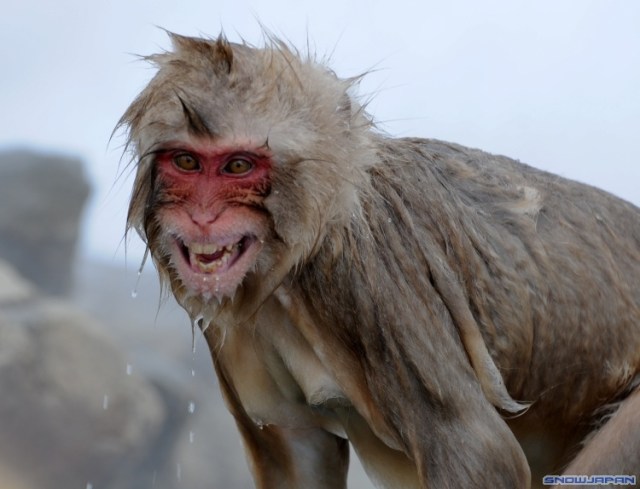
snowmonkey

Like this guy*! [Source]

* May not actually be a guy
Posted in Rules, Setting, World-Building | Tagged , , , | Leave a comment

The problem with oboes

葦の髄から天井を覗く
(Yoshi no zui kara tenjou wo nozoku;
“To peer at the ceiling through a reed.”)

Definition:

Forming opinions and making decisions on a topic based on one’s narrow views and pre-formed beliefs rather than any sort of breadth or depth of experience. Making judgments about big issues based on little information, often in a self-serving way. Having a view as narrow as what can be seen through the hollow stem of a reed after the pith has dried up.

Breakdown:

The verb of this sentence is 覗く (nozoku) in sentence-final form. To 覗く is to look at something in or through a narrow space, such as through a keyhole or down in a ravine. It’s often translated as “peek” or “peep.” Next is the noun 天井 (tenjou), “ceiling,” marked by the particle (wo) as the direct object of the verb. The location of the action is indicated by the particle から (kara), “from,” as occurring through the space of a (zui), “pith” or “marrow.” This in turn is joined by the associative particle (no) to the noun (yoshi, although see below), the common reed.

Notes:

In some versions of this saying, the may be elided, and/or 覗く may be replaced with the more generic 見る (miru), “to see.”

In other contexts, may be called ashi rather than yoshi. This is based on a pun: yoshi can also be 良し, “good,” and ashi can also be 悪し, “bad.” (See also 悪しからず, ashikarazu, “I’m sorry, but….”) Nobody wants to be adrift among the bads, so a practice arose of referring to reeds as yoshi.

This saying is the entry of the Edo iroha karuta set, and is mostly synonymous with the saying about the frog in the well.

Example sentence:

葦の髄から天井を覗くほどの無知を遥かに極めた奴が大統領選に出馬できるなんて、信じられない。気持ち悪い」

(Yoshi no zui kara tenjou wo nozoku hodo no muchi wo haruka ni kiwameta yatsu ga daitouryousen ni shutsuba dekiru nante, shinjirarenai. Kimochi warui.”)

[“For a guy, who is far and away more ignorant than someone peeking out at the world through a tiny keyhole, to be able to run for president – it’s hard to believe. It makes me sick.”]  😢

Posted in Japanese, Kotowaza | Tagged , , , , , | 1 Comment

If you want to get away from it all but hate cabbages

垂釣
you.kyuu.sui.chou

Literally: sheep – [clothing made of animal skin and/or fur] – dangle – fishing

Alternately: To avoid the vulgar world of common society and live as a hermit. To live wearing animal skins and fish in streams for your food.

Notes: This now-obscure phrase seems to be based on one of the “biographies of hermits” from volume 83 of the Book of the Later Han.

youkyuusuichou

I can’t read the Chinese website this happy guy came from, but it sure looks right!

Posted in Japanese, Yojijukugo | Tagged , , , , , | 2 Comments

Magic Monday – God-eaters – The Red Ape

The Red Ape
(Kapik Adam)

Description: The Red Ape is a huge gorilla, tall enough to tower over any man when standing, with clay-red fur, a barrel chest, and burning red eyes. He tends to be watchful, with slow and deliberate motions, whenever humans are about, but can forget his dignity to move with frightening speed when necessary. He and his people (at least several hundred ordinary gorillas) live in a few square miles’ worth of forested mountain slope and ridge, where in times of great need they take refuge in a cave complex of unknown extent.

Worshipers: No. Villagers at the foot of the mountain, and even imperial servants passing through, leave out regular offerings of fresh fruit and leaves for the gorillas in return for peace. But Kapik Adam is not interested in human followers, only in keeping his people safe.

Servitors: Yes. Many troops of gorillas roam the mountain. With their god as an unquestioned mediator for internal tensions, these groups are both larger and more coordinated – internally and with each other – than is typical for gorillas in the wild.

Confrontation: Human intruders into the Red Ape’s mountain territory will be met with observation from increasing numbers of gorillas; open threat will be met with harassment through sabotage, thrown objects, or even hit-and-run attacks. An effective defense will cause them to draw back quickly. Kapik Adam may appear and observe the intruders from a distance, but will prefer to meet them in his cave near the peak with his weapon close to hand, a rough iron machete-like blade.

Kapik Adam communicates telepathically. He is not polite or kind to intruders, but makes a point of being reasonable. He will attempt to negotiate and reason with anyone willing to talk. If this fails he will attack with his machete without warning while telepathically “screaming” at targets he cannot reach in an attempt to stun them. (Psychic save at difficulty d20 or be unable to move for a number of rounds equal to the margin of failure on the save.) He is a perceptive combatant who chooses targets tactically and may call on his people for support if he feels their presence will help end a fight quickly without undue risk to their lives and safety.

Aspect: Iron; strength; mind. Those present at defeat may boost one of Strength stat, Life meter, or Shock save.

Powers – Tier 1: The character gains the ability to communicate psionically with others of their own species within eyeshot. A single channel may be established at will, and a second may be established after a round’s worth of concentration, although the only use of these channels is one- or two-way communication, respectively. The character may establish a “group call” with a number of total links up to their Presence score.

Powers – Tier 2: The character’s psionic powers grow stronger, and their hair turns red and shaggy. They may open communication channels with all sentient beings, and if focusing on an individual, may open up a third channel (with a round of concentration) and attempt to stun them with a psychic scream (difficulty d10).

Powers – Tier 3: Anyone who has lost more than half of their Humanity after embracing the Red Ape’s essence becomes redder and hairier, is no longer in danger of being stunned by his machete, and may compel any apes in their presence to follow simple commands. The save difficulty of the character’s psychic screams rises by a step at this point, and will rise by another step if they enter apotheosis.

Powers – Other: The essence of The Red Ape carries an empathic connection to other apes. The character can automatically understand an ape’s emotional state by looking at it or touching it and can speak and understand their language on a rudimentary level. (Points may then be invested in this language as a skill.) His machete is a relic and never rusts. Anyone coming into contact with it must make a Psychic save at d10 or be stunned as above, unless they have mastered it by passing three consecutive saves.

Example Checks: Anyone who has absorbed part of Kapik Adam’s essence must check Humanity in order to harm any sort of ape. In most circumstances the difficulty is d20; this drops to d4 if the ape is actively attacking the character or someone they feel they must protect.

Notes: The Red Ape despises Monkey, and fears both the wolves and the wargs. He will help and reward any who act against these enemies.

Kapik Adam is not terribly hostile or dangerous to humanity, and players may balk at the idea of attacking and killing him in order to acquire his power. This is fine. The campaign world is full of too many gods to count, much less consume, and PCs can make an ally of him, or an enemy that they don’t need to battle to the death. As a relatively easy god to kill he may present a tempting target, leading players to grapple with moral and ethical issues – or a GM may simply place something that the PCs want inside his territory and see how they approach the potential conflicts that arise.

Posted in Rules, Setting, World-Building | Tagged , , , | Leave a comment

All’s well that’s ended well

有終の美を飾る
(Yuushuu no bi wo kazaru; “To add a crowning touch”)

Definition:

Carrying something through to a successful conclusion. Producing excellent results by seeing a task through with full effort until it’s complete, rather than doing enough work to finish and then coasting. Especially used to describe someone going above and beyond normal expectations to do their job or complete an assignment well.

Breakdown:

This is a very simple sentence. Its verb is 飾る (kazaru), “to decorate,” “to adorn,” in sentence-final form. The particle (wo) marks everything before that as the object of the verb. This noun phrase comprises the associative particle (no) and the nouns 有終 (yuushuu), “perfection” (literally “having an end”) and (bi), “beauty.”

A more literal (and poetic?) rendering might read, “To adorn with the beauty of an ending.”

Notes:

Replacing 有終 with homophone 優秀 (“excellence”) is an error; the term 有終 is derived from a passage in the “Major Court Hymns” (大雅) section of the Zhou Dynasty text, the Classic of Poetry (詩経).

Example sentence:

「森下氏は控えめでいつも自分のことを三日坊主とか碌で無しとか言ってますが、いざとなったら不言実行有終の美を飾る方ですね」

(“Morishita-shi wa hikaeme de itsumo jibun no koto wo mikkabouzu to ka roku de nashi to ka ittemasu ga, iza to nattara fugenjikkou de yuushuu no bi wo kazaru kata desu ne.”)

[“Mrs. Morishita is always very self-effacing, describing herself as someone who gives up quickly or isn’t very useful, but when push comes to shove she keeps her mouth shut and sees things through to the end.”]

Posted in Japanese, Kotowaza | Tagged , , | 1 Comment

You could go with this, or you could go with that

Or you could go with this. Or you could go with that. Or you could go with us!

優柔不断
yuu.juu.fu.dan

Literally: gentle – soft – non – sever / judge / decide

Alternately: Waffling. Vacillating. Hesitating to choose. Lacking resolve or clarity and unable to come to a decision. A condition indicative of choice overload at best, lack of self-awareness or willingness to take responsibility for one’s decisions at worst.

Notes: Some people may accidentally write (type?) homophones 優従 (which has no meaning) for 優柔 or 普段 (“ordinary”) for 不断, but these are errors.

Posted in Japanese, Yojijukugo | Tagged , , , , , | Leave a comment

Magic Monday – God-eaters – Deity template

I’ve shifted the focus of my RPG-related time allowance, in a serious way, to developing the God-eaters campaign. In the mid to long term this will mean that I’ll need to fill in more mechanics (beyond just magic spells with an implied framework of rules somewhere behind and off to one side). In also means that I’ll need to fill in a bit of a setting, with maps and cultures and so on. (I’m thinking I might keep on running with the Monoke-hime influence: somewhere off the map, a distant and largely unconcerned imperial capital that occasionally meddles; closer at hand, a handful of squabbling fiefs beholden to the capital… and a handful of relatively independent clans or outposts.) In the short term, though, it means I need to design some gods that the characters might want to eat. What follows is an overview of the template I’ll be using in that design process.


Name
: A primary appellation for the god
(Title(s)): Other titles, names, nicknames, or descriptors

Description: This section talks about the god’s sensory manifestations such as appearance or smell, its common behaviors, and (if it has a fixed territory or preferred location to visit) its surroundings.

Worshipers: Do humans actively and routinely serve and honor the god in return for its protection, forbearance, or gifts? If so, the relationship is described here.

Servitors: Do non-human creatures or spirits do the god’s bidding or aid it in some way? If so, they are described here. Note that from their point of view, many sentient “servitors” should count as “worshipers.” For our purposes, the distinction is made in human terms.

Confrontation: How the god, its worshipers, and its servitors respond to outside forces, including their general strategies and tactics for responding to violence.

Aspect: Key words that describe the god in a metaphorical way, and what character traits are boosted in those who absorb energy from the god’s death or defeat.

Powers – Tier 1: Those who consume part of the defeated god or its essence gain access to these powers (and drawbacks, and quirks).

Powers – Tier 2: Those who actively embrace the god’s essence as part of themselves gain access to these powers (and drawbacks, and quirks).

Powers – Tier 3: Those who have moved far enough away from their Humanity gain access to these powers (and drawbacks, and quirks).

Powers – Other: Miscellaneous other effects of consuming or accepting the god’s essence.

Example Checks: The god’s essence, even after being largely dissipated, divided, and diluted, remains potent. While the GM (or even the player!) should call for Humanity checks based on what seems most appropriate to the campaign’s dramatic, narrative, and mechanical needs, this section provides some examples to spur the imagination and suggest an overall tone.

Notes: Anything else that seems worth mentioning but doesn’t fit into the above categories goes here.

Posted in Rules, World-Building | Tagged , , | Leave a comment

One, two, three, four five; Once I caught a fish alive

Six, seven, eight, nine, ten; I never saw a fish again

柳の下にいつも泥鰌は居らぬ
(Yanagi no shita ni itsumo dojou wa oranu;
“There isn’t always a loach below the willow”)

Definition:

Just because something good happened once doesn’t mean that the same good thing will always result from the same circumstances. Don’t expect that good fortune will automatically repeat. Just because you caught a fish under a willow tree once doesn’t mean that going back to the same tree will give you a fish every time.

Breakdown:

We begin four characters in with the particle (ni) in its location-marker function. The location is (shita), “below,” with the associative particle (no) telling us that it’s the space below (yanagi), a willow tree. This section is followed by the frequency adverb いつも (itsumo), “always.” Finally we get the topic of discussion (as marked by topic-marker particle , wa) with the noun 泥鰌 (dojou) – a “loach,” a kind of freshwater fish related to carp and catfish. And finally, at the very end, we get a verb: 居る (oru or iru), “[for a living thing] to be (in a place).” The verb is in the imperfective case with negative suffix (nu). (This is one of those cases where classical grammar would probably give us sentence-final (zu).)

Notes:

I deliberately went with the longest, oldest-fashioned version of the phrase available. Acceptable variants include writing いつも as 何時も, 泥鰌 as どじょう, and 居らぬ as おらぬ or even the more modern 居ない/いない. The いつもmay also be brought to the beginning, or the entire phrase may be referenced in condensed form as the noun phrase 柳の下の泥鰌.

However, replacing with , or placing the いつも at the start of the phrase, will alter the meaning. Therefore both of these are considered errors.

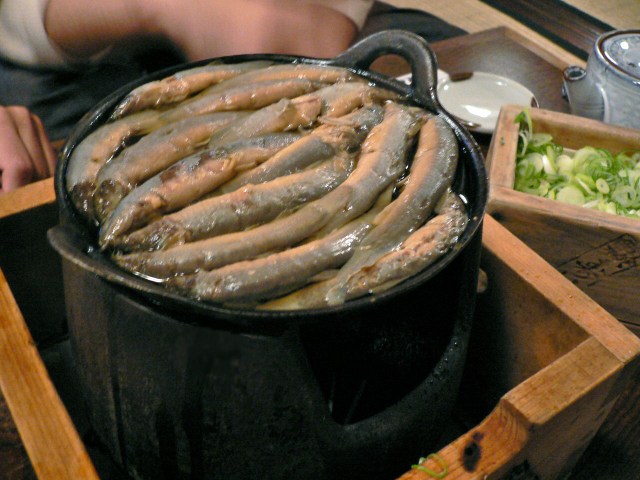
The どじょう is a once-common fish in Japanese streams, traditionally used as food, but not especially familiar to Americans. (Does the word “loach” actually invoke an image of a fish in your head? It didn’t for me!) For a bit of cultural context, then, here are some loach:

loach_pot

Photo from the wikimedia commons, by “hirotomo t.”

Example sentence:

「唯ちゃん?ああ、六月中旬に、適当に入ってみたカフェで凄く格好いい男の人を見かけたらしくて、柳の下の泥鰌を狙ってそれからずっと同じカフェに何回も行ってるのにその人と会えないからこうなってるよ。可哀そうだよね」

(“Yui-chan? Aa, rokugatsu chuujun ni, tekitou ni haitte mita kafe de sugoku kakkou ii otoko no hito wo mikaketa rashikute, yanagi no shita no dojou wo neratte sore kara zutto onaji kafe ni nankai mo itteru no ni sono hito to aenai kara kou natteru yo. Kawaisou da yo ne.”)

[“Yui-chan? Ah, see, I guess in the middle of June she saw a really cool guy in some random cafe. So ever since she’s been trying to get lightning to strike twice by going back to the same cafe over and over, but she hasn’t seen him since. And now she’s depressed about it, the poor girl.”]

Posted in Japanese, Kotowaza | Tagged , , , , , , | 1 Comment

He’s dead, Jim

Should have tried the Power of Rock.

薬石無効
yaku.seki.mu.kou

Literally: medicine – stone – nothing – efficacy

Alternately: Neither medicine nor treatment were effective. The 石 in 薬石 refers to traditional Chinese treatments making use of stones, such as bian stones.

Notes: Some variation of this phrase may be used to describe a patient’s death from disease, although it seems to also be usable on a more metaphorical level.

Some people may replace with homophone (“achievement”), but is preferred.

yakusekiyuuren

A book cover (title means approximately “No cure for love”) from this illustrator’s portfolio. The protagonists’ names pun on the yojijukugo.

Posted in Japanese, Yojijukugo | Tagged , , , , , | Leave a comment

Magic Monday – God-eaters

(An outline for a CoaEG-style campaign)

Last summer I posted about a “campaign core” idea based on player characters gaining power, not through traditional blood-and-gold leveling, but through stealing the essence of “legendary entities.” Recently I rediscovered the post and have been turning it over in my head. The original post doesn’t go beyond a vague outline for designing a campaign, but there’s a huge leap from that sort of kernel to an actual playable game. Well, maybe it’s time to take that leap. Or the first couple of steps of the leap. So to speak.

System. If I were to produce this commercially I’d want to provide rule-sets for common systems such as Pathfinder and assorted flavors of D&D, but for now I’ll base things on YAOSC because that’s mine and why not.

Setting. Despite the above, I probably won’t go with my “Four Realms” setting. Nor am I interested in using a modern or sci-fi setting, nor a bog-standard Tolkien-pastiche RPG fantasy world. Probably something more distinctly Mononoke-Hime-ish: all player characters are human; humans live in little enclaves; the wilds are not just natural but supernatural; the world is peppered with spirits, sentient beasts, and gods. Given the main thrust of play, probably something a little dark – not despairing, but not free of blood and grit either.

Entities. There is no “spirit world.” Spirits live in our own world, albeit invisible and intangible (except when they aren’t). Some of these spirits are powerful enough to be called gods, but most of the world’s gods are not spirits. Instead, some of them are earthly beasts or ex-humans of supernatural stature, while others are Cthulhu-style invaders from the stars. Humans worship some of the gods, and probably even house a few of them in villages and towns and temples as patrons. These deity/worshiper relationships can range from abusive gods playing petty tyrant over a flock, to desperate cults keeping an erratic deity’s rage and whimsy at bay, to genuine mutually-beneficial symbioses. The gods definitely should have vastly different levels of power and kinds of ability, so that players will have to gather and consider information while making their plans. The gods have territories, ranging in size from a single forgotten sealed room in a basement somewhere to an entire city or swath of wilderness; some of these are well-known and documented, while others are less so. Some of the gods are on their own, while others have human cults and/or servitor creatures.

Mechanics. Each character gets made normally, but is secretly assigned a “Humanity” score. I’m quite sure yet how high it should be at the start – maybe have players go so far as to fill out a little personality quiz for their characters? At first, play progresses normally – the players know that they’re expected to hunt down and defeat gods, and that they won’t advance in levels in a traditional way. Finally, they manage to defeat one of the gods. Perhaps one will come to them and force their hand early on, allowing the GM to subtly steer the party’s initial encounter with CoaEG mechanics.

Each god has an aspect corresponding to certain character stats, and has some special powers and attributes that give it “deity” status. These are reflected in three “tiers” of powers that become available to players who are involved in defeating it.

* Helping to defeat a god, or perhaps merely being present at its defeat, allows a character to absorb some of its energy. This is reflected in a +1 boost at least one character stat: life meter or health meter, an attribute or save tied to the god’s aspect, or a few extra skill points in relevant skills.

* After defeating each god, the characters will feel an impulsive desire to consume it in some way. Those who do gain access to the god’s tier 1 power – they literally contain some of that god within themselves; it marks them and empowers them.

* Some time later, each character will get the option to either embrace that god’s essence within themselves, or keep it at a distance. Those who accept it gain access to the god’s tier 2 power (which should be a step above what tier 1 grants) but they also lose a point of Humanity permanently, and the way they are “marked” becomes outwardly apparent, at least while their powers are in active use.

* Reaching certain levels of Humanity on the count down to zero – certain benchmarks of loss-of-humanity – grants access to more powers. Perhaps some benchmarks give generic abilities common to all “god eaters,” while others grant god-specific tier 3 powers. (These should probably be less mighty, but more pervasive and more blatant, than the first two tiers.)

* At times during play, when certain conditions are met, the GM should call for a check from the players. (This is a Humanity check, rolled like any other check, although at least at first the reason for the check should be kept secret!) Those who pass the check continue playing as they want. Those who fail have an action chosen by the GM which their character must perform, giving in to the alien urges they feel bubbling up from the supernatural essence they contain. For example, characters who have slain a god may feel compelled to consume it (raw) on the spot in an atavistic blood-frenzy. A character who enters a moon-lit glade may feel compelled to dance. The difficulty of these Humanity checks should vary from trivial to near-impossible.

* If/when a character’s humanity reaches zero, they’re irrevocably on the track to apotheosis. They continue to grow in power and start attracting worshipers of their own, but also gain new strictures and taboos… and new foes. Ironically, apotheosis technically puts them in danger of being cannibalized by their fellows, but let’s not think about that too hard.

Follow-up thoughts:

* “Defeat” need not necessarily mean killing, and “consuming” need not necessarily mean physically eating and drinking the materials that made up a god’s physical form. Clever players should be able to find other ways to accomplish these tasks, at least in some cases.

* Offers of tier 2 power can come in dreams, or in moments of danger when the GM asks “You feel a new power welling up from the essence of [one of the gods] in your moment of need; do you use it?” Some may be triggered by deliberate acts, such as performing a ritual or putting on the right mask in the right place at the right time.

* If the game runs well, players should feel a tension between pursuing power and maintaining control over their characters. Too far in one direction and it’s just a quest for power… not inherently bad, but not what I’m aiming for, either. Too far in the other direction, and you get upset players who feel too much stress or loss of agency to want to play any more. The goal is a narrative in which different characters approach the overall quest with attitudes that differ from each other and that change over time based on the events of an organically-developing story.

Posted in Rules, Setting, World-Building | Tagged , , , , | 1 Comment