Talking through your hat

冬編笠に夏頭巾
(Fuyu amigasa ni natsu zukin; “Woven hats in winter; hoods in summer”)

Definition:

Things are the opposite of how they should be. Left is right, dogs are cats, up is down, people wear hats that don’t match the season, and elected officials who used to claim they cared about the law are openly supporting and defending a criminal.

Breakdown:

We begin three characters in with the noun 笠 (kasa), your classic conical hat, compounded with and modified by verb-stem-acting-as-noun 編 (here ami), “knit,” “braid.” The woven hat is further modified by noun 冬 (fuyu), “winter.”

Similarly, the latter noun phrase centers around 巾 (kin), a rectangle of cloth, modified by noun 頭 (here zu), “head,” and this compound in turn modified by the noun 夏 (natsu), “summer.”

The two compound nouns are joined by particle に (ni), apparently functioning as a directional particle and thus literally “to,” but better read in the sense of “added to,” i.e. “and.”

Notes:

Wide-brimmed woven hats allow a breeze through and keep off the hot sunlight; a zukin essentially serves the same function as a stocking cap, although as a piece of cloth wrapped around the head it can take a variety of shapes.

An alternate version of this phrase replaces headwear with bodywear: the inappropriate winter wear becomes 帷子 (katabira), a light single-layer kimono, and the summer wear becomes 布子 (nunuko), clothing insulated with cotton padding. Also compare and contrast with 夏炉冬扇.

011920 Amigasa

One style of amigasa, from a mid-1970s TV drama, eponymously titled Amigasa Juubei (編笠十兵衛)
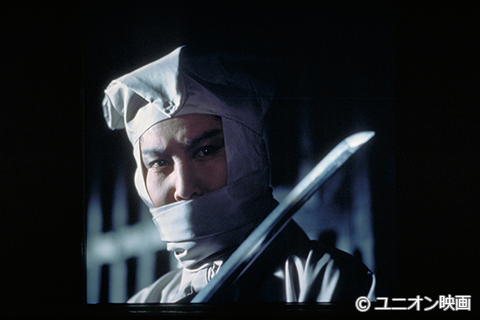
011920 Zukin

One style of zukin, from the same show
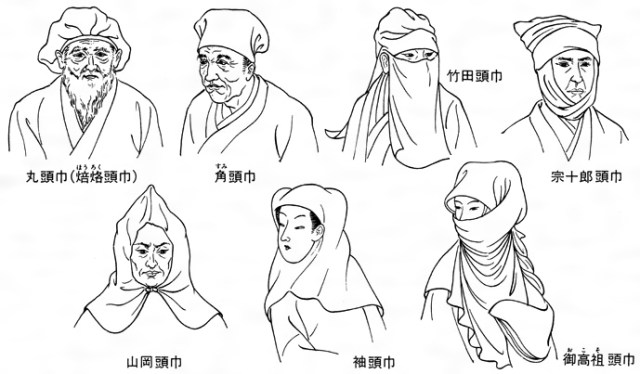
011920 Kotobank Zukin

A selection of zukin styles from Kotobank, including possibly the dorkiest hood ever

Example sentence:

「あの無責任な奴が強い権力を持っているなんて、冬編笠に夏頭巾だ。我々の組織はこれでもはや絶望的な状態だ」

(“Ano musekinin na yatsu ga tsuyoi kenryoku wo motteiru nante, fuyu amigasa ni natsu zoukin da. Wareware no soshiki wa kore de mohaya zetsubouteki na joutai da.”)

[“For that irresponsible a-hole to have so much power, everything is upside-down and backwards. With this, our whole organization is in desperate straits.”]
Posted in Japanese, Kotowaza | Tagged , , , , , , , , , | Leave a comment

All times as one, and now

夷険一節
i.ken.i-.ssetsu

Literally: barbarian/flatten* – steep/dangerous – one – joint/section/occasion

Alternately: You should stand firm to your principles regardless of whether things are calm and easy, or dangerous and hard. Don’t sell out your values, no matter the circumstances.

Notes: This particular rare compound comes to us from Chinese antiquity, attributed to a Song-dynasty scholar called Ouyang Xiu (欧陽脩, Ouyou Shuu in Japanese).

*The character 夷 can refer to the indigenous people of northern Japan, such as the Emishi and Ainu. It can also serve as a derogatory term for foreigners or “unsophisticated” people, looked down on by the self-congratulatory, aristocratic, capital-dwelling speaker. For some utterly mysterious reason, the same character can also mean “to subjugate,” “to put down a rebellion,” “to level [something] out.”

This yojijukugo uses the meaning of “level,” or by extension “easy, peaceful.” 夷険 thus means something like “good times and bad,” while 一節 refers to having a single set of principles, in this compound of compounds.

IKenISsetsuKin

I guess her unwavering principle is… metal?

Posted in Japanese, Yojijukugo | Tagged , , , , , , | Leave a comment

Coffee before coffee

It depends on how much sugar you put in

朝茶は七里帰っても飲め
(Asacha wa shichiri kaette mo nome;
“Drink your morning tea, even if [you have to] travel seven leagues home”)

Definition:

If you set out on a trip without drinking your morning tea, then as soon as you notice the error you should go back and make sure to properly drink it, even if doing so seems incredibly inconvenient.

Sadly, that seems to be all there is to it: a throwback admonition that gives us a tiny window into an old folk belief about tea. But I’d like to use it more metaphorically, as a reminder that doing the right thing is worth it, and you should put in the effort even if it’s inconvenient. That’s a lesson we need more people to learn, remember, and put into practice.

Breakdown:

We begin with the particle は (wa) marking the compound noun 朝茶 (asacha), “morning tea,” as our topic of discussion. The comment on this topic begins with number-noun 七里 (shichiri), “seven ri.” Without any particles, this is followed by the verb 帰る (kaeru), “to return home,” in conjunctive form and followed by emphatic particle も (mo), a structure that can be rendered as the conditional “even if [verb].” And finally, the conditional’s result clause consists entirely of the verb 飲む (nomu) in imperative form.

Notes:

When tea was first imported from China in the Kamakura era it was treated as a form of medicine. What’s more, it was supposedly thought that having a cup of tea in the morning was not just good for your health, but preternaturally effective against misfortune for the rest of the day. (One of my sources specifically locates this belief in modern Nagano and Miyagi prefectures) If that were true, then it would stand to reason that it’s vitally important to drink your tea, even if you need to travel a long way home to do so.

And the way home is unquestionably long. While the length of a ri has fluctuated throughout history and across different locations, the modern Japanese length is about 3.9km or 2.4 miles (as we’ve seen before), meaning that, depending on factors such as terrain, each direction would easily make a full day’s walk! This would really only make sense for a very long trip with little chance of getting any tea elsewhere.

The saying becomes much more manageable using the original definition of a 里 as a length unit, which was 300 paces. (The original original measure was apparently of an area 300 paces on each side.) Returning home – and then heading out again – by seven ri each way would then only add 4,200 steps to your total: a bit of a pain, but eminently doable, especially for a pre-modern society in which walking was the norm.

Example sentence:

朝茶は七里帰っても飲め。勉強は、観たい映画が上映中でも、忘れずにちゃんとしなさい」

(Asacha wa shichiri kaette mo nome. Benkyou wa, mitai eiga ga joueichuu de mo, wasurezu ni chanto shinasai.”)

[“Drink your morning tea even if you have to walk miles home. And even if a movie that you want to watch is playing, don’t forget to do your homework.”]

Posted in Japanese, Kotowaza | Tagged , , , , , , | Leave a comment

The scarecrow’s final blade

紫電一閃
shi.den.i-.ssen

Literally: purple – electricity – one – flash

Alternately: The light that glints from a sword being brandished. By extension, an extremely short moment of time; a single instant. By extension, a dramatic change that happens in very little time.

Notes: This is a compound of compounds; 紫電 is the purple light that glints off of a sharp blade. (Why purple? I’m not sure.) 一閃 is a single, momentary flash.

Long-time readers may recall another yojijukugo on a similar themetwice.

ShiDenISsenJetto

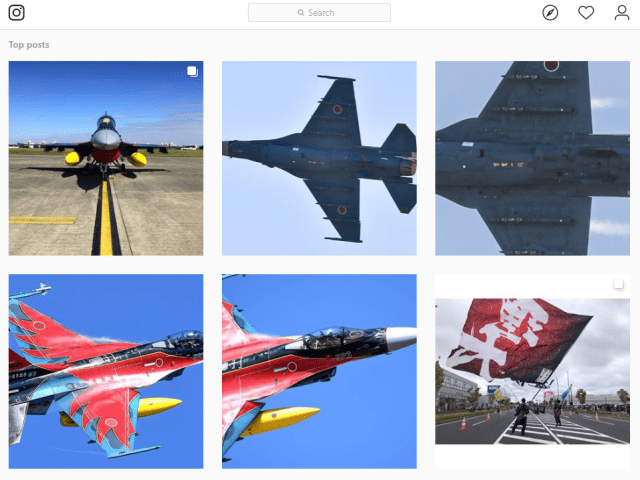
Top results on instagram for #紫電一閃 give us a modern update of the lightning-fast sword

Posted in Japanese, Yojijukugo | Tagged , , , , , , , | Leave a comment

Treating shallow as if it were deep

Good with rivers; bad with ideas

浅い川も深く渡れ
(Asai kawa mo fukaku watare; “Even in a shallow river, cross deep”)

Definition:

Take care even with things that seem easy, or trivial in scope. It’s better to be safe than sorry. Even if a river seems shallow, ford it as cautiously as if you knew it to be deep, just in case.

Breakdown:

We begin with adjective 浅い (asai), “shallow,” in prenominal form, attached to and modifying the noun 川 (kawa), “river.” This is given its function in the sentence by intensifier particle も (mo), which can be rendered here as “even.” The following independent clause begins with adjective 深い (fukai), “deep,” in conjunctive form and acting as an adverb. It precedes and modifies the verb 渡る (wataru), “to cross,” which appears in imperative form. The subject performing this verb is you, the listener, but as so often happens in Japanese it is elided.

Notes:

Caution should be a familiar theme for kotowaza to address, as we’ve already seen several times before.

Example sentence:

「正直、明日の期末テストは楽勝だろうと思ってる。でも、浅い川も深く渡れというし、やっぱり復習しとこうかな」

(“Shoujiki, ashita no kimatsu tesuto wa rakushou darou to omotteru. Demo, asai kawa mo fukaku watare to iu shi, yappari fukushuu shitokou ka na.”)

[“Honestly, I think tomorrow’s term test should be an easy A. But they do say to ford shallows as if they were deep, so yeah, I should probably review the material.”]

Posted in Japanese, Kotowaza | Tagged , , , , , , | 1 Comment

And the leaves that are green

…seem to be green again the next year… but we are not leaves.

年年歳歳
nen.nen.sai.sai

Literally: year – year – year/age – year/age

Alternately: Every single year. Year in and year out.

Notes: As always, the second instance of each character may be replaced with the kanji doubling mark 々. Also, somewhat less commonly, the order of the elements may be flipped to give 歳歳年年 (with or without doubling marks), sai sai nen nen.

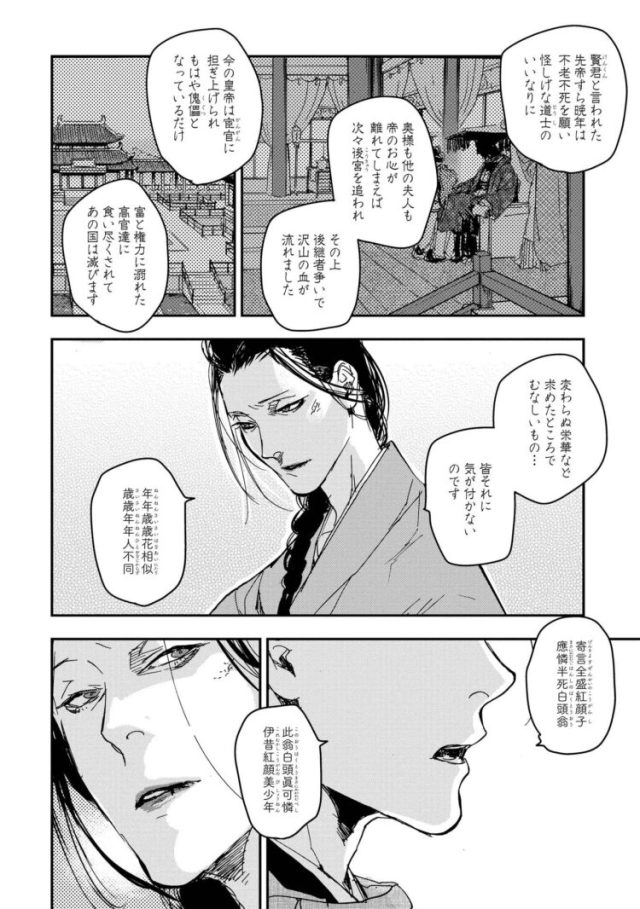
This compound comes to us from a poem by Liu Xiyi (劉希夷, Japanese Ryuu Ki’i) a mid-600s CE Chinese poet. The piece, known as 「代悲白頭翁」(Japanese pronunciation “Daihi hakutouou”), laments that 年年歳歳, the flowers bloom as always – but 歳歳年年, the people who come to see them bloom are different, because old age comes for us all.

NenNenManga

Here quoted in 『応天の門』(Outen no mon), an obscure manga about early-Heian court politics

Posted in Japanese, Yojijukugo | Tagged , , , , , , , | Leave a comment

Fly me home, country winds

越鳥南枝に巣くい、胡馬北風に嘶く
(Ecchou nanshi ni sukui, koba hokufuu ni inanaku;
“The bird from Yue builds its nest in southern branches;
the horse from Hu neighs at the northern wind”)

Definition:

An expression of homesickness or nostalgia. A southern bird living in the north will (supposedly) build its nest in the southern branches of a tree; a horse from the northern steppes will recognize the northern winds and give voice; so too will a human respond to things that remind them of their hometown or childhood.

Breakdown:

This saying is composed of two parallel independent clauses. The first begins with proper noun 越 (Yue, Japanese Etsu), a state that existed in the southeast of what is now China, over 2300 years ago. This proper noun compounds with and modifies the noun 鳥 (here chou), “bird.” This compound noun is not followed by any particles, but acts as the subject of the clause. Next we find the location particle に (ni) marking a compound comprising direction noun 南 (here nan), “south,” and 枝 (here shi), “branch.” The verb performed in this location is 巣くう (sukuu), “to build a nest,” appearing in conjunctive form in order to attach to the latter half of the phrase.

Following the same pattern, the second clause begins with the proper noun 胡 (Hu, Japanese Ko), a generic term for people living to the north and northwest, including various Mongolian and Turkic peoples and the Xiongnu. Little wonder, then, that the noun compounded with and modified by 胡 is 馬 (here ba), “horse.” This time, the following compound noun comprises direction 北 (here hoku), “north” and noun 風 (fuu), “wind.” The final verb is 嘶く (inanaku), “to neigh,” in conclusive form, and this time I’m parsing the particle に (ni) as a sort of directional marker; the north wind is something that the horse neighs in response to. (One could also read it as a marker for time; “when the north wind [blows].”)

Notes:

This imagery comes to us from a poem in the Wen Xuan (in Japanese『文選』= Monzen), a Chinese literary anthology from the third decade of the 6th century CE; its origins in Chinese antiquity explain why so much of the phrase itself uses Chinese-style readings.

Note that the phrase may be shortened by dropping the bird and only using the horse part; it may be further compacted into either of a pair of four-character compounds: 越鳥南枝 (ecchou nanshi) or 胡馬北風 (koba hokufuu).

Example sentence:

胡馬が北風に嘶くように、僕も実家を出てから故郷、いや、州ですら懐かしくなってきました」

(“Koba ga hokufuu ni inanaku you ni, boku mo jikka wo dete kara furusato, iya, shuu de sura natsukashiku natte kimashita.”)

[“Like the northern horse that neighs at northern winds, since leaving my parents’ home I too have started thinking fondly of my hometown – no, of the entire state.”]

Posted in Japanese, Kotowaza | Tagged , , , , , , , , , | Comments Off on Fly me home, country winds

‘Tis the season

…and the age.

私利私欲
shi.ri.shi.yoku

Literally: me/private – benefit/profit – me/private – desire/greed

Alternately: One’s own profit; one’s own greed. The self-centered attitude or behavior of someone who is motivated by avarice over all else.

Notes: 欲 may also be written in its alternate form of 慾 (note that the former is just the latter with 心 removed) without any change in meaning or pronunciation; in another variant, the initial 私 may be replaced with 我 (ga, also “me”).

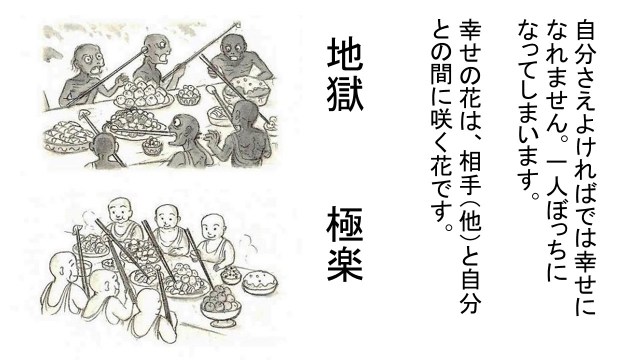
There’s a Buddhist tale about a man who visited a hell and a paradise, and at each he observed a table set with a mouth-watering feast… and meter-long chopsticks.

In the hell (地獄), the near-skeletal denizens who sat at the table fell prey to their selfishness and greed, desperately trying and failing to grab the best food and eat it with a tool that made doing so impossible. Eventually the meal broke down entirely in bickering and everyone remained hungry.

In the paradise (極楽), everyone who sat at the table simply fed the people across from themselves, and were fed by those people in turn. The meal ended with everyone satisfied and happy in a warm glow of camaraderie.

ShiRiShiYokuGaKi

A picture of that story, from this Buddhist dictionary.

Posted in Japanese, Yojijukugo | Tagged , , , , , , , | Leave a comment

When True Seeing exfoliates

化けの皮が剥がれる
(Bake no kawa ga hagareru; “The changeling skin is stripped away”)

Definition:

Someone’s wrongdoings, flaws, or malicious true nature come to light. A previously-hidden, negative truth is revealed. Someone (or everyone) realizes how bad a situation actually is after a time during which the reality of it was obscured.

Breakdown:

We begin with the verb 化ける (bakeru), “to change shape,” especially in the sense of various spirits and creatures that are said to be able to take the form of a human being. This appears in conjunctive form and acts as a noun, which allows the associative particle の (no) to connect it with, and thus modify, the noun 皮 (kawa), “skin,” which in turn is marked by the particle が (ga) as the subject. The predicate this subject takes consists entirely of the verb 剥がれる (hagareru), “to come off (of something).”

Notes:

Supposedly this comes to us from the 『太平記』(Taiheiki), a 600-some-year-old historical epic.

Japanese mythology is full of shapeshifters, most famously tanuki and foxes from the natural world, to the point where 化け物 (bakemono, literally “thing that transforms”) is used in almost exactly the same way that we use “monster” in contemporary English. Several of the myths even include a special pelt or garment that must be worn or taken off to effect the change.

In keeping with the prominence of animal bakemono, there are synonymous sayings such as 尻尾を出す (shippo wo dasu, “sticking out one’s tail”) that refer to tails – supposedly the one part of the body that a tanuki or fox couldn’t transform, which would expose their true nature if discovered.

Example sentence:

「自分の化けの皮がいつか剥がれてしまうんじゃないかって悩んでうるさかった後輩が試合で完敗してしまってサークルを辞めたんだよね。本当に偽物だったのか、インポスター症候群にやられたのかは不明」

(“Jibun no bake no kawa ga itsuka hagarete shimau nja nai ka tte nayande urusakatta kouhai ga shiai de kanpai shite shimatte saakuru wo yameta nda yo ne. Hontou ni nisemono datta no ka, inposutaa shoukougun ni yarareta no ka wa fumei.”)

[“Yeah, the junior member who had been loudly worrying that sooner or later the awful truth about them would be revealed? They were annihilated at the competition, and quit the club. But it’s not clear whether they were really a fake, or whether they were done in by imposter syndrome.”]

Posted in Japanese, Kotowaza | Tagged , , , , , , | Leave a comment

A stitch in time of crisis

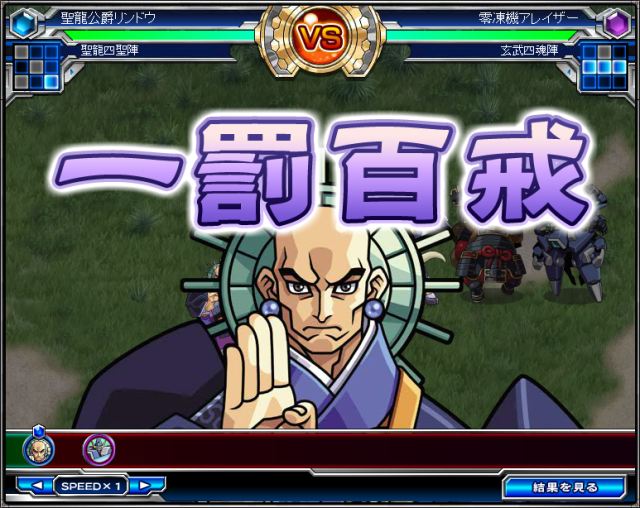
一罰百戒
ichi.batsu.hya-.kkai

Literally: one – punishment – hundred – warnings

Alternately: Making an example of someone. Meting out a punishment not just so one wrongdoer faces consequences, but also so that anyone else considering the same crime is forced to reconsider.

Notes: This phrase is not meant to imply an actual hundred-to-one ratio; 百 is simply standing in for “a large number.”

IchiBatsuHyaKkai

But is it a finishing move? We’ll have to see.

Posted in Japanese, Yojijukugo | Tagged , , , , , | Leave a comment