Your life may depend on what you overhear

門前の小僧習わぬ経を読む
(Monzen no kozou narawanu kyou wo yomu;
“The child before the gate reads sutras they never learned”)

Definition:

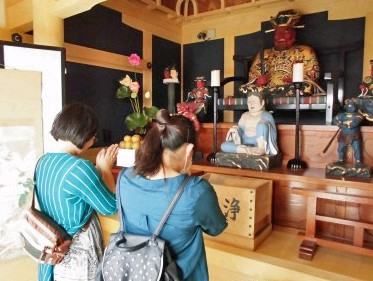
The place you live in has a strong impact on you. People who live somewhere for a long time will unconsciously be affected by their the character of the place. A child who lives near the entrance to a temple will hear the sutras being recited on a daily basis, and will eventually be able to recite the Heart Sutra themselves despite never formally learning it.

Breakdown:

Going right to left – the verb in this full sentence is 読む (yomu), “to read,” in sentence-final form. Note that in this case the word refers to reading out loud, or reciting, rather than the simple act of looking at and understanding a text that we usually think of when we say “read” in English. The particle (wo) points to the direct object, the noun (kyou), “sutra.” The noun is modified by the verb 習う (narau), “to learn.” This verb appears in imperfective form with negative suffix (zu) in prenominal form (which changes it to , nu).

Everything else makes up a single noun phrases that the verb takes as its subject. The primary noun is 小僧 (kozou). The characters refer to a young priest-in-training, but by extension the term can refer to any young boy. In this case, the saying makes the most sense if you abandon the literal meaning. This noun is connected by the associative particle (no) to compound noun 門前 (monzen), literally “in front of the gate (of a temple).”

Notes:

Compare and contrast 孟母三遷.

This is the entry for the Edo iroha karuta set.

Example sentence:

門前の小僧習わぬ経を読むで、子育てのために自分もテレビを止めて毎日読書するように頑張ってる」

(Monzen no kozou narawanu kyou wo yomu de, kosodate no tame ni jibun mo terebi wo yamete mainichi dokusho suru you ni ganbatteru.”)

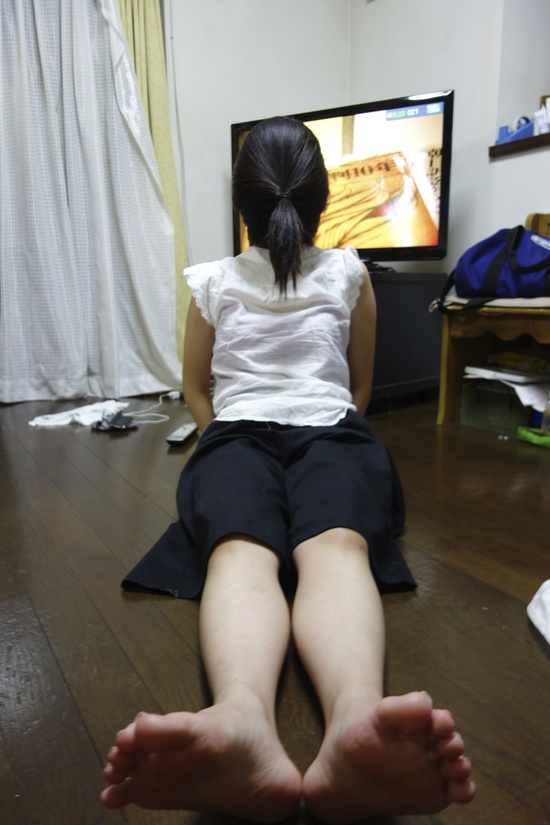
[“They say that the child by the temple gates unknowingly learns sutras… so for the sake of my own kids I’m working on giving up TV and reading books every day.”]
Posted in Japanese, Kotowaza | Tagged , , , , , | 1 Comment

Deep, deep turtle

盲亀浮木
mou.ki.fu.boku

Literally: blind – turtle – float – tree

Alternately: An incredibly rare event; something nigh-impossibly difficult to find. By implication, something you really should take advantage of while you have the chance.

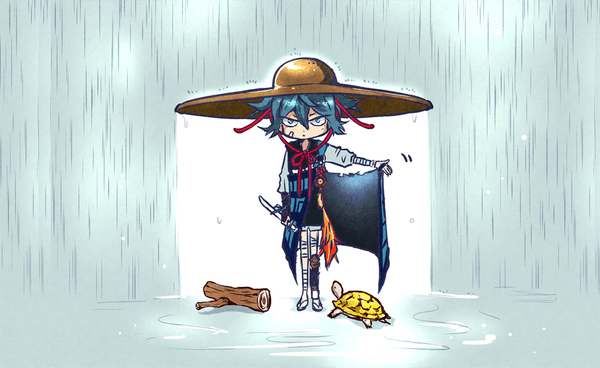
Notes: 盲亀 is, as the characters say, a blind (sea) turtle. 浮木 is not just a “floating tree,” but specifically driftwood.

This phrase is derived from a Buddhist allegorical story about a blind sea turtle who only comes to the surface of the ocean once in a hundred years, and upon surfacing happens to stick its head into the only hole in a floating piece of driftwood. It is said that one’s chances, in the endless cycle of Samsara, of being reborn as a human and gaining entry into the Buddha’s teachings is as rare and difficult as it is for that turtle to rise and poke its head into that hole in the driftwood… so now that you’re here and listening, I guess you’d better take advantage of your amazing good fortune and try to free yourself from attachments to the illusory material world!

b8xskzrcqaa9vdg

Not really expressive of the meaning of the phrase, but cute! (Picture is unknown origin, probably from a Chinese sketch site, but I found it on Twitter.)

Posted in Japanese, Yojijukugo | Tagged , , , , , | Leave a comment

Magic Monday – Uneasy lies the head

Crown of Shadows

Shadows are strange, abstract entities that only truly exist in the realm of the Shadow – the psychic mirror of the material world. Many are benign, but the touch of even the best-intentioned can be dangerous to mortals. The Crown of Shadows is a simple circlet, like polished hardwood to the touch but appearing almost ethereal due to the constant play of iridescent colors on its surface. When not claimed, it vanishes as soon as it goes unobserved for more than a moment, and reappears on its home pedestal in the underground Hall of Visions, one of the places where the border between the physical realm and the Shadow is especially weak.

Any who claim the Crown are joyfully greeted by a quickly intensifying rush of all shadow-creatures in the immediate vicinity. The shadows will close in, reach out to touch their new ruler in greeting, and recede again like the waves of an incoming tide. For those without the proper protection, each touch draws the mortal more fully into the Shadow realm; they lose d4 kilograms of mass and one point from a randomly chosen stat each round for the first 20d20 rounds of their reign. This greeting can be forestalled as long as one remains bathed in unbroken pitch darkness or blinding light. Those reduced to zero mass are drawn fully into the Shadow, ironically leaving the Crown behind.

If the claimant survives this greeting, then as long as they possess the Crown nothing of the Shadow will harm them and they may converse freely with shadows; as long as they wear it, they may command shadows in the area to appear and give them aid (acting essentially like the Green Lantern’s ring). Each morning or evening (at least one camp action), the wearer is expected to hold court in a shadowy place and administer the disputes and other matters of the shadows – their language and daily affairs are somehow comprehensible to one wearing the Crown, although this knowledge cannot be satisfactorily expressed in any human tongue. On rare occasions, the wearer of the Crown may be asked to engage in a quest of behalf of their subjects.

The shadow sovereign may resign at any time simply by renouncing possession of the Crown, but shadows will continue to recognize them, and will respond to their presence based on what kind of a ruler they were: rulers who went above and beyond the call of duty in service of their subjects while demanding little of them will be respected and aided; rulers who asked much and gave little will be taunted and hindered in subtle ways, and Shadow-based magic will not aid them.

(Today’s magic item was inspired by last Friday’s musings on the Artifact Dash. I’m very pleased with both the danger that keeps it from being casually claimed, no matter how ready it might seem for the taking, and with the possibility for interesting consequences of its use even after being mastered.)

Posted in Rules, Setting, World-Building | Tagged , , , , , | Leave a comment

Wise guys’ noses, eyes

Smart enough not to say “Smell you later”?

目から鼻へ抜ける
(Me kara hana he nukeru; “[In] from the eyes and out the nose”)

Definition:

Especially perceptive and shrewd. Able to quickly understand and correctly judge a situation. “Smelling out” a situation as soon as one has seen it because of a close linkage between one’s powers of sight and smell. Aside from the literal and metaphorical sensory connections, some sources cite the short distance between eyes and nose as a factor in this saying’s connotations of speedy discernment.

Breakdown:

We begin at the end with the verb 抜ける (nukeru) in sentence-final form. This verb can take on an array of meanings but in this case acts as “to come out,” synonymous with 出る (see below). In this case the verb takes no explicit subject or object at all. Instead, the particles から (kara), “from,” and (he), “to,” mark it as taking place in the span between one’s (me), “eye(s),” and (hana), “nose.”

Notes:

The may be replaced with fellow directional particle (ni). Alternately, the sentence may be changed by adding the verb 入る (hairu, “to enter”) and changing 抜ける to 出る (deru, “to go out”), in the form 目から入って鼻へ出る.

On the other hand, it is considered an error to make the eye into the subject with 目が鼻へ抜ける or to reverse the order into 鼻から目へ~.

This saying is attributed to Matsue Shigeyori’s 1645 haiku collection 毛吹草 (Kefukigusa).

Example sentence:

「今晩、僕の好きなクイズ番組に出る芸能人は皆、目から鼻へ抜けるように速く答えられるらしいから、楽しみにしています」

(“Konban, boku no suki na kuizu bangumi ni deru geinoujin wa minna, me kara hana he nukeru you ni hayaku kotaerareru rashii kara, tanoshimi ni shiteimasu.”)

[“Supposedly all of the celebrities appearing on my favorite game show tonight are really quick on the draw, so I’m looking forward to watching it.”]

Posted in Japanese, Kotowaza | Tagged , , , , , , | Leave a comment

Challenge accepted: Artifact dash

Today I finally got around to reading a post from a couple of months ago over at an RPG blog called Semper Initiativus Unum about “megadungeons and artifacts.” As is generally the case when I write this kind of post, a relatively throwaway line caught my eye and my imagination.

It strikes me that the deep levels of a megadungeon are possibly the most natural resting spots for artifacts. After all, if the Invulnerable Coat of Arn or the Sword of Kas is just sitting within 600′ of the entrance point of a dungeon, why hasn’t someone already come along and taken it? If there are a dozen layers of dungeon and monsters between it and the surface, well, that makes a bit more sense.

[Emphasis mine.] The question is presumably meant to be rhetorical. But if playing Microscope has taught me anything, it’s that taking this kind of question at face value and trying to come up with a workable answer can be very fruitful. So, as it says above: Challenge accepted. First, a couple of definitions in common RPG terminology.

  • An “artifact” is a supernatural object of incredible power. A “normal” magic item might be a potion that heals you or a ring that turns you invisible. In contrast, an artifact would be a fountain that restores the dead to life and the wounded to perfect health, or the One Ring forged by Sauron to control all the other Rings of Power in the world (and also turn the wearer invisible). A sword that never rusts or dulls is magic; a sword that can cut through any substance in the universe is an artifact.
  • A “dungeon” is an adventuring location, generally an underground complex of caves, rooms, and tunnels, filled with monsters and treasure. A “megadungeon” is a very large one, often going down many “levels” underground and containing hundreds of rooms filled with foes and traps of increasing danger and rewards of increasing value. In traditional D&D play, a megadungeon can provide enough material for dozens of gaming sessions and carry multiple characters from their first steps through to a rich retirement (or ignominious death).

It’s easy to see why the lower levels of a megadungeon would be a logical and appropriate place for an artifact: a powerful tool is both commensurate with other treasures in a high-reward area, and can help the players overcome the equally difficult challenges they encounter. Also, almost any band of fools can waltz a few hundred feet into a dungeon and make it out alive with the first shiny treasure they see – so why wouldn’t an artifact only a short dash away from the entrance be taken away almost immediately? Well, here are some possibilities….

  1. The artifact might not stand out. In a cavern full of rocks, the Philosopher’s Stone may register as just one more piece of debris. Only a seasoned adventurer who has spent hour after hour poring over arcane texts would have a chance of recognizing the signs that this is no ordinary rock.
  2. The artifact might be secured against casual looters. If Kusanagi is inside the body of a great serpent which most adventurers avoid (and which tends to devour those who don’t avoid it), then only those powerful enough to defeat the beast can claim it. If the Armor of Invincibility is on the body of a hermit who lives in the cave, then nobody can take it without finding a way to defeat or trick the hermit or convince her to give it up.
  3. The artifact might require supernatural conditions to claim. Like above, but with a magical rather than merely logistical impediment. If Excalibur can sit in a town square and resist all attempts to draw it from its stone until the rightful king of all Britain lays hand on it, then it’s not even a leap to imagine an artifact that will only allow itself to be possessed by one who has faced their own sins personified, or parleyed with genies and dragons, or beheld the light of the False Sun and lived.
  4. Taking the artifact might be dangerous. All of the above assume that getting the artifact in your possession is the tricky part, for one reason or another. But it could also be the case that any schmuck can pick it up, and the hard part is surviving long enough to get it back to town. A golden egg might be guarded by a gauntlet of Indiana-Jones-style traps, tempting the foolish to their doom. The Crown of Shadows might be just sitting on a dais for the taking… surrounded by the petrified corpses of would-be claimants who couldn’t endure the joyful embraces of their new subjects. The Ruby of Fire might be 2000° Kelvin to the touch. The Sacred Bone of Whence may be hunted down and taken back by the gibbering goblin hordes of the Labyrinth.

All of these are viable, and have several advantages (in my mind) over an artifact hidden in the depths. (Not that there aren’t potential downsides as well, or advantages to hiding an artifact down deep and planting clues about it in the upper levels. But I feel like the “artifact dash” approach could lead to some unexpectedly rewarding storytelling moments.)

If adventurers pass by a shiny reward every time they adventure into the dungeon, it should provide a more concrete goal for them to pursue than mere rumor would. In some cases, clever and careful (and lucky) planning and execution could allow the party to “sequence break” the dungeon by gaining the artifact earlier than expected, giving the players a huge feeling of accomplishment and driving the entire adventure in unexpected (and therefore potentially very entertaining) directions. Alternately, a party could ignore all your warning signs and try to steal the artifact long before they’re ready to deal with the consequences, leading to several minutes of panic followed by a fresh start with a new, more alive party. Assuming the players are good sports about it, this should be very entertaining and provide a memorable story to re-tell long after the game has ended. In the case of an artifact hidden in plain sight, the moments of realization and triumphant retrieval should also provide a memorable play session.

In the end, the image that sticks with me is the one that inspired the title of this post: a big, shiny, irresistible artifact on a pedestal in the middle of a cyclopean hallway under the earth… and a band of adventurers just picking it up and sprinting madly for the exit as the darkness comes alive all around them with danger.

Posted in Miscellaneous, Musing, World-Building | Tagged , , , , , , | 2 Comments

Back to back they faced each other

面従腹背
men.juu.fuku.hai

Literally: face/mask – obey – belly – back/defy

Alternately: Putting on a show of obeying or going along with someone while secretly opposing or resisting them, at least mentally. This defiance will likely manifest eventually, but as long as it exists within one’s heart, this compound is applicable.

Notes: While most learners of Japanese think of as one’s physical back, and may therefore be amused or stymied by 腹背‘s literal interpretation as “belly-back,” all that’s going on here is being disobedient (背く) in one’s belly (where emotions happen, you know – see also 腹が立つ, hara ga tatsu. “to get angry”).

menjuufukuhair

Literalism strikes again! From this random blog post.

Posted in Japanese, Yojijukugo | Tagged , , , , | Leave a comment

It’s just a mallet Gotye used to know?

It’s like falling off a bicycle: you never forget how

昔取った杵柄
(Mukashi totta kinedzuka; “The handle of a mallet that one used to use”)

Definition:

Abilities and skills gained in one’s youth. By extension, such skills that one has managed to retain even as one ages. In the former sense, one could use the phrase to describe athletic ability that has since faded. In the latter, it’s something like how they say that you never forget how to ride a bicycle.

Breakdown:

This one is simply a noun phrase. Our main noun is a compound of (kine), a mallet – especially the large wooden mallets used in mochitsuki – and (tsuka), “handle.” The noun is modified by the verb 取る (toru), “to take,” in past tense; the verb in turn is modified by the noun (mukashi), “past.” Something about the construction makes me suspect that this noun phrase was extracted over time from a longer sentence, but (as discussed below) its actual provenance is unclear.

Notes:

I haven’t been able to find an origin for this phrase anywhere. Source after source painstakingly explains that the image invoked is of the mochi-pounding mallet one handled in one’s youth (most likely during winter festivals), and how this is a stand-in for skills or abilities acquired and used in the past in general. But nobody seems to know how or when people first began using that particular image for that particular shorthand.

It is considered valid to write 取った as 操った (base form ayatsuru, here in past tense, normally pronounced ayatsutta), “to manipulate (a tool).” My sources do not make it clear whether 操った changes pronunciation to totta in this case.

Example sentence:

「十年ぶりに空手の練習をもう一度始めようと思ってるけど、昔取った杵柄をまだ操れるかな」

(“Juunen buri ni karate no renshuu wo mou ichido hajimeyou to omotteru kedo, mukashi totta kinedzuka wo mada ayatsureru ka na.”)

[“I’m thinking of starting karate practice again after a ten-year break, but I wonder if I still have the skills I picked up when I was younger.”]

Posted in Japanese, Kotowaza | Tagged , , , , , , | Leave a comment

Take a breather and call me in the morning

Kaynahara.

無病息災
mu.byou.soku.sai

Literally: not – sick – stop – disaster

Alternately: To be healthy.

Notes: primarily refers to “breath,” but has been associated a variety of words (cf. 息子 – musuko – “son”), and in this case refers to stopping something. The term 息災 on its own is Buddhist in origin, and refers to the power of the Buddha keeping someone free of disease, but the “breath” connection seems to be related to terms like 休息 (kyuusoku – “rest/relaxation”) as in catching one’s breath.

An apparently-related compound replaces the with (ichi), arguing that someone with a (non-terminal) illness is likely to take better care of themselves than someone effortlessly healthy, and so in the end, people with imperfect health will actually live longer.

MuByouKiGan

無病息災 is a common request in prayers, as in this article about an August 16th “Enma festival” at a small shrine in Fukuoka.

Posted in Japanese, Yojijukugo | Tagged , , , | Leave a comment

On YAOSC scaling

One of the central conceits of YAOSC’s mechanics is that many things scale up or down in a relatively abstract way. The obvious example is the dice rolled for checks, which vary to represent variable difficulty levels. But the idea extends into the physicality of the game’s imaginary world, where measures (for purposes of game mechanics) will tend to scale as well.

In time, the units go like this. In play, action is set to a particular scale until a turning-point in the story or action is reached, and then probably switch. For example, in a traditional dungeon-crawl game, travel to the dungeon will be conducted in watches, days, or weeks. Exploring the dungeon will be conducted in minutes, scenes, or hours. If you meet and fight a monster, combat will be conducted in rounds, with some actions taking moments or minutes.

  • Moment: something lasts or takes about a second. Blink or sneeze and you could miss it.
  • Round: a few seconds. Just long enough to perform one or two fundamental moves of an activity.
  • Minute: not exactly sixty seconds. Long enough to finish a simple task like putting on and tying one’s shoes.
  • Scene: several minutes, up to perhaps half an hour. Long enough to finish a moderate task like washing dishes, traveling somewhere close by, or getting a toddler to pee in the potty.
  • Hour: again, not exactly 3600 seconds. Long enough to get a significant amount of work done.
  • Watch: about a quarter of a day’s work.
  • Day: about one normal wake/sleep cycle based on human activity on earth, because we norm that way.
  • Week: this one’s not exact either. More than just a couple of days.
  • Month: you get the picture.
  • Season
  • Year
  • Decade
  • Century
  • Eon

We’re well outside the scope of most gaming at this point, so if you need to scale something up from an eon, then let’s just call it “indefinitely long” and leave it at that.

In space, the units go like this. Spaces described may be linear, square, or cubic in nature, and are inexact enough that the measure could describe span or radius equally well. Real-world measures may also be used if you really want.

  • Contact/personal: something is essentially zero distance from your reference object.
  • Reach: close enough to reach out and touch for an adult human; about a meter or two.
  • Room: close enough for a small group of people to interact comfortably without personal-space issues or inconvenience; a few meters.
  • Area: not close enough to talk with someone in conversational tones, but close enough to toss them a ball or shoot an arrow at them. Probably up to about a hundred meters, or the size of many sports fields.
  • Estate: the size of a small town, large estate, or normal university campus. It might take about an hour to walk across.
  • County: close enough that you could fit a moderate modern town inside, or the distance between neighboring hamlets in a more medieval setting. A few hours’ travel by foot over open terrain.
  • Region: big enough that it would take hours to drive across in a car; the size of a large metropolitan area.
  • Realm: big enough to encompass an entire kingdom, or a state or province in a large modern nation.
  • Continent
  • Planet
  • Okay, cut it out.

Some objects, especially objects that a character might consider carrying or using, may scale their size.

  • Grain: really fine stuff like sand or watch screws. If you’re not careful, you could lose one forever.
  • Bead: you can hold a handful of these easily, but they’re not going to slip through the cracks between your fingers.
  • Finger: one or or a few fit comfortably in the palm of your hand. In weapon terms, a shiv.
  • Hand: you can hold one and manipulate it with one hand, like a tennis ball. In weapon terms, a short sword or pistol. Your head is on the large end of “hand” size.
  • Arm: up to about a meter in its longest measure, probably still usable with one hand. In weapon terms, a club or rapier.
  • Chest: about the size of one’s whole torso. In weapon terms, bagpipes or an accordion.
  • Body: matching an adult human in at least one of its dimensions, including gear such as fire-fighter or astronaut suits. In weapon terms, a halberd or Zweihänder.
  • Horse: we’re starting to leave human measures behind here; this is a size category for things that support you instead of the other way around, like most large animals or personal vehicles.

And there you have it! This has all been in the back of my mind for a very long time, and bits of it can probably be seen peeking out in some of the details of Magic Monday spells, but now there’s a working draft written out that we can refer back to as needed. Working out a second draft of the spell list would involve making sure that everything conforms to this model, now that it’s an explicit list rather than a vague idea.

Posted in Rules | Tagged , , , | 2 Comments

The curse of the wart-cure??

ミイラ取りがミイラになる
(Miiratori ga miira ni naru; “The mummy-hunter becomes a mummy”)

Definition:

A person, sent to get someone and bring them back, themselves ends up staying away. A person who goes to convince someone of something ends up being convinced that the other side is correct. An ironic reversal. “Going for wool and coming home shorn.”

Breakdown:

We begin with the second word, 取り. This is the verb 取る (toru), “to take,” in stem form and acting as a noun. It’s modified by compounding it with the noun ミイラ (miira), “mummy,” to make “mummy-hunter.” (Although see below for an alternate reading.) The whole is marked as the subject of the sentence by the particle (ga). The latter half of the sentence comprises the verb なる (naru), “to become,” with the particle (ni) indicating that the repeated noun ミイラ is undergoing the transition.

Notes:

The Japanese word ミイラ comes to us, through Portuguese, from “myrrh” (Hebrew מור (mor); Arabicمر (mur)), for its use in embalming practices. It may also be written with the ateji 木乃伊, although katakana are far more commonly used in contemporary Japanese.

The most-supported explanation for ミイラ取り is of people who disinter old, mummified remains to be ground into powder for their supposed medicinal effect! They end up mummified themselves, though, becoming exactly that which they had sought to retrieve and destroy.

However, one of my sources claims that ミイラ取り isn’t a mummy-hunter, but rather a person sent to retrieve myrrh for someone else’s mummification process who ends up dying in the desert and becoming a mummy through natural action of the sun and dry air. I don’t buy this explanation, though. For starters, it has the feel of a folk etymology invented by people who think of dynastic Egypt as a bunch of idiots out wandering around in the sand rather than a sophisticated commercial empire built around a flood plain. Second, this reading would require that ミイラ carry two different meanings within the same sentence: first “myrrh,” then “mummy.”

Note that there is a (now-outlawed) Buddhist tradition of monks realizing that their time has come and arranging to die while meditating in such a way that their bodies will naturally mummify; the resulting corpses may be retrieved, decorated, and put on display to demonstrate the power of Buddhism in warding off corruption and decay. These are generally not called ミイラ, but rather 即身仏 (sokushinbutsu) – “body-as-is Buddhas.”

Example sentence:

「本屋さんで立ち読みしてる息子を呼びに行ったら、面白そうなアンソロジーが目に留まって、我に返ったら三十分も経ってた。ミイラ取りがミイラになったな、ハハハ」

(“Honya-san de tachiyomi shiteru musuko wo yobi ni ittara, omoshirosou na ansorojii ga me ni tomatte, ware ni kaettara sanjuppun mo tatteta. Miiratori ga miira ni natta na, ha ha ha.”)

[“When I went to get my son, who was in the bookstore reading, an interesting-looking anthology caught my eye, and when I came to my senses over half an hour had passed. I’d gone out for wool and come home shorn.”]

Posted in Japanese, Kotowaza | Tagged , , , , | Leave a comment