:|

8^|

真一文字
ma.ichi.mon.ji

Literally: true – one – sentence – character

Alternately: Straight as an arrow; as the crow flies; as straight as the written character for the number one, which is just a straight line. By extension; when a person’s actions are focused, single-minded.

Notes: Keep in mind that 文 here is not adding significant meaning on its own; 文字 (usually pronounced moji in contemporary Japanese) refers to a written or printed character. If we divide up the parts of this yojijukugo, it’s not half-and-half but 真 modifying 一文字 “the character for ‘one’.”

There’s a set phrase for compressing your mouth into a straight line: 真一文字に口を結ぶ (maichi monji ni kuchi wo musubu).

:| :[ :| :[ :| :[ :| :[ :| :[ :| :[ :| :[ :| :[ :| :[ :| :[ :| :[ :| :[

😐 :[ 😐 :[ 😐 :[ 😐 :[

Posted in Japanese, Yojijukugo | Tagged , , , , , | Leave a comment

Every body has some body

So rock your body right

身は身で通る裸ん坊
(Mi wa mi de tooru hadakanbou;
“The body, as the body, passes through (life) naked””)

Definition:

Everybody has their own strengths and weaknesses, quirks and skills, station in life, and so on – but we all go on living our lives just the same. Everybody is born naked (and without any possessions) and cremated naked, and in between you’ve got a body that will get you through somehow or other.

Breakdown:

We begin with the noun 身 (mi), “body,” or by metaphorical extension one’s position in society, marked as the topic of discussion with the particle は (wa). The comment on this topic begins with another 身, this time marked by the particle で (de) as the means by which an action is performed. The action in question is the verb 通る (tooru), “to pass through,” in prenominal form and preceding a compound noun comprising the nouns 裸 (hadaka), “nakedness,” and 坊 (bou). Most directly this term means “priest” or “boy,” but by extension it can mean “a person characterized by [whatever precedes the 坊].” An extra ん (n) sound is added in between for euphony. We may imagine a copula here, but it has been elided.

Notes:

This is the み (mi) entry of the Kyoto iroha karuta set. A variant expands the final 坊 to 坊 (bouzu) without significant change in meaning; it is also possible to abbreviate the phrase to just 見は身で通る.

I’m not sure what to make of this saying. On the one hand, its fatalism seems to fall on the side of optimism: “no matter your troubles, you’ll muddle through somehow or other.” On the other hand, it is fatalism and from my modern perspective it feels like the sort of thing someone with a smooth and easy life would coopt to justify ignoring the suffering of those less fortunate.

When I first spotted this kotowaza I managed to read 通る as 踊る (odoru, “to dance”). This would have been very cute but it is, alas, an error.

Example sentence:

「若い時は身は身で通る裸坊主、ただ生き続けられるだけで嬉しかった。がしかし、年を取ると次第に自分の身の振り方について考えるようになってきた」

(“Wakai toki wa mi wa mi de tooru hadakanbouzu, tada ikitsudzukerareru dake de ureshikatta. Ga shikashi, toshi wo toru to shidai ni jibun no mi no furikata ni tsuite kangaeru you ni natte kita”)

[“When I was young I was glad that I was simply able to go on living in the body I’d been born with. But as I got older, I increasingly thought about the course I wanted to steer through my life.”]

Posted in Japanese, Kotowaza | Tagged , , , , , , , | 1 Comment

A man with a heart of… field

野心満満
ya.shin.man.man

Literally: field – heart – full – full

Alternately: Bursting at the seams with (possibly secret) hopes and desires of grand scope. Burning with ambition.

Notes: This is a compound of compounds. 野心 on its own can be used for aspiration or ambition, especially ambition out of proportion to what the person is actually  capable of. In a more sinister vein, it can mean the kind of overweening ambition that leads to plots and treachery. 満満 (which may also be written with the doubling mark as 満々) is an emphatic doubling that simply means “full [of something].” A synonymous phrase replaces 満満 with 勃勃 (botsu botsu), “rising,” “energetic.”

One of my sources attributes this phrase to Chinese Qing-era drama The Palace of Eternal Life (Japanese 『長生殿』 = Chouseiden).

Sunglasses are key

My dream is to one day have the biggest, poppedest collar in the whole world!

Posted in Japanese, Yojijukugo | Tagged , , , , , , , , , , , , | Leave a comment

Smaller than an apple, at least

目の上の瘤
(Me no ue no kobu;
“A lump over the eye”)

Definition:

An eyesore; metaphorically, a person you don’t want to meet, usually because they always seem to get in your way and cause problems. Especially used for someone of higher social station, or greater ability, than your own. A thorn in your side. The image is of a swelling close enough to the eye that it interferes with your field of view and causes frustration.

Breakdown:

This noun phrase centers on its final noun, 瘤 (kobu), a lump or swelling. Repeated use of the associative particle の (no) specifies that the lump in question is 上 (ue), “above,” the 目 (me), “eye.”

Notes:

Apparently back in the day the slang term 瘤付き (kobutsuki) described the situation of having a child in tow – especially a child from a former relationship, which could get socially awkward and increase the logistical overhead of things you wanted to do. Today’s saying is explicitly not associated with that usage of 瘤.

A variant replaces 瘤 with synonym たん瘤 (tankobu); another rewrites the whole as 鼻の先の疣々 (hana no saki no iboibo, “warts on the tip of the nose”). Another saying specifically compares a woman’s sister-in-law to a 瘤 under the eye; apparently this could be an especially fraught relationship back before the modern/Western family structure was imported and meant that a wife no longer usually lives under the same roof as her husband’s entire family.

This is the め (me) entry of the Edo and Osaka iroha karuta sets.

Example sentence:

「ガッカリしたな。俺はあいつのことを良いライバルだと思ってて、お互いに切磋琢磨しながら成長していける関係だと思ってたけど、あいつは俺のことをただの目の上の瘤だと思ってたらしい。勿体ない!」

(“Gakkari shita na. Ore wa aitsu no koto wo ii raibaru da to omottete, otagai ni sessa takuma shinagara seichou shite ikeru kankei da to omotteta kedo, aitsu wa ore no koto wo tada no me no ue no kobu da to omotteta rashii. Mottai nai!”)

[“I’m disappointed. I thought that he would be a good rival, and that we could both grow by competing against each other, but I guess he just thought of me as an obstacle. What a waste!”]

Posted in Japanese, Kotowaza | Tagged , , , , , , , , , | Leave a comment

Million-yard stare

Look on my Works, ye Mighty

空空漠漠
kuu.kuu.baku.baku

Literally: sky / empty – sky / empty – desert / wide – desert / wide

Alternately: Vast; indefinitely wide – and empty. Alternately, vague; hazy; ill-defined. When applied to a person, it can mean that they’re distracted or lost in thought.

Notes: This is a self-compounding compound; the Buddhist term 空漠 is doubled for emphasis. The doubling character may also be used, for 空々漠々. Replacing 漠 with homophone 莫 is considered an error, even though there are cases where the latter takes on a similar meaning.

In its more abstract meaning, this compound is considered synonymous with 曖昧模糊, 有耶無耶, and 五里霧中, and an antonym of 一目瞭然 (among others).

...

Posted in Japanese, Yojijukugo | Tagged , , , , , , | Leave a comment

404 Ghost not found

(According to my file, this is the 404th kotowaza post!)

幽霊の正体見たり枯れ尾花
(Yuurei no shoutai mitari kareobana;
“[I] saw the ghost’s true form: dry pampas grass”)

Definition:

When something seems frightening at first but turns out to be benign after closer inspection – or when a person is so full of fear or doubt that they end up jumping at shadows and seeing threats where nothing is actually amiss.

Breakdown:

We begin with the noun 幽霊 (yuurei), “ghost,” “apparition.” This is followed by the associative particle の (no) in its possessive function, then by the possessed thing: the noun 正体 (shoutai) – literally “correct body,” but in this case best rendered as “true form.” Then without any particles that is taking the preceding noun phrase as its direct object: the verb 見る (miru), “to see,” in conjunctive form as simply 見 (mi), with auxiliary verb たり (tari), which expresses that an action has been completed. This is likely also appearing in conjunctive form (also たり, conveniently enough) so that it can connect to what follows: a noun phrase with all further verbs  or parts elided.

The final noun phrase begins with the verb 枯る (karu), “to wither,” “to dry out,” in prenominal form as 枯れ (kare), modifying the noun 尾花 (obana), the brushy frond at the end of a stalk of pampas grass. (Literally this one is “tail flower,” which I rather like.) Anything else, such as a copula, is elided.

Notes:

This saying is attributed to the Uzuragoromo (『鶉衣』, literally “quail clothing,” figuratively “ragged clothing”), an Edo-era collection of poetic writings by Yokoi Yayū. Apparently the original form of the phrase used a 化け物 (bakemono), literally “a thing that changes form” but often translated as “monster,” but that this was changed to a ghost through memetic association. See also 疑心暗鬼.

Incidentally, the ゆ (yu) entries of the three big iroha karuta sets are either 油断大敵 or an excessively obscure phrase, 幽霊の浜風 (yuurei no hamakaze), which describes someone as listless as a ghost that has had to put up with the buffeting of a wind blowing in from the sea. While I was looking for more information on that, though, I found this saying, and the rest is history.

Example sentence:

「本を怖がるなんて、正に幽霊の正体見たり枯れ尾花じゃない?可哀そうに」 「あいつらがススキを怖く思ったから燃やしたと言っても、花園まで燃やしてしまったらいくら何でも許せないぞ」

(“Hon wo kowagaru nante, masa ni yuurei no shoutai mitari kareobana ja nai? Kawaisou ni.”  “Aitsura ga susuki wo kowaku omotta kara moyashita to itte mo, hanazono made moyashite shimattara ikura nandemo yurusenai zo.”)

[“Being afraid of just a book, isn’t that exactly a case of seeing ghosts in every rustle of the grass? I feel sorry for them.”
“Even if they say they did it because the ‘grass’ scared them, there’s just no way I could forgive someone who burned down the whole damn garden.”]

Posted in Japanese, Kotowaza | Tagged , , , , , , , , , , , , , | Leave a comment

A cure for what ails ya!

(Not universally applicable, unfortunately.)

応病与薬
ou.byou.yo.yaku

Literally: answer – disease – give – medicine

Alternately: Just what it says on the tin: giving someone medicine appropriate to the illness they are suffering from at the time. By extension, teaching people the lessons they need (especially moral lessons, or in a Buddhist context, Buddhist teachings) in a way appropriate to their personal character, aptitude, and situation in life.

Notes: This compound may also be given the Japanese-style reading 病に応じて薬を与える (yamai ni oujite kusuri wo ataeru). It has a number of synonyms, including 対症下薬 (taishou kayaku, “giving medicine against the symptoms”) and 因機説法 (inki seppou, “teaching (Buddhist) law based on the opportunity”).

Most of my sources are silent on the origins of this phrase, but one attributes it to our friend, the Saṃyukta Āgama (Japanese 『雑阿含経』= Zou agon kyou).

Calligraphy

[Insert joke about doctors’ handwriting]

Posted in Japanese, Yojijukugo | Tagged , , , , , , , | Leave a comment

On covering your butt

Both literally and metaphorically… not that a fundoshi actually covers much of the butt….

義理と褌欠かされぬ
(Giri to fundoshi kakasarenu;
“Underwear and courtesy cannot be left lacking”)

Definition:

In the old days, it was acceptable for men doing hard labor to strip down (and for small children to go essentially naked, with perhaps a smock on their fronts), but the minimum acceptable clothing for adult males was a fundoshi, a loincloth made by wrapping, tying, and/or tucking a long strip of cloth. This saying asserts that properly observing one’s obligations and the strictures of decent behavior is just as necessary as that standard of physical “decency.”

Breakdown:

We begin at the end with the verb 欠く (kaku), “to lack.” It appears in imperfective form as 欠か (kaka) and takes the causative suffix す (su), itself in imperfective form as さ (sa) and taking the passive suffix る (ru), which is also in imperfective from as れ (re) and takes the negative suffix ず (zu), which is in – did you guess it? – conjunctive form as ぬ (nu). The resulting pileup is 欠かされぬ, “(can)not be made to be lacking” – or in simpler terms, “indispensable.”

Any particles that might point to the verb’s function are elided, but this verb structure is a predicate and the preceding phrase uses the particle と (to) to show that the verb applies to each of its nouns: 褌 (fundoshi), “loincloth,” and 義理 (giri), a complicated term that can refer to duty, honor, social obligations, or common courtesy.

Notes:

義理 puts a lot of weight on the sense of owing someone something (such as a form of behavior), often more for the sake of social cohesion as a whole rather than for them personally. The phrase 義理を欠く (giri wo kaku) on its own refers to failing one’s social obligations. See also 義理の~ (giri no ~) appended to familial terms for one’s in-laws, or the practice of 義理チョコ (giri choko), chocolate given to work associates and superiors on Valentine’s day for the sake of soothing their feelings rather than any romantic interest.

This is one of two possible き (ki, in this case voiced as gi) entries in the Kyoto iroha karuta set. The Osaka set uses the contracted form 義理と褌. Other variations replace the verb phrase with せねばならぬ (seneba naranu), “shouldn’t not do,” or 裸になってもせずには居られぬ (hadaka ni natte mo sezu ni wa irarenu), “can’t exist without doing, even if (otherwise) naked.” And of course the base form will allow a comma between the noun phrase and a verb phrase, if you feel like using one.

The ultimate source of this phrase is unclear, although it is apparently attested in Edo-era reference works such as the 『譬喩尽』 (Tatoe-dzukushi, literally “an exhaustive list of figurative speech”) and the 『諺苑』 (Gen’en, literally “garden of sayings”).

Example sentence:

「最近、廊下での挨拶でさえ面倒臭くなってきたけど、義理と褌欠かされぬというし、やっぱりメールの返事などは褌を締めてかからないとね」

(“Saikin, rouka de no aisatsu de sae mendou kusaku natte kita kedo, giri to fundoshi kakasarenu to iu shi, yappari meeru no henji nado wa fundoshi wo shimete kakaranai to ne.”)

[“Recently even just saying ‘Hi’ to someone in the hallways has started to feel like a pain in the butt. But courtesy is the bare minimum requirement for decency, as they say, so I’d better gird my loins and answer some emails.”]

Posted in Japanese, Kotowaza | Tagged , , , , , , , , , , | Leave a comment

All roads lead to Home

異路同帰
i.ro.dou.ki

Literally: different – road – same – go home / arrive at / result in

Alternately: “Different path, same destination.” When differing methodologies produce the same end result.

Notes: Synonyms include 殊塗同帰 (shuto douki), in which 殊 (shu, “exceptional”) fills the role of 異 and 塗 (to) stands in for homophone 途, used here to mean “route” and fill the same role as 路. This formulation can also sometimes flip its parts and become 同帰殊塗 (douki shuto). Compare and contrast 同工異曲.

This compound comes to us from our friend the Huainanzi (Japanese 『淮南子』 =  Enanji). It can also be given the native-Japanese reading of 路を異にして帰りを同じうす (michi wo koto ni shite kaeri wo onajiusu, probably).

This is the proper い entry I promised previously: the older reading of 異 is “yi” (イ), rather than “wi” (ヰ) or “i” (ヒ).

The sample pages suggest that the "same destination" in this case is a restaurant. Could be worse.

The title of a brief indy manga. You can check it out for free (with an account) or otherwise support the creator on their Pixiv.

Posted in Japanese, Yojijukugo | Tagged , , , , , , , , , , | Leave a comment

Eliza, Eliza

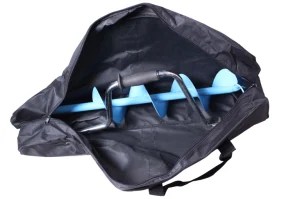
There’s a hole in the bag now; an exceptional hole!

嚢中之錐
nou.chuu.no.kiri

Literally: bag – inside – [possessive particle] – awl / auger / drill

Alternately: A person of exceptional ability will show through even if surrounded by large numbers of ordinary people. “The cream rises to the top.” An awl, or similar piercing tool, hidden inside a bag will poke out and show itself.

Notes: There are a number of four-character compounds that use 之 in its archaic function as the associative particle, and to this point I’ve avoided using them because it feels like cheating to me somehow. In this case I relented because of the remaining compounds that start with no, this was the only one referenced in all my usual sources, so I’m assuming that it’s the most commonly-used and accessible.

Modern Japanese orthography may see this written at times with の instead of 之, though. Other variants replace 錐 with 穎 (ei), “awn” or “glume” (both apparently spiky strictures on plants) or even with 類 (tagui), “type,” “kind [of thing],” although why I’m not sure. It doesn’t seem to have any associations with specifically sharp or poky things, and may simply be a common “misspelling” of the obscure 穎.

Compare and contrast 能ある鷹は爪を隠す.

This compound comes to us from regular contributor Records of the Grand Historian (Japanese 『史記』 = Shiki).

WHO WOULD WIN!?!?

How about a bag designed to hold the auger, though?

Posted in Japanese, Yojijukugo | Tagged , , , , , , , , | Leave a comment